Horse Racing Fun Facts

Santosh Jha
| 28-04-2026
 · Travel team
A Thoroughbred racehorse at full gallop covers about 6 meters with every single stride. Its heart — roughly the size of a basketball — pumps around 75 liters of blood per minute during a race.
In about 60 seconds of flat-out running, a top racehorse burns more energy than most humans do in an entire day of moderate exercise.
Horse racing is a sport that looks elegant from the grandstand, but up close it's a display of raw, extraordinary biology operating at its absolute limit. And that's just the beginning of what makes it genuinely fascinating.

One of the Oldest Sports in Human History
Horse racing has been happening for a very long time — chariot racing featured in the ancient Olympic Games as far back as 700 BC, and mounted horse racing followed shortly after. The modern form of Thoroughbred flat racing developed in 17th and 18th century England, when wealthy landowners began selectively breeding horses for speed over distance. Every single Thoroughbred racehorse alive today traces its male lineage back to one of just three stallions imported to England in the late 1600s and early 1700s: the Darley Arabian, the Godolphin Arabian, and the Byerley Turk. Three horses, hundreds of years ago, are the foundation of an entire global sport.
The Thoroughbred — Built for One Thing
Thoroughbreds are essentially a purpose-built machine. Centuries of selective breeding have produced an animal with an unusually large windpipe for oxygen intake, an exceptionally flexible spine that acts like a spring during the galloping stride, and long, lightweight legs optimized for speed rather than durability. The trade-off is that Thoroughbreds are more physically fragile than other horse breeds — their legs carry enormous stress loads at racing speeds. A top racehorse can reach speeds of around 70 kilometers per hour, and the impact force on each foreleg at that speed is roughly equivalent to the horse's entire body weight landing on a single point with every stride.
The Jockey Factor
Jockeys are among the most physically demanding athletes in any sport, in ways that aren't always obvious. They must maintain extremely low body weight — typically between 54 and 58 kilograms — while possessing the upper body strength to control a 500-kilogram animal moving at 65 km/h, the balance to stay seated through sudden direction changes, and the tactical intelligence to make split-second racing decisions. Professional jockeys typically ride multiple races per day, often at different tracks, and manage their weight year-round through strict diet and training regimens. It's a combination of strength, discipline, and nerve that few sports require simultaneously.
Famous Races Worth Knowing
The world's most prestigious races each have their own character:
• The Kentucky Derby in the US: 1.25 miles at Churchill Downs, run since the 1870s, known as "the most exciting two minutes in sports"
• Royal Ascot in the UK: a five-day festival attended by the British royal family, as much a social occasion as a sporting event
• The Melbourne Cup in Australia: dubbed "the race that stops a nation," it's a public holiday in Victoria
• The Prix de l'Arc de Triomphe in France: Europe's richest flat race, held at Longchamp in Paris every autumn
Each race has its own distance, surface, and tradition, attracting the best horses from breeding operations worldwide.
The Numbers Behind the Sport
Horse racing is a genuinely enormous industry. Globally, it generates over $300 billion in annual economic activity when breeding, training, veterinary services, and related industries are included. The most expensive racehorses ever sold at auction have fetched prices exceeding $16 million for a single animal. Prize money at the top level is staggering — the Saudi Cup, held in Riyadh, currently offers $20 million in total prize money, making it the richest horse race in the world.
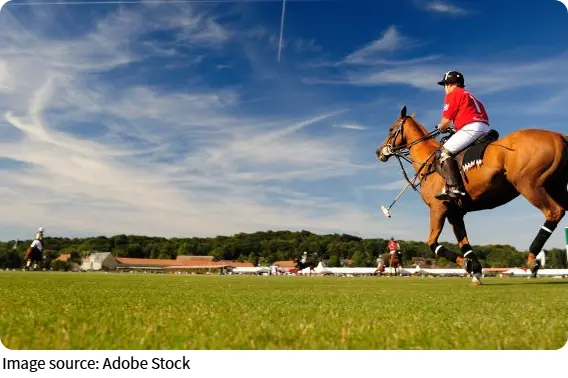
Horse racing sits at an unusual intersection of sport, science, history, and spectacle. Whether you follow it closely or just catch the big races occasionally, there's always something underneath the surface worth knowing about — and the horses themselves, those extraordinary engineered athletes, are endlessly worth paying attention to.