Dinkelsbühl at Golden Hour

Mason O'Donnell
| 19-05-2026
 · Travel team
Friends, ready for a slow-travel day that feels like stepping into a hand-painted postcard?
Dinkelsbühl—among the most romantic stops on Germany’s famed scenic route—wraps Renaissance townhouses inside complete medieval walls. Think soaring gatehouses, cobbled lanes, and flowered windowsills.
This guide keeps it practical: the best strolls, viewpoints, small museums, prices, and easy logistics—so your time here feels effortless and deeply charming.
Old Town
Begin at the compact Altstadt. Wander Hezelhof’s 16th-century courtyard, then amble toward Marktplatz and long, rectangular Weinmarkt. The street network grew organically, so let the walls and tall gate towers orient you. Plan 60–90 minutes to drift, photograph façades, and pause for coffee or cake (€3–€5) at a café with outdoor seating.
Weinmarkt
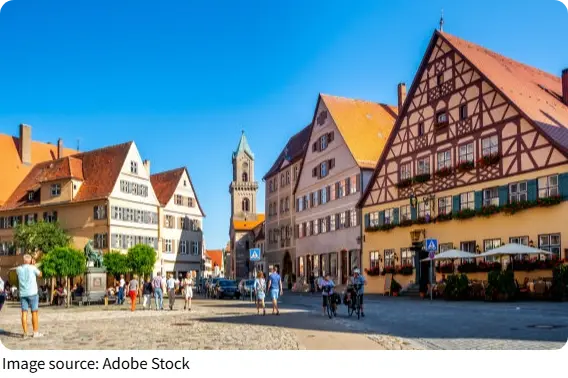
The west side row of gabled houses is pure drama. Look for the former Ratstrinkstube with its cupola and slender spire—now a favorite photo stop. Arrive early morning or golden hour for fewer people and soft light. Nearby boutiques sell regional crafts; many open 10:00–18:00 (shorter on Sunday).
Deutsches Haus
Right on Weinmarkt, this timber-framed treasure (late 1500s façade) rewards a slow look—carved figures tucked into the beams, painted details, and a noble front gable. Snap from across the square to fit the whole façade; wide-angle lenses help.
City Museum
Set inside the historic town hall ensemble, the Haus der Geschichte distills eight centuries into bite-sized galleries—trade tools, portraits, civic stories, and everyday objects. Expect €6–€8, 60 minutes; labels often in German with summaries in English. Family tip: a kid-friendly route uses playful storytelling to keep younger visitors engaged.
Gate & Mill
At the eastern edge, Nördlinger Tor anchors a stout complex; beneath it, the former Stadtmühle (city mill) feels more like a mini-fortress. Inside, the small 3D-Museum plays with optical illusions—stereograms and anaglyphs that delight mixed-age groups. Budget €5–€7, 45 minutes.
North Gate
Approaching from the north, the high Rothenberger Tor dominates the bridge over the old moat. Step back on the span for a full view of its barbican, coats of arms, and stepped gable. It’s a satisfying stop on a walls-and-water loop that frames the old town in 30–40 minutes on foot.
Southwest Gate
Climb gently to Segringer Tor, rebuilt with rounded forms in the 1600s. The area is quieter, with handsome gables along Segringer Straße and long sightlines back toward the center. Bring a pastry and take five on a bench—great for people-watching without the bustle.
Green Belt
Dinkelsbühl’s moat became a continuous Stadtpark. Follow paths that trace the walls past ponds, tree-lined promenades, and flowerbeds. It’s an almost complete circuit; allow 45–60 minutes. On Sundays (late May–summer), free concerts often play at the music pavilion—check the week’s board near the park entrance.
Baroque Palace
The Deutschordensschloss contrasts sharply with gabled houses: rusticated corners, pilasters, a proud pediment. Peek through the passage to a small ornamental interior and a compact hall known for ebullient stucco. Short visits take 15–20 minutes; combine with the nearby park loop.
Historic Complex
The former Spitalanlage (city almshouse, 13th century onward) is now an exhibition and concert venue. Step into the calm courtyard to see the preserved wooden laundry mangle and water-driven details. Rotating exhibits (often free or €3–€5) make for a 20–30 minute stop.
Spitalhof
Town Festival
Each July, the city stages Kinderzeche, a colorful ten-day celebration retelling a beloved local legend of children safeguarding their town. Expect parades in historical attire, music, and sweet-filled gift bags for little participants. Book stays 3–6 months ahead; rates can rise 20–30% during festival days.
Weekly Market
On Wednesday and Saturday mornings, the Wochenmarkt spreads across the small market square beside patrician houses. Pick up seasonal fruit, cheeses, fresh bread, and pastries for a scenic picnic on the park lawns. Most stalls wrap by 13:00; arrive before 11:00 for the best selection.
Romantic Road
Dinkelsbühl sits midway on the scenic route. Easy half-day hops: Feuchtwangen (15 minutes by car; monastic cloister and tidy square) and Wallerstein (20 minutes; hilltop vistas and a striking historic column). Buses run but are sparse; by car, you can link both towns and return by late afternoon.
Eat & Sleep
- Meals: Expect hearty soups, seasonal salads, regional noodles, and baked specialties. Mains €10–€18; café lunches €8–€12.
- Snacks: Bakeries near Weinmarkt and Marktplatz serve pretzels, fruit tarts, and dense seed breads (€1.50–€4).
- Stays: Half-timbered inns and small hotels inside the walls run €95–€160 per double. Parking is easiest just outside the gates (€2–€6/day), then a short walk in.
- Timing: April–October brings terrace life and flower boxes; December weekends glow with small seasonal stalls and lights.
Getting There
By rail, connect via Ansbach or Aalen, then a short regional train or bus to Dinkelsbühl-ZOB (walk 10 minutes to the center). By car, the A7/A6 junctions make for a smooth detour; once inside the walls, streets are narrow—use perimeter lots and enjoy the stroll.
Conclusion
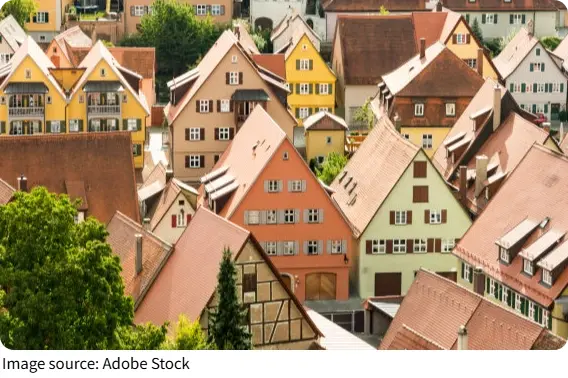
Dinkelsbühl rewards the unhurried eye: a carved beam you missed at first, a reflection of gables in the park ponds, a square that changes mood with the light. When you picture your visit, what’s the first scene you want to stand in—a quiet gate at sunrise, the market in full chatter, or a sunset lane of pastel façades? Tell me your travel month and walking pace, and I’ll help thread those moments into a seamless day.