Safer Car Distance

Caleb Ryan
| 12-05-2026
 · Automobile team
There's a moment every new driver recognizes—the car ahead suddenly slows, and for a split second, it feels closer than expected.
That small jolt of tension usually comes down to one thing: distance judgment. It's not about sharp reflexes or fast braking. It's about leaving enough space so you don't need either in the first place.
The “3-second rule” actually works
Forget guessing distance in meters. Most experienced drivers rely on time, not space.
Here's how it works:
• Pick a fixed point on the road (like a sign or pole)
• When the car ahead passes it, start counting
• If you reach that point in less than three seconds, you're too close
This method adjusts naturally to speed. Whether you're moving slowly or cruising on a highway, the timing keeps things consistent. In heavier traffic or poor weather, extending it to four or even five seconds gives you more buffer.
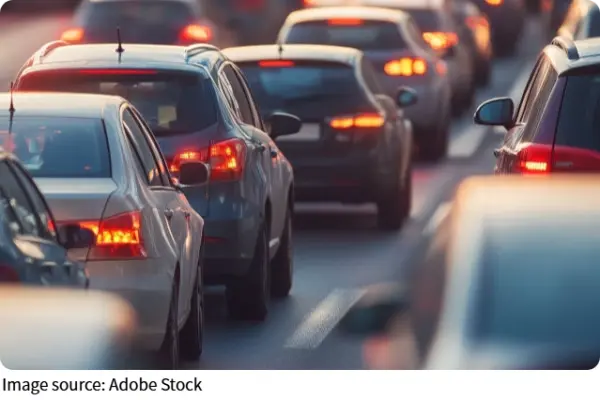
Why distance matters more than reaction speed
A lot of beginners think quick reactions will save them. In reality, reaction time has limits.
Even if you respond instantly:
• The brain still needs a moment to process
• The foot takes time to move to the brake
• The car needs distance to slow down
That's why spacing is everything. A safe gap turns sudden braking from a panic moment into a smooth adjustment.
Speed changes everything
The faster you go, the more distance you need—but not in a linear way. It increases faster than most people expect.
At higher speeds:
• Stopping distance grows significantly
• Small errors become harder to correct
• Following too closely feels manageable—until it isn't
This is why highway driving demands more discipline with spacing than city driving.
Watch patterns, not just the car ahead
Focusing only on the car directly in front limits your awareness.
Instead:
• Look two or three cars ahead when possible
• Notice brake lights early
• Anticipate slowdowns before they reach you
This habit gives you extra time to react smoothly, rather than suddenly.
Bad weather? Double your space
Rain changes road grip more than it seems at first glance.
• Tires lose traction
• Braking distance increases
• Visibility drops slightly
In these conditions, the usual three-second rule isn't enough. Stretch it out. The extra space gives you room to stay calm and controlled.
Tailgaters change the equation
Sometimes the pressure comes from behind, not ahead.
If someone is following too closely:
• Don't speed up just to “escape”
• Gradually increase your distance from the car in front
• This creates a buffer zone in case you need to slow down
It's a simple adjustment that protects you from both directions.

Getting distance right isn't about memorizing rules—it's about building a feel for space over time. At first, it might seem like you're leaving too much room. Then one day, traffic slows suddenly, and you realize you didn't have to react sharply at all. That's when it clicks.