Rear Spoilers Explained

Kwame Johnson
| 19-05-2026
 · Automobile team
A rear spoiler is often misunderstood as nothing more than a styling feature designed to make a car look sportier.
In reality, a properly engineered spoiler can improve vehicle stability by managing airflow and reducing unwanted lift at higher speeds.
As velocity increases, aerodynamic forces begin to affect how a car handles, grips the road, and maintains balance. For performance-focused vehicles, a rear spoiler serves a functional purpose that extends far beyond appearance.
Understanding the Purpose of a Rear Spoiler
A rear spoiler is an aerodynamic component mounted on the trailing section of a vehicle, commonly positioned on the trunk lid, roof edge, or rear hatch. Its role is to alter airflow as air leaves the body, minimizing turbulence and reducing unwanted lift that can compromise traction. In some situations, particularly with streamlined shapes, the rear of the vehicle may experience aerodynamic lift—a force that can subtly reduce tire contact with the road surface.
Although this may be insignificant during city driving, it becomes increasingly important during aggressive cornering or sustained high-speed travel. A spoiler works by disrupting and redirecting airflow, helping maintain stability where control matters most. Unlike wings designed to aggressively generate downforce, spoilers are often engineered to balance airflow efficiency with road usability.

The Relationship Between Spoilers and High-Speed Stability
One of the most misunderstood aspects of rear spoilers is their effect on handling. Their greatest contribution is not outright speed but predictability. At elevated speeds, a car becomes increasingly sensitive to aerodynamic instability. Sudden steering inputs, lane changes, or crosswinds may feel exaggerated if airflow underneath or around the vehicle creates lift.
A rear spoiler helps stabilize the chassis by encouraging cleaner airflow separation at the back of the car. This translates into greater confidence during high-speed maneuvers. Tire contact remains more consistent, reducing the sensation of rear-end “float” that drivers occasionally notice in vehicles lacking aerodynamic support. The effect is particularly important in rear-wheel-drive sports cars, where traction at the rear axle strongly influences corner exit performance and braking balance.
Downforce Without Misconceptions
The word downforce is frequently used in marketing, but its application is often exaggerated in street-car discussions. A spoiler can contribute to aerodynamic pressure that improves tire grip, but the magnitude depends heavily on speed, design geometry, and vehicle integration. A decorative trunk lip made primarily for styling may deliver minimal aerodynamic change, while a wind-tunnel-tested carbon fiber spoiler can measurably improve stability.
Crucially, larger size does not automatically equal more performance. Oversized aftermarket components that ignore airflow behavior can increase drag and sometimes reduce efficiency. Effective aerodynamic parts are shaped around pressure zones created by a specific vehicle body, which explains why professionally engineered spoilers are often model-specific rather than universal.
Material Choices and Why They Matter
Spoiler effectiveness is not only determined by shape but also by construction. Carbon fiber has become a preferred material for performance applications because of its combination of rigidity and low weight. Reducing mass near the rear deck helps avoid unnecessary weight penalties while maintaining structural strength.
For drivers focused on performance driving or motorsport-inspired setups, carbon fiber provides durability without excessive bulk. Fiberglass remains a common alternative due to affordability and design flexibility. It allows manufacturers to create aggressive aerodynamic shapes at a lower price point, although it is generally heavier and more susceptible to damage under repeated stress.
ABS plastic is frequently used for factory-style spoilers and cosmetic upgrades. While less performance-oriented, modern molded plastics can still improve airflow modestly when properly engineered. Their biggest advantage lies in cost efficiency and ease of installation.
Active and Fixed Spoilers: Different Philosophies of Aerodynamics
Modern performance vehicles increasingly use active aerodynamic systems rather than fixed components. An active spoiler changes position depending on speed, throttle input, or braking force. During normal driving, it may stay retracted to reduce drag and maintain efficiency. Once speed rises, electronic systems deploy the spoiler to increase aerodynamic stability.
This technology is common in premium sports cars because it balances practicality with performance. Drivers benefit from aerodynamic assistance only when conditions demand it. Fixed spoilers, meanwhile, remain permanently mounted in one position. Their effectiveness depends entirely on design precision. Although mechanically simpler, they provide predictable airflow management and remain widely used on track-focused vehicles where consistency matters more than adaptability.
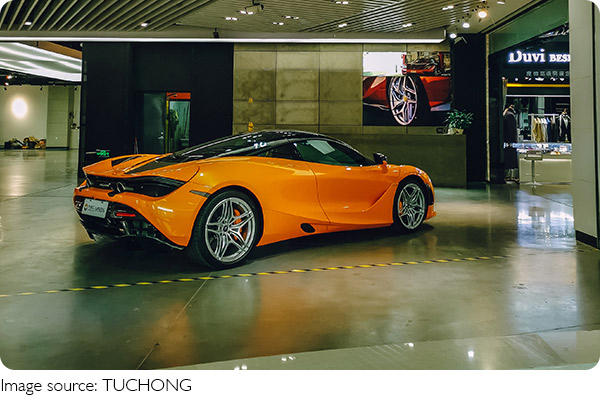
Properly engineered rear spoilers enhance stability, improve handling, and increase driver confidence at high speeds. Whether fixed or active, their design, placement, and material all influence performance. Understanding how they function allows drivers to make informed choices, combining style with aerodynamics.