Green Light Over Red Cabins

Raghu Yadav
| 27-07-2026
 · Travel team
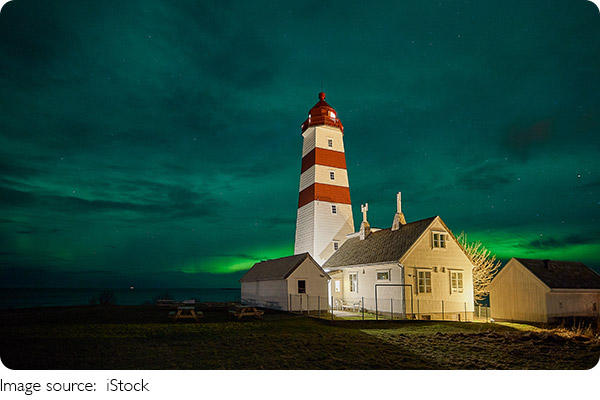
Readers, on the island of Moskenesøya in Norway's Lofoten archipelago, a tiny fishing village of red wooden cabins clings to granite rock between jagged peaks and the Norwegian Sea. Reine—with a population of roughly 300—is widely considered one of the most beautiful villages in Norway. But between September and March, something extraordinary transforms this already dramatic scene: the aurora borealis unfolds overhead in curtains of green, purple, and white light, reflecting in the still fjord water below and turning an already iconic landscape into something that feels closer to hallucination than geography.
Aurora Season
The northern lights are visible in Lofoten from late August through mid-April, with peak viewing conditions from September through March. The strongest displays typically occur between 9:00 PM and 2:00 AM, though activity can extend beyond those hours during intense geomagnetic storms. Reine's coastal position and relatively low light pollution make it an exceptional viewing location—the red rorbuer (fishing cabins) reflecting green aurora light in the fjord water is one of the most photographed Arctic scenes in the world. September and March offer the "sweet spot" balance of sufficient darkness, reasonable weather, and strong geomagnetic activity. Aurora forecast apps provide real-time alerts—flexibility in scheduling is critical, as cloud cover can change within minutes.
Reinebringen Hike
The most famous viewpoint in Lofoten—and one of the most iconic in all of Norway—sits at the summit of Reinebringen, reached via a steep stone staircase of nearly 2,000 steps built by Sherpa teams. The hike takes approximately 1.5 to 3.5 hours round trip depending on fitness level. The summit panorama encompasses Reine's harbor, surrounding fjords, jagged peaks, and the open Norwegian Sea—a view that has defined Lofoten's global image. The trail is free but physically demanding. Parking at the P2 Reine lot is paid (approximately $5 to $8), while the P1 Steffenakken lot is free but extremely limited. Avoid hiking in wet or icy conditions—the stone steps become dangerously slippery. The trail is generally safe from late May through early October.
More Trails
Beyond Reinebringen, Lofoten offers additional hikes accessible from Reine. The Ryten trail delivers elevated views over Kvalvika Beach—one of the most stunning coastal panoramas in the Arctic. The hike to Bunes Beach combines moderate terrain with arrival at a remote, dramatic shoreline. Both trails are free and take three to five hours round trip. Lofoten's weather changes rapidly—waterproof layers, sturdy boots, and windproof gear are essential regardless of the forecast.
Getting There
Two main airports serve Lofoten. Evenes Airport (EVE)—the most practical for international connections—sits on the mainland, approximately 4.5 hours' drive from Reine. Airport (BOO) connects to the Lofoten ferry, which crosses to Moskenes (near Reine) in approximately 3 to 3.5 hours. Ferry tickets cost approximately $25 to $50 per person and $90 to $140 for a vehicle. Domestic flights from Oslo or Tromsø to Evenes cost $80 to $250 one way depending on booking time. Widerøe operates regional flights from to Leknes or Svolvær within Lofoten for $60 to $180 one way.
Where to Stay
Reine's signature accommodation is the rorbuer—traditional red wooden fishing cabins converted into guest lodgings, many perched directly over the water on wooden stilts. Reine Rorbuer and Eliassen Rorbuer (in nearby Hamnøy) are the most iconic properties, with nightly rates from approximately $250 to $400+. Budget alternatives include Lofoten Å HI Hostel in the nearby village of Å (dormitory beds from approximately $40 to $60 per night) and guesthouses in Sakrisøy from $100 to $180 nightly. Booking iconic waterfront cabins requires reserving months in advance—peak aurora season (October through February) and summer midnight sun season (June through July) both command premium pricing.
Food Costs
Norway is among the most expensive countries in the world for dining. Self-catering from supermarkets (REMA 1000, Kiwi) costs approximately $30 to $40 per person per day. Casual restaurant meals cost $25 to $40 per main course. A three-course dinner for two can easily exceed $140. Budget strategy: stock up on groceries in larger towns before reaching Reine, as options in the village are limited. Many rorbuer have fully equipped kitchens—cooking your own meals from fresh local fish (available at harbors) is both affordable and rewarding.
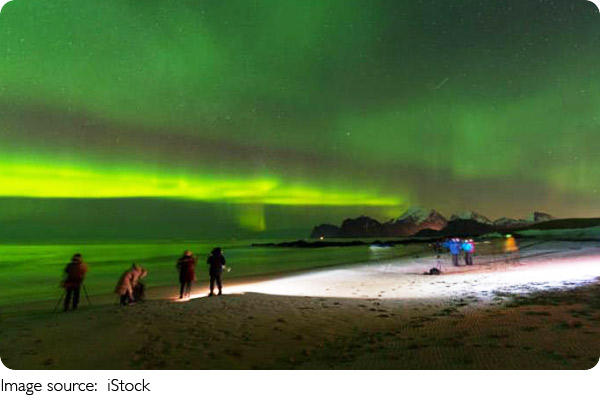
Lykkers, Reine exists at the intersection of the dramatic and the intimate—a village of 300 people set against mountains that tower overhead, fjords that reflect the sky in perfect mirror, and an aurora that turns the night into something no camera fully captures. The green light rippling above the red cabins is the image that brings most visitors to Lofoten, but it is the silence between the peaks that makes them stay longer than planned. Have you ever traveled somewhere specifically for one phenomenon and discovered that everything surrounding it was equally extraordinary?