Red Cabins, Sharp Peaks
Caleb Ryan
| 27-07-2026
 · Travel team
Readers, above the Arctic Circle off Norway's northwestern coast, an archipelago of jagged granite peaks, turquoise fjords, and tiny fishing villages connected by bridges and tunnels stretches approximately 170 kilometers into the Norwegian Sea. The Lofoten Islands hold some of the most dramatic coastal scenery in Scandinavia—mountains rising vertically from the waterline, traditional red wooden cabins (rorbuer) perched on stilts over the harbor, and a quality of light that, depending on the season, either refuses to set (June and July) or delivers green curtains of aurora across the night sky (September through March). This is a place where the Arctic feels simultaneously wild and habitable.
Reine and Hamnøy
Reine—a fishing village of approximately 300 residents at the southern end of the E10 highway—is widely considered the most photographed village in Norway. Red and white rorbuer cluster along the waterfront beneath vertical granite walls, creating a composition that defines Lofoten in the global imagination. Hamnøy—a smaller settlement connected to Reine by bridge—offers equally dramatic scenery with fewer visitors. Staying in a rorbuer provides the most authentic Lofoten accommodation—traditional cabins originally built for seasonal fishermen, now renovated with modern amenities. Reine Rorbuer and Eliassen Rorbuer are the most established options, with nightly rates from approximately $180 to $400+ depending on season and cabin size. Summer dates book out months in advance.
Summit Hikes
Reinebringen—the most iconic Lofoten hike—climbs approximately 450 meters via a reconstructed stone staircase to a viewpoint directly above Reine, delivering a postcard-perfect panorama of the village, surrounding fjords, and mountain peaks. The round trip takes approximately 2 to 3 hours. Ryten (543 meters) provides a dramatic overlook of the hidden Kvalvika Beach, with a round trip of approximately 4 to 5 hours. Offersøykammen and Mannen offer additional summit options with varying difficulty levels. All trails are free—no permits, no fees. Norwegian mountain weather changes rapidly—waterproof layers, sturdy hiking boots, and warm clothing are essential even in summer.
Northern Lights
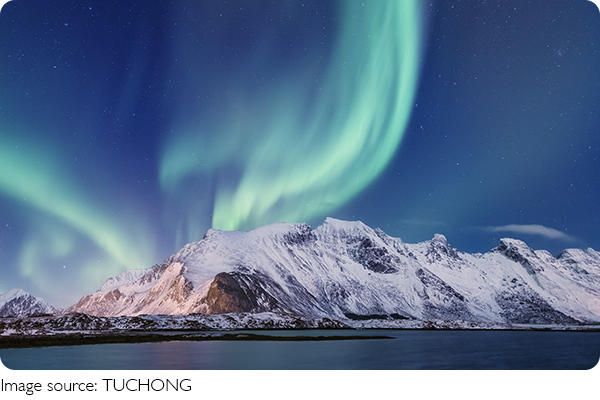
Lofoten sits within the aurora oval—the zone of highest Northern Lights activity. The viewing season runs from late August through mid-April, with September/October and February/March offering the best balance of darkness, clear skies, and manageable temperatures. Coastal beaches—Uttakleiv, Skagsanden, and Haukland—provide dark, open-sky locations ideal for aurora viewing and photography. Guided aurora tours cost approximately $100 to $180 per person, with local operators using real-time forecasting to locate clear-sky windows. The Midnight Sun—the opposite phenomenon—keeps the sky illuminated around the clock from late May through mid-July, eliminating darkness entirely.
Getting Around
Car rental is strongly recommended for exploring Lofoten—the E10 highway traverses the entire archipelago, connecting all major villages via bridges and tunnels. Daily car rental from Svolvær or Leknes starts from approximately $90 to $170, with prices rising sharply during summer peak season. The nearest airports are Leknes (LKN) and Svolvær (SVJ), with domestic flights from costing approximately $60 to $180 one way. Evenes Airport (EVE)—the main gateway with wider flight connections—is approximately 3 to 3.5 hours' drive from Reine. Public buses operate along the E10 but run infrequently, making car travel the practical choice for flexible exploration.
Where to Stay
Beyond rorbuer, Lofoten offers hostels, guesthouses, and boutique hotels across its villages. Svolvær—the largest town and unofficial capital—provides the widest accommodation range, with mid-range hotels from approximately $150 to $300 per night. Hostel dormitory beds start from approximately $55 to $80. Camping is available at designated sites from approximately $20 to $40 per night—wild camping is legal in Norway under the "right to roam" (allemannsretten), provided tents are pitched at least 150 meters from the nearest inhabited house. Farm stays and converted fisherman's cottages offer unique alternatives from $120 to $250.
Food Costs
Norway's food prices rank among the highest in Europe. A casual café lunch costs approximately $15 to $22. A mid-range restaurant dinner runs $35 to $70 per person. Coffee and pastry at a local bakery cost $7 to $12. Budget strategy: most rorbuer and hostels include full kitchens—grocery shopping at Rema 1000 or Kiwi supermarkets and self-catering keeps daily food costs at approximately $25 to $40 per person. Fresh fish purchased directly from local fishermen (seasonal) offers both a budget-friendly and culturally authentic dining experience.
Friends, the Lofoten Islands deliver a version of the Arctic that contradicts every assumption about what "above the Arctic Circle" looks and feels like—turquoise water, green mountain slopes in summer, fishing villages with centuries of continuous habitation, and a landscape so visually dense that every bridge crossing and every bend in the E10 reveals a new composition of peak, water, and sky. The islands change character completely between the endless daylight of summer and the aurora-lit darkness of winter, making them two fundamentally different destinations depending on the month of arrival. If you had to choose between the Midnight Sun and the Northern Lights—endless day or dancing sky—which version of the Arctic would you choose?