Terraces That Hold the Sky

Amit Sharma
| 27-07-2026
 · Travel team
Friends, in the mountainous northwest of Vietnam, ethnic minority communities have carved rice terraces into steep mountainsides for centuries—transforming vertical terrain into layered, curving staircases of fields that change color with the seasons. Mu Cang Chai—approximately 280 kilometers from Hanoi along National Highway 32—and Sapa—a more established hill station 320 kilometers northwest—represent two distinct approaches to the same landscape: Mu Cang Chai is wilder, less developed, and closer to the authentic rhythm of subsistence farming, while Sapa offers more tourist infrastructure, easier access, and dramatic valley views from a higher elevation.
Seasonal Colors
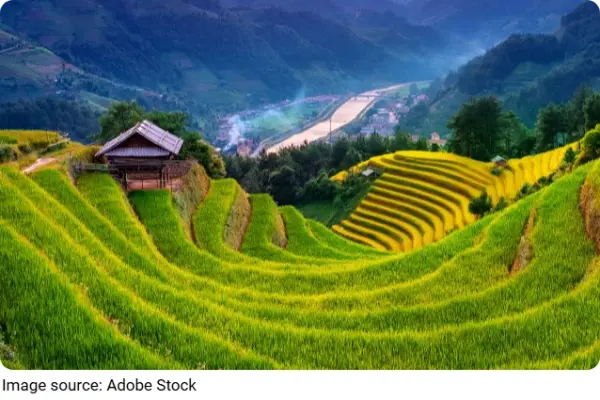
The rice terraces cycle through three dramatically different visual phases each year. The pouring season (May through June) floods the terraces, turning entire mountainsides into mirrors that reflect clouds and surrounding peaks—extraordinary for photography. The growing season (July through August) fills the landscape with vivid, electric green as the rice plants mature. The harvest season (mid-September through early October) transforms the terraces to gold as the rice ripens—this is the most popular and most crowded period. Each season offers a fundamentally different visual experience, and choosing the right window is the single most important planning decision.
Mu Cang Chai
Mu Cang Chai sits in Yen Bai Province at the base of the Hoang Lien Son mountain range. The most spectacular terraces are concentrated around three communes: La Pan Tan, Che Cu Nha, and De Xu Phinh. Mam Xoi Hill—a famous viewpoint accessible by motorbike—provides the most iconic panoramic perspective. The Khau Pha Pass, between Tu Le and Mu Cang Chai, is one of the most scenic mountain roads in northern Vietnam. Sleeper buses from Hanoi's My Dinh Bus Station take approximately 7 to 9 hours and cost $8 to $15. Private car and driver hire costs approximately $80 to $150 per day—offering flexibility to stop at viewpoints along the route. Motorbike rental within Mu Cang Chai costs approximately $8 to $15 per day—essential for reaching remote viewpoints.
Sapa Alternative
Sapa—located in Lao Cai Province at approximately 1,500 meters elevation—offers a more developed tourism experience with a wider range of accommodation, restaurants, and organized trekking tours. The overnight train from Hanoi to Lao Cai (approximately 8 hours) costs $15 to $45 depending on berth class, followed by a 40-minute bus or taxi to Sapa town. Direct sleeper buses from Hanoi cost approximately $12 to $20. Guided trekking tours through rice terraces and ethnic minority villages (Hmong, Dao, Tay communities) cost approximately $15 to $40 per person per day. The Fansipan cable car ($25 to $35 round trip) provides an aerial perspective at 3,143 meters—the highest point in mainland Southeast Asia.
Where to Stay
Mu Cang Chai accommodation is centered on homestays and small eco-lodges. Homestays with local Hmong or Thai families cost approximately $10 to $25 per person per night, typically including home-cooked meals. The Mu Cang Chai Ecolodge—the most established boutique option—offers bungalow rooms with valley views from approximately $60 to $120 per night. In Sapa, the range expands significantly: dormitory beds from $5 to $12, mid-range hotels from $25 to $80, and boutique properties like the Topas Ecolodge from $100 to $250. Booking during harvest season (September through October) requires two to three months' advance reservation.
Eating Affordably
Northern Vietnamese mountain food is simple, hearty, and extraordinarily affordable. Street food and local market meals cost $1 to $3—pho (noodle soup), banh mi (sandwiches), and com tam (broken rice plates) are available throughout. Homestay meals—included in most Mu Cang Chai accommodation rates—feature locally grown rice, seasonal vegetables, and regional specialties. Restaurant meals in Sapa town cost approximately $3 to $10. Self-catering from local markets keeps daily food costs under $10 per person. The daily budget for a full Mu Cang Chai experience (homestay with meals, motorbike rental, and incidentals) runs approximately $40 to $60 per person—making this one of the most affordable dramatic landscape experiences available anywhere in Asia.
Practical Tips
Cash in Vietnamese is essential—ATMs are scarce in Mu Cang Chai and unreliable in smaller Sapa villages. Road conditions on Highway 32 are winding and can be challenging during rain—experienced motorbike riders find the journey rewarding, but nervous riders should hire a private driver. Cell service is intermittent in mountain areas—downloading offline maps is essential. The best photography light occurs in early morning (6:00 to 8:00 AM) when mist sits in the valleys and the terraces catch low-angle sunlight.
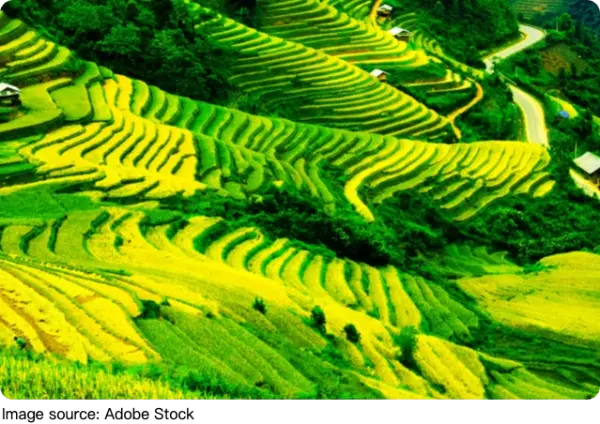
Lykkers, the rice terraces of northern Vietnam represent one of those rare instances where human cultivation has created something more visually spectacular than untouched nature—where the geometry of agricultural necessity, shaped by centuries of mountain farming, has produced a landscape that changes color with the seasons and catches light in ways that no flat field or forest canopy can replicate. Mu Cang Chai and Sapa offer two versions of the same phenomenon—one raw and remote, the other accessible and developed. If you were choosing between sleeping in a Hmong family's wooden house above a golden terrace and waking to valley mist, or riding a cable car to the highest peak in the region and looking down at the entire landscape from above—which perspective would tell you more about the place?