Cars Get Smarter

Owen Murphy
| 26-06-2026
 · Automobile team
Hi, Readers! Cars are no longer just machines that get us from one place to another.
They are quickly turning into rolling tech lounges, packed with screens, sensors, cloud services, and software that wants to stay in touch every second. That is where 5G steps in, like swapping an old garden hose for a fire hydrant.
With much faster speeds, lower delay, and stronger capacity, 5G is reshaping what in-car connectivity can do now and what it can grow into next.
A big shift is that connectivity in vehicles is no longer about basic navigation or streaming a song on the commute. Modern vehicles need constant, reliable data links for infotainment, maps, software updates, telematics, driver assistance, and communication with the world around them. 5G helps support all of that at once, even when many devices and systems are active together.
It gives car makers room to build richer digital experiences without making the whole setup feel like a crowded elevator with bad signal.
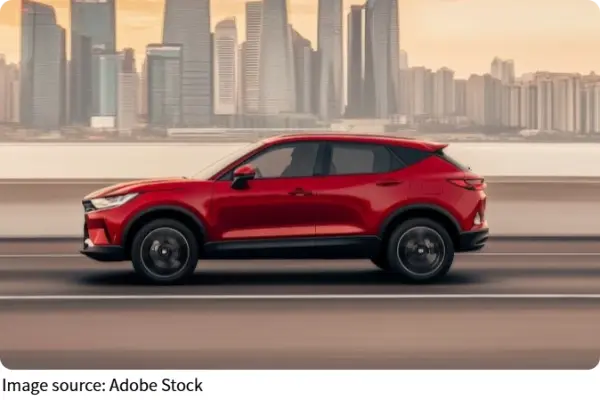
Why 5G matters in cars
Compared with earlier mobile networks, 5G brings three major advantages to connected vehicles. First is speed. Downloading maps, media, and software updates can happen much faster, which means less waiting and fewer interruptions.
Second is low latency, which is the fancy term for the delay between sending and receiving data. Lower delay matters because vehicles increasingly rely on timely information, whether that is traffic conditions, cloud-connected services, or advanced safety features. Third is greater network capacity, which helps vehicles stay connected in dense urban areas where lots of users are competing for bandwidth.
This mix lets manufacturers offer more seamless in-car services. Passengers can enjoy richer entertainment, while the vehicle itself can pull in live data for navigation, route planning, and system optimization.
It also supports over-the-air updates, which let manufacturers improve vehicle features, fix issues, and add capabilities remotely instead of requiring a trip to a service center. That is a bit like your car getting a software refresh while sitting in the driveway, quietly leveling up overnight.
More than entertainment
5G in vehicles is not just about keeping passengers busy on long rides. It also helps power connected safety and convenience features. Cars can exchange information with cloud platforms and, in some cases, with nearby infrastructure and other road users.
That can improve awareness of hazards, traffic flow, and road conditions. Connectivity also supports telematics services such as vehicle diagnostics, fleet management, and emergency response features.
Another important piece is the growing role of the car as a digital platform. As vehicles become more software-defined, connectivity becomes central to how features are delivered and maintained. Drivers may see more personalized services, subscription features, app ecosystems, and smarter voice assistants.
Carmakers can also gather performance data, with user permission, to improve future services and understand how vehicles perform in real-world conditions.
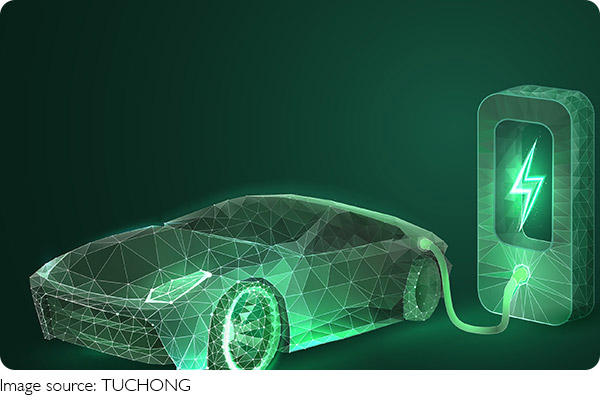
What comes beyond 5G
The road does not stop at 5G. Future development points toward even more advanced connected experiences, with tighter integration between the vehicle, the cloud, and edge computing systems. That can support more intelligent driver assistance, richer mapping, better energy management in electric vehicles, and more immersive entertainment for passengers.
As network technology evolves, vehicles may handle larger amounts of data more efficiently and respond even faster to changing conditions.
There is also a broader ecosystem angle. The future of in-car connectivity will likely involve cooperation across automakers, telecom providers, app developers, and infrastructure companies. Vehicles are becoming part of a much bigger connected environment, where roads, services, and devices can work together more smoothly.
If that sounds like your car is joining a giant digital neighborhood group chat, that is not too far off, just with fewer awkward messages.
The road ahead
For automakers, 5G opens the door to new business models and customer experiences. For drivers and passengers, it promises vehicles that are more helpful, more up to date, and more responsive. Of course, strong connectivity also brings responsibilities around privacy, security, and system reliability. Those pieces will matter just as much as raw speed.
In short, the future of in-car connectivity is about making vehicles smarter, more connected, and more adaptable over time. 5G is a major step in that journey, and what comes next could push the car even further from being a simple machine and closer to being a constantly improving digital companion.
So next time you sit in a connected car, it may be worth asking not just how fast it goes, but how smartly it listens, updates, and stays in sync with the world around it.