Camels Beat the Heat

Mukesh Kumar
| 26-06-2026
 · Animal team
Deserts are among the hottest and driest environments on Earth. With intense sunlight, limited rainfall, and scarce water sources, survival requires extraordinary adaptations.
Desert camels have evolved specialized physical features and behaviors that allow them to withstand extreme heat, conserve water, and travel long distances across arid landscapes.
Staying Active in the Heat
Unlike many desert animals that avoid the hottest part of the day, camels can remain active under intense sunlight. Their bodies are adapted to tolerate a wider range of body temperatures, reducing the need to sweat and helping them conserve valuable water during long journeys.
Natural Cooling Systems
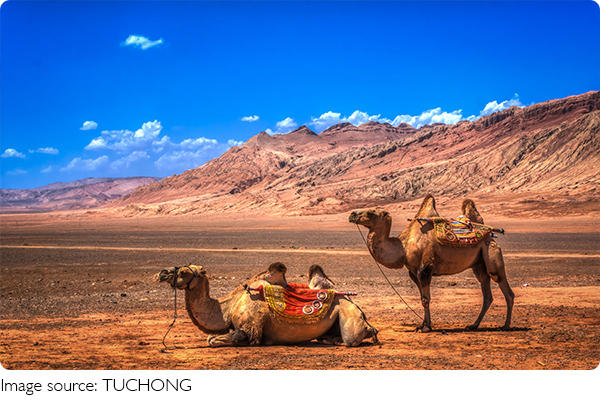
Camels have several natural adaptations that help regulate body temperature. Their light-colored coats reflect much of the sun's heat, while their thick fur acts as insulation, reducing the amount of heat that reaches their skin during the day. At night, the same fur helps retain warmth when desert temperatures drop.
Conserving Every Drop of Water
Water is essential for survival in the desert, and camels are highly efficient at conserving it. Their kidneys and digestive system are specially adapted to reduce water loss, allowing them to retain moisture more effectively than many other mammals. Camels can also tolerate significant dehydration and quickly replace lost fluids when water becomes available.
Built for Desert Conditions
Camels possess several physical features that make life in the desert easier. Their broad, padded feet help them walk across soft sand without sinking. Long eyelashes and closable nostrils protect their eyes and airways from blowing sand, while thick lips allow them to feed on dry, thorny desert plants.
Energy Stored for Long Journeys
Camels are well adapted to survive long periods when food and water are limited. Their bodies use stored energy efficiently, allowing them to travel great distances and remain active in harsh desert conditions. These adaptations help support their survival during extended periods in dry environments.
Thriving in Extreme Heat
Camels are among the best-adapted mammals for desert life. Their ability to regulate body temperature, conserve water, withstand dehydration, and move efficiently across sandy terrain allows them to survive where many other animals cannot. These remarkable adaptations continue to make camels one of the most successful inhabitants of the world's deserts.

Desert camels are uniquely equipped to survive some of the most challenging environments on Earth. From conserving water and regulating body temperature to protecting themselves from sand and storing energy for long journeys, every adaptation contributes to their survival. These remarkable characteristics demonstrate the extraordinary resilience of camels and highlight how specialized adaptations enable life to flourish even in extreme desert conditions.