Iceland Aurora Falls

Pankaj Singh
| 01-08-2026
 · Travel team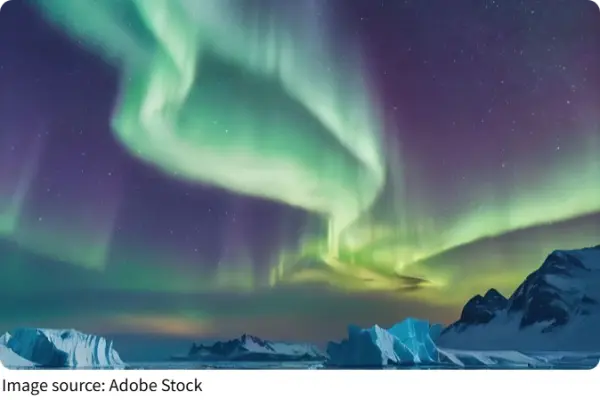
Skógafoss is one of Iceland’s most famous waterfalls, but visiting it under the green aurora borealis requires careful planning. Located on Iceland’s South Coast, this 60-meter waterfall combines powerful water flow, dark winter skies, and wide open landscapes that create one of the country’s most dramatic natural scenes. However, seeing both Skógafoss and the northern lights on the same trip is never guaranteed. Weather, cloud cover, and timing decide everything.
For Lykkers, the smartest plan is to stay near the South Coast for at least 3 nights, visit Skógafoss during daylight, and reserve several evenings for aurora chances. This gives you a realistic balance between scenery, transportation, and weather flexibility.
Plan Your Skógafoss and Aurora Trip
Skógafoss is located near the small village of Skógar, about 155 kilometers southeast of Reykjavik. The waterfall is easy to reach compared with many Iceland attractions, but winter conditions can change travel plans quickly.
Choose the right season and timing
The best period for combining Skógafoss with the aurora borealis is from October to March.
Each season offers a different experience:
∙ October to November: fewer visitors, longer darkness, and a good chance for aurora viewing
∙ December to February: the strongest winter atmosphere with snow possibilities, but shorter daylight and more difficult roads
∙ March: longer daytime hours with continued aurora opportunities
The northern lights are usually most visible between around 22:00 and 02:00, although they can appear at any time during dark hours. A clear sky and low light pollution matter more than a specific hour.
Do not plan the entire trip around one night. Aurora sightings depend on solar activity and weather conditions. Staying 3 to 5 nights greatly improves your chances.
Choose transportation based on winter conditions
From Reykjavik to Skógafoss:
∙ Distance: about 155 kilometers
∙ Driving time: around 2 to 2.5 hours in good conditions
∙ Route: mainly along Iceland’s Route 1
A rental car is the most flexible option. Typical prices:
∙ Small car: around EUR 50 to 120 per day
∙ 4x4 vehicle: around EUR 100 to 250 per day
A 4x4 vehicle is worth considering between November and March because snow, ice, and strong winds may affect roads.
For travelers who prefer not to drive, South Coast day tours from Reykjavik often include Skógafoss. Prices commonly range around EUR 90 to 180 per person, but these tours usually return to Reykjavik the same day, leaving less flexibility for aurora chasing.
A better strategy is staying overnight near Skógar, Hvolsvöllur, or Vík. This reduces driving at night and gives you more time in the area.

Make the Waterfall and Aurora Experience Work
The biggest mistake travelers make is treating Skógafoss as a quick photo stop. The waterfall area deserves different timing because daylight and darkness create completely different experiences.
Visit Skógafoss with a practical schedule
A comfortable 3-day South Coast plan:
Day 1:
Arrive in Reykjavik, collect your rental car, and drive toward the South Coast. Stay near Hvolsvöllur, Skógar, or Vík.
Day 2:
Visit Skógafoss in the morning or afternoon when natural light reveals the waterfall’s full scale. Continue to nearby attractions such as black volcanic beaches, glaciers, or coastal viewpoints.
After sunset, check aurora forecasts and cloud conditions. Return to a dark area away from town lights.
Day 3:
Explore more of the South Coast before returning to Reykjavik.
This schedule avoids the common problem of driving long distances after dark while trying to find the northern lights.
Know the best places and conditions for aurora viewing
Skógafoss itself can work for aurora photography because the surrounding area is relatively dark. However, the waterfall lights and nearby visitors may affect photos.
For the clearest experience:
∙ Move away from artificial lights
∙ Check Iceland’s weather forecast before leaving
∙ Look for clear skies rather than only strong aurora activity
∙ Wait patiently because conditions can change quickly
Bring a tripod if photography is important. Long exposure images usually capture colors more clearly than the human eye.
Prepare for the real Iceland conditions
Many visitors underestimate the environment.
Pack:
∙ Waterproof jacket and pants
∙ Warm layers
∙ Gloves and hat
∙ Waterproof hiking shoes
The waterfall area can become slippery because of mist and ice. The path to the viewing area is short, but winter surfaces require careful walking.
Common mistakes include:
∙ Visiting only one winter night and expecting aurora
∙ Driving unfamiliar roads during storms
∙ Wearing normal shoes near icy viewpoints
∙ Ignoring wind warnings
Understand the budget before booking
A realistic 4-day trip from Reykjavik for one traveler:
∙ Rental car: around EUR 200 to 500
∙ Fuel: around EUR 80 to 150
∙ Accommodation: around EUR 120 to 300 per night
∙ Food: around EUR 40 to 80 per day
∙ Day tours if needed: around EUR 90 to 180
Iceland is expensive, so planning accommodation and transportation early makes a major difference.
Skógafoss and the green aurora borealis create one of Iceland’s most memorable natural combinations, but the experience depends on smart timing rather than luck alone. Stay several nights, keep your schedule flexible, and treat the waterfall and northern lights as two separate highlights that come together when nature allows. For Lykkers, that patience is what turns a beautiful Iceland trip into a truly unforgettable one.