Why Japanese Curry Differs

Kenji
| 29-10-2026
 · Cate team
Japanese curry feels familiar at first glance, yet the moment you take a spoonful, it stands apart from many other curries in the world.
Its color is deeper, the texture is thicker, and the flavor leans mellow, savory, and gently sweet rather than sharply spiced. The curry roux is a big part of that, along with sweet vegetables, a thick texture, and gentle seasoning.
The Roux Changes Everything
Instead of building the dish only from ground spices, Japanese curry often uses a roux block or a homemade flour-and-butter base. Store-bought blocks combine curry powder, flour, oil, and flavorings. The roux melts into the simmering liquid and creates a thick, glossy sauce that coats the rice.
This is very different from looser curry styles that rely mainly on spices, coconut milk, or yogurt for structure. The roux also softens the edge of the spices, so the final dish tastes rounder and more approachable. That is why Japanese curry is often described as mild, deep, and satisfying rather than fiery or intensely aromatic.
A Flavor Built on Everyday Comfort
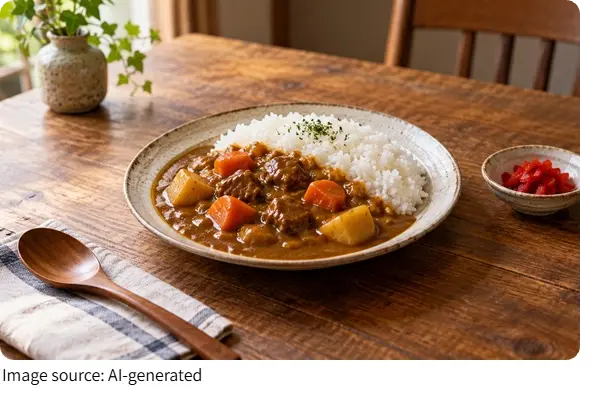
The flavor profile also sets it apart. A typical pan begins with onion, carrot, and potato, ingredients that bring natural sweetness and a homestyle feeling. Chicken or other meat adds richness, and the curry slowly comes together into a complete one-bowl meal rather than a sharply spice-forward sauce.
Many Japanese curry recipes also include grated apple, honey, or similar ingredients to create balance and a subtle sweetness. The result is layered flavor without harshness, making it especially popular as a family meal.
Texture Matters as Much as Spice
Another reason Japanese curry feels unique is its texture. It is thick enough to sit neatly beside or over rice, almost like a smooth stew. The vegetables become tender as they simmer, and the sauce clings to every bite.
Carrots and potatoes are often cut into generous chunks, which adds to that hearty, filling character. The eating experience is not just about heat or spice, but about warmth, softness, and a slow-cooked depth that makes the dish feel deeply comforting.
Balanced Seasoning, Not Just Heat
Japanese curry usually focuses on balance rather than intensity. You still get spice, but it is often gentler and blended into the background. The dish is easy to adjust depending on the curry roux used, since some blocks are milder and others are deeper and richer.
Store-bought roux blocks usually come in mild, medium-hot, and hot versions. That flexibility helps explain why Japanese curry appeals to so many people. It invites customization while keeping its signature smoothness and savory sweetness intact.
Between Curry and Stew
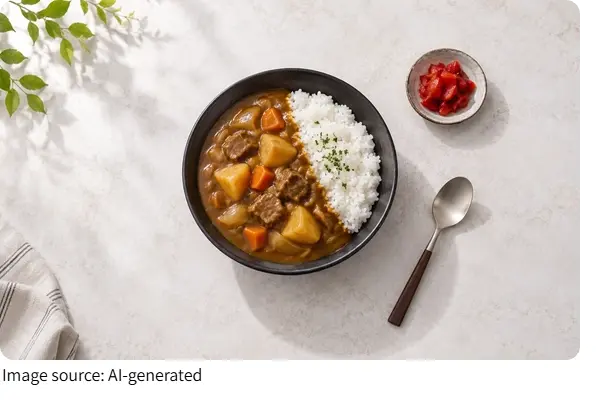
Part of what makes Japanese curry different is that it sits in a cozy space between curry and stew. It is usually served with rice, made with familiar vegetables, and designed to be filling and approachable. On the side, it usually comes with fukujinzuke, a mix of pickled vegetables, or rakkyo, pickled shallots, which add a sharp contrast to the rich sauce.
A Favorite Across Japan
Curry first appeared in Japanese cookbooks in 1872, and today it is one of the most popular daily dishes in Japan. By 2000, it was eaten more often than sushi or tempura. It was first served in school meals in 1948.
The same sauce now shows up in other forms too. Curry udon and curry soba use a thickened curry broth with noodles, and curry bread, a filled and fried bun, was introduced in 1927.
If you have only tried thinner or more spice-driven curries, a mild roux block is an easy place to start. Turn off the heat before stirring it in so it melts without lumps. Leftovers keep well, as the sauce thickens overnight; add a splash of water when reheating.