Reforma Made Easy

Pankaj Singh
| 17-08-2026
 · Travel team
Hello, Lykkers! If Mexico City had a living room, Paseo de la Reforma would be it.
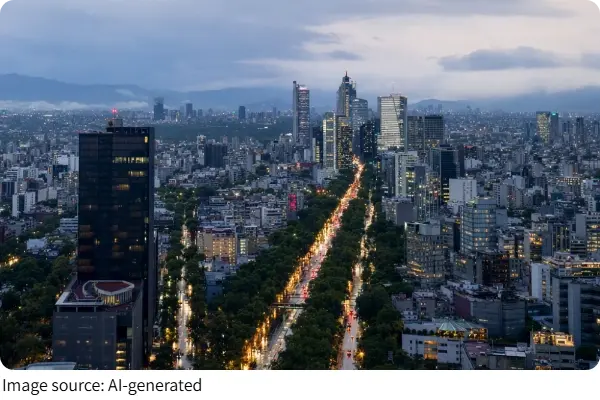
This broad, elegant avenue cuts through the city like a shiny ribbon, lined with monuments, towers, museums, and leafy stretches that somehow make the whole place feel both grand and easy to enjoy.
Originally designed as a formal boulevard connecting the historic center with Chapultepec, it has grown into one of the city's most important and most recognizable streets.
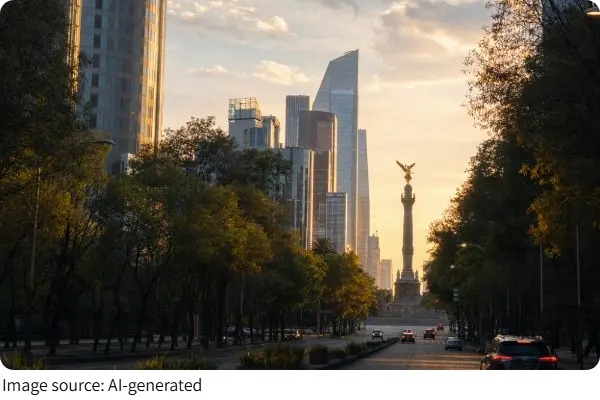
Paseo de la Reforma is famous for its scale and for the landmarks gathered along it like trophies on a shelf. One of the most recognized is the Angel of Independence, the golden monument that rises above a busy roundabout and seems to watch the city hustle below. Along the avenue, you will also find major office towers, public art, fountains, and access to important cultural spots. It is not just a road. It is a stage where the city shows off.
What To See
One of the best things about Reforma is that it keeps handing you reasons to stop walking. The Angel of Independence is a must-see and free to view from outside. The Diana the Huntress Fountain is another iconic stop, and Chapultepec Park at the western end opens up a giant green escape with museums, lakes, and walking paths.
The National Museum of Anthropology, close to Reforma inside Chapultepec Park, is one of the city's standout attractions. Admission is usually about USD 5, and it generally opens from morning to late afternoon, often around 9:00 AM to 6:00 PM, with one weekly closing day, so it is smart to check before heading out.
If you like city views, Torre Latinoamericana is not directly on Reforma but easy to combine with your day. Observation deck tickets are often around USD 11 to USD 12. Reforma itself is also known for public sculptures and modern buildings, so even a simple stroll feels like flipping through a glossy city album.
Getting Around
Reforma is easy to reach from many parts of Mexico City. By car from the historic center, the ride can take about 10 to 20 minutes depending on traffic, which in this city can behave like a cat with opinions. The Metro is one of the cheapest options, with single rides costing well under USD 1. Several stations connect conveniently to areas near Reforma, and the Metrobús also runs along parts of the avenue, making it especially useful for hopping between landmarks.
From Mexico City International Airport, a taxi or ride app trip to Reforma usually takes about 25 to 40 minutes depending on traffic. The cost often falls around USD 10 to USD 20. If you prefer a tighter budget, public transport is possible, though less convenient with luggage. Walking is one of the best ways to enjoy the avenue itself, especially during daylight hours when the monuments, trees, and architecture are easiest to appreciate.
Paseo de la Reforma
Costs And Staying Nearby
A walk along Paseo de la Reforma is free, which is excellent news for anyone whose travel budget is already making dramatic speeches. Many monuments and public spaces along the avenue are also free to enjoy. Museum visits vary in cost, but several major attractions nearby remain reasonably priced by big-city standards.
Accommodation around Reforma covers a wide range. Budget stays in nearby areas can start at about USD 30 to USD 60 per night for simple hotels or hostels. Mid-range hotels usually land around USD 80 to USD 150 per night, while upscale options along or near the avenue can run from USD 180 upward. Staying nearby is convenient if you want early access to Chapultepec, museums, and central business and dining areas without spending half your day commuting.
Best Way To Enjoy It
The smartest plan is to treat Reforma like a long, rewarding walk rather than a single stop. Start near Chapultepec Park, visit the museum area, then move eastward past monuments and major plazas. Mornings are pleasant for walking, and weekends can feel especially lively. Some stretches become more pedestrian-friendly during special city activities, which makes the avenue feel less like a road and more like a giant public promenade.
Paseo de la Reforma works because it gives you the big-city sparkle without making you work too hard for it. You get history, architecture, culture, green space, and people-watching all bundled into one long boulevard. If you are planning a Mexico City trip, put it high on your list, wear comfortable shoes, and give yourself time to wander a little, because Reforma is the kind of place that rewards curiosity at every turn.