Simple Ice Cream Best

Pardeep Singh
| 28-07-2026
 · Cate team
Hello, Lykkers! You probably remember that one scoop that stopped you mid-bite, a spoonful so creamy and pure it felt like a revelation.
Chances are, it came from a small batch with just a handful of components. Most commercial versions load up with stabilizers, emulsifiers, and flavor boosters, but the true stars rely on a short list: cream, milk, sugar, eggs, and maybe a vanilla pod.
Why does simplicity work so well?
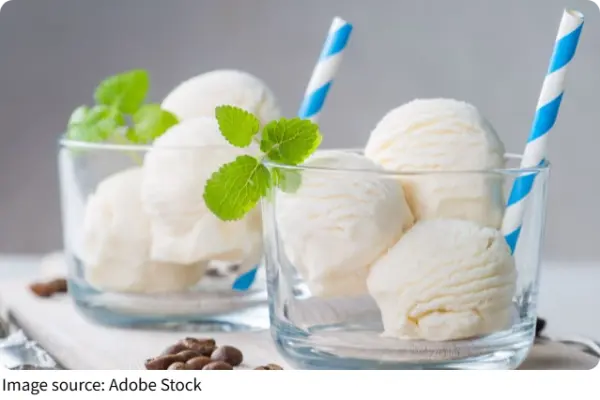
The Science of Simplicity
The science is straightforward. Ice cream is a frozen emulsion of butterfat droplets surrounded by ice crystals and air bubbles. When you add too many additives, the texture becomes gummy or icy. A minimal recipe forces the maker to perfect the base. High butterfat content from cream yields richness, while sugar lowers freezing point for a soft scoop. Egg yolks provide lecithin, a natural emulsifier that keeps butterfat evenly distributed. No need for gums or stabilizers.
The Classic French Vanilla Base
Consider the classic French vanilla base. Use 2 cups heavy cream, 1 cup whole milk, ¾ cup granulated sugar, 5 large egg yolks, and a scraped vanilla bean. That is it. Heat cream and milk with sugar, temper into yolks, cook to 170°F, then chill and churn. The result is denser and more flavorful than any industrial product because the butterfat globules stay small and uniform. Emulsifiers like lecithin work better than synthetic agents when handled correctly.
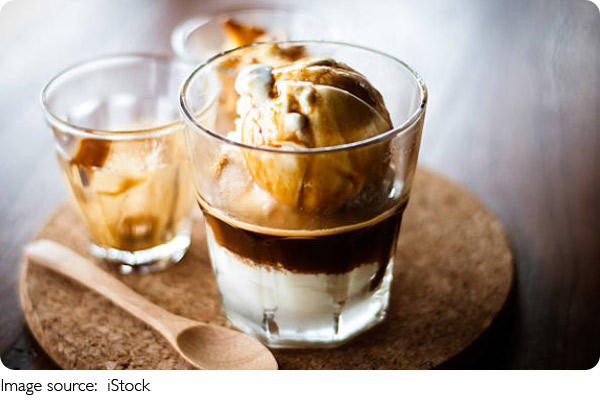
Flavor Clarity
Another advantage is flavor clarity. Each ingredient has a role, and none masks another. Real vanilla stands out. Fresh cream tastes sweet and grassy. You notice the eggy custard undertone. When companies add corn syrup solids, carrageenan, or mono- and diglycerides, they dilute those natural notes. The human palate detects these differences. A study from the University of Pennsylvania showed that people prefer simple formulations in blind tastings, rating them higher for creaminess and flavor intensity.
Custard vs. Philadelphia Style
Custard-style ice creams (French) are the most common minimal approach. But some makers skip eggs entirely for a Philadelphia style: cream, milk, sugar, flavorings. That yields a lighter, cleaner taste. Both rely on the same principle: use high-quality dairy with enough butterfat—at least 18% for a premium scoop. Lower grade bases need thickeners to compensate, which weakens the final product.
Churning and Storage Tips
Churning technique matters too. Minimal recipes require slow, careful churning to incorporate air without overworking. Overrun (the amount of air beaten in) should stay under 30% for a dense, satisfying bite. Commercial tubs often exceed 80% overrun, which makes them airy but lacking. Homemade or artisan batches rarely exceed 40%.
Storage also impacts quality. Simple ice cream without stabilizers can suffer from ice recrystallization more quickly. To mitigate, store it in an airtight container, press plastic wrap against the surface, and keep the freezer temperature at 0°F or lower. Eat within two weeks for best texture.
Embracing Minimalism
So next time you see a pint with five ingredients or fewer, grab it. It means the maker trusts the basics. You are getting the purest expression of cream and sugar transformed into a frozen delight. If you want to try making your own, start with that French vanilla base. You likely already have everything in your kitchen.
Minimal ice cream is not just trend. It is a return to craft. The best scoop you ever had probably contained nothing more than milk, cream, sugar, eggs, and vanilla. That is all it ever needed.