Malabo Harbour Planned
Finnegan Flynn
| 12-08-2026
 · Travel team
Malabo harbour sits on the northern edge of Bioko Island, connecting Equatorial Guineas capital with the Gulf of Guinea. For Lykkers, the important point is that this is a working port, not a purpose-built waterfront attraction. You should not plan an entire day around entering the harbour.
Instead, combine an approved public harbour viewpoint with central Malabo and a short coastal drive. Two nights are sufficient for this focused visit, while three nights are safer if weather affects visibility. Excluding international flights, a comfortable two-night trip may require roughly 180,000 to 350,000 Central African CFA francs per person, depending heavily on hotel and private transport.
Plan Before Landing
Malabo is not a destination where you should improvise every transfer after arrival. Accommodation, airport transport, and preferably a driver should be organized beforehand, particularly when the harbour is your main objective.
Choose December to February
Malabo has an equatorial climate with high humidity and substantial rainfall. December through February is generally among the more practical periods for outdoor sightseeing because rainfall is lower than during the wettest months.
Temperatures remain warm, commonly reaching the upper 20s Celsius during the day. Start outdoor sightseeing around 08:00 and reduce extended walking around midday. Carry at least one litre of water, sun protection, and a lightweight waterproof layer.
September and October are generally much wetter. If photography and broad harbour visibility matter, avoid making these months your first choice.
Stay centrally for two nights
Malabo International Airport lies only around 8 to 10 km from central Malabo. Under normal conditions, allow approximately 15 to 25 minutes by vehicle.
Accommodation is relatively expensive compared with many nearby destinations. Basic options may occasionally fall below 50,000 CFA francs nightly, while established mid-range and higher-category hotels can easily reach approximately 70,000 to 140,000 CFA francs or more per room. Check current rates before committing because availability and pricing fluctuate significantly.
Budget roughly 140,000 to 280,000 CFA francs for two nights if you want a comfortable private room. Staying centrally reduces sightseeing transport and makes a short Malabo itinerary much easier.
Arrange the airport transfer through your hotel or a reputable local operator. Rather than assuming a street-taxi price, request the complete fare in advance. For a private driver covering several sightseeing stops, ask for a half-day quotation and confirm whether waiting time and fuel are included.
Carry CFA francs
The local currency is the Central African CFA franc, abbreviated XAF. Cash is important for smaller expenses, and you should not assume every business accepts international cards.
For one sightseeing day, keep roughly 30,000 to 60,000 CFA francs available beyond your hotel cost. A practical allowance is around 10,000 to 20,000 CFA francs for meals and drinks, with the remainder covering transport and unexpected expenses. Private-driver costs vary considerably, so obtain the actual quotation before arrival rather than relying on a fixed online estimate.
Make the Harbour Worthwhile
The efficient route is simple: harbour viewpoint early, central Malabo afterward, lunch around midday, then a flexible coastal afternoon. This avoids wasting hours trying to access operational port areas.
See the harbour around 08:30
Ask your hotel or driver which public waterfront viewpoint currently provides a legal view toward Malabo harbour. Access conditions around working infrastructure can change, so local confirmation is more reliable than following an old map.
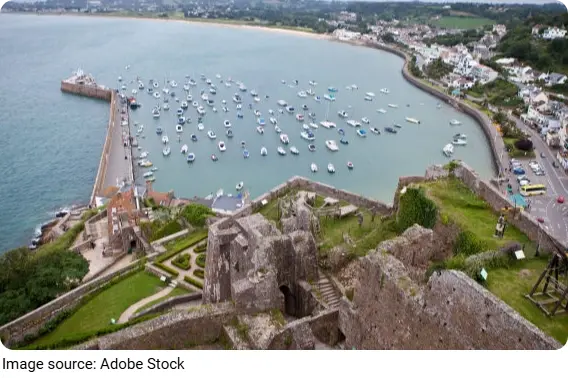
Spend approximately 30 to 45 minutes here. The harbour works visually because ships and port infrastructure sit against the Gulf of Guinea and Biokos steep volcanic landscape.
Photography requires particular care. Do not photograph security personnel, controlled port installations, government facilities, or other sensitive infrastructure unless you know photography is permitted. Never enter a fenced or controlled area for a better angle.
A drone should not be considered a shortcut to the aerial panorama. Obtain current authorization information before bringing or operating one. If your primary goal is professional aerial photography, arrange permissions before the trip rather than attempting to solve them after arrival.
Give central Malabo three hours
Move into the centre around 09:30. Malabo is compact enough that approximately two to three hours provides a useful introduction.
Walk in short sections rather than continuously. Tropical heat and humidity make 30 to 45 minute outdoor periods more comfortable. Add shaded breaks and allow roughly one hour for lunch.
Budget around 5,000 to 10,000 CFA francs for a straightforward meal, with hotel and more formal dining potentially costing more. Carry smaller notes for minor purchases and transport.
If you want photographs of people, ask first. The same caution applies near administrative buildings and transport infrastructure.
Keep 13:30 to 16:30 flexible
Use the afternoon as a weather buffer. If morning visibility was poor, ask your driver whether returning to an approved harbour viewpoint is worthwhile. Otherwise, take a short coastal drive or continue exploring permitted public areas of Malabo.
Do not schedule a distant Bioko Island excursion on the same day. Longer journeys deserve a separate day and may involve additional local access requirements. Confirm these through your accommodation or an established operator.
Malabo harbour is worth roughly half a day, not an entire holiday. Lykkers should stay two nights, reserve approximately 180,000 to 350,000 CFA francs for a comfortable short visit, and spend only 30 to 45 minutes at an approved harbour viewpoint. The strongest experience comes from combining the port landscape with central Malabo while keeping photography, access, weather, and transport firmly under control.