Pumpkin Benefits for Health

Zoe
| 15-09-2026
 · Cate team
Pumpkin is a versatile vegetable with a naturally vibrant color, mild sweetness, and soft texture.
It provides carotenoids, vitamins, minerals, and dietary fiber while being relatively low in calories. These qualities make it an easy ingredient to incorporate into a variety of meals.
Rather than relying on pumpkin for a single health effect, its value comes from the combination of nutrients it contributes to an overall varied eating pattern.
Rich in Carotenoids
Pumpkin's orange color comes partly from carotenoids, including beta-carotene. The body can convert beta-carotene into vitamin A, an essential nutrient that plays important roles in normal vision and immune function.
The National Institutes of Health Office of Dietary Supplements states, “Vitamin A is important for normal vision, the immune system, reproduction, and growth and development.”
Including pumpkin in meals can therefore provide provitamin A carotenoids as part of a varied diet.
Provides Important Nutrients
Pumpkin contains several vitamins and minerals, including vitamin C and potassium. These nutrients support normal physiological functions and contribute to overall nutritional intake.
Potassium is essential for normal cell function, while vitamin C contributes to normal immune function and other processes in the body. The precise nutritional content of pumpkin varies according to the variety and preparation method.
For this reason, pumpkin is best viewed as one nutritious food among many rather than as a stand-alone source of any particular nutrient.
Contributes Dietary Fiber
Pumpkin also provides dietary fiber, which naturally occurs in plant foods. Fiber contributes to a nutritious eating pattern and can be obtained from a wide range of vegetables, fruits, legumes, and whole grains.
Including pumpkin alongside these foods can add variety while helping create meals with a broader range of plant-based nutrients.
A Relatively Low-Calorie Vegetable
Plain pumpkin is relatively low in calories, making it useful for meals where you want to add flavor, color, and texture without relying on large amounts of energy-dense ingredients.
Preparation can significantly change the nutritional profile of a pumpkin dish. Roasting, steaming, mashing, or blending pumpkin can keep the ingredient simple, while large amounts of added sugar, salt, or other calorie-dense ingredients can make the finished dish substantially different from plain pumpkin.
Simple Ways to Enjoy Pumpkin
Pumpkin's mild flavor makes it suitable for many types of meals. It can be:
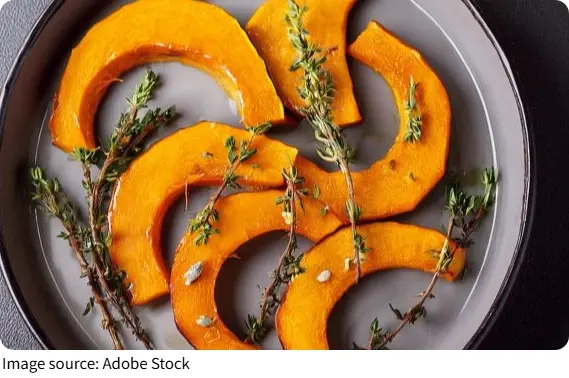
- Roasted with herbs and vegetables
- Mashed as a side dish
- Blended into soups
- Added to grain or legume bowls
- Mixed into oatmeal or other breakfast dishes
- Used in homemade sauces
These options make it easy to enjoy pumpkin without complicated preparation.
Pumpkin is a nutritious and adaptable vegetable that contributes carotenoids, vitamins, minerals, and dietary fiber to the diet. Its relatively low calorie content and versatility make it a practical ingredient for everyday meals.
The best approach is to enjoy pumpkin as part of a diverse eating pattern rather than treating it as a special health food. Pairing it with a wide variety of vegetables, fruits, whole grains, legumes, and other nutrient-rich foods can help support overall dietary quality.