Car Body Materials Guide

Kwame Johnson
| 13-08-2026
 · Automobile team
A modern car body is not built from a single material. Engineers choose different materials for different parts of the vehicle because each section has its own job.
Some areas must provide maximum strength during a collision, others must reduce weight, and many must remain affordable to manufacture and repair.
The result is a carefully planned structure that balances safety, efficiency, durability, and cost.
Steel: The Structural Backbone
Steel remains the foundation of most passenger vehicles. It offers high strength, good durability, and efficient manufacturing, making it well suited to large-scale production. The central body structure of many cars relies on steel to maintain rigidity and support long-term everyday use.
Modern vehicles use several grades of steel rather than one uniform type. High-strength and ultra-high-strength steels are placed in critical structural areas where stiffness and protection are most important, while other sections use steel that is easier to form during production. This allows engineers to improve structural performance without adding unnecessary mass.
Steel is also widely supported by repair facilities, which helps keep maintenance and repair procedures practical and cost-effective.
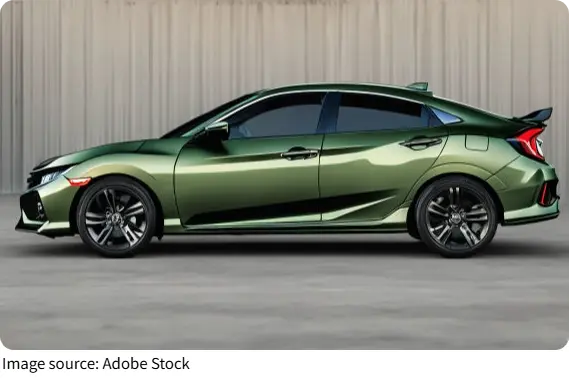
Aluminum: Reducing Weight
Aluminum is used when lowering vehicle weight becomes a priority. Because it is significantly lighter than steel, it can improve efficiency, handling, and overall performance. It is commonly found in hoods, doors, suspension components, and, in some vehicles, major structural sections.
A lighter body requires less energy to move, which benefits both conventional and electric vehicles. Reduced weight can also improve braking response and suspension performance.
The trade-off is cost. Aluminum is generally more expensive than steel and requires different manufacturing and repair techniques. Joining, shaping, and repairing aluminum components often demands specialized equipment and training.
Composite Materials: Specialized Performance
Composite materials, including carbon-fiber-based and fiberglass-reinforced components, are used where very low weight and high stiffness are especially valuable. These materials are common in high-performance vehicles and specialized automotive applications.
Composites allow designers to create complex shapes while keeping weight to a minimum. Their stiffness can enhance structural performance, and their low mass can improve acceleration, braking, and handling.
The main limitation is expense. Composite production is typically more costly and time-consuming than metal manufacturing, and repairs may require specialized procedures. For that reason, full composite body structures are uncommon in most mass-market vehicles.
The Mixed-Material Strategy
The most important trend in modern automotive design is the intelligent combination of materials. A vehicle may use high-strength steel for the passenger safety cell, aluminum for outer panels and selected structural parts, and composites for specific performance-oriented components.
This approach allows engineers to place each material where it delivers the greatest benefit. Safety requirements, vehicle type, production volume, repair infrastructure, efficiency targets, and cost all influence these decisions.
A family sedan designed for affordability will use materials differently from a luxury coupe or a high-performance sports car. The objective is not to find a single perfect material, but to achieve the best overall balance for the vehicle’s intended purpose.

Modern car bodies are the result of material engineering rather than a single material choice. Steel provides strength, durability, affordability, and repairability. Aluminum reduces weight and supports greater efficiency. Composites deliver exceptional lightness and stiffness where performance goals justify the added complexity and cost.
Beneath the paint of every modern vehicle is a carefully engineered combination of materials, with each section selected for a specific function. Understanding this design strategy shows that automotive engineering is not only about appearance—it is about achieving the right balance of safety, efficiency, performance, durability, and manufacturing practicality.