Easy Classic Tiramisu Recipe

Mukesh Kumar
| 13-08-2026
 · Cate team
Good day, Lykkers! Tiramisu is one of those desserts that feels elegant without requiring complicated baking. Layers of espresso-soaked ladyfingers, silky mascarpone cream, and cocoa powder come together in a chilled dessert that is rich, airy, and deeply aromatic.
This easy tiramisu recipe skips the oven entirely. Instead, the dessert is assembled in a 9×13-inch dish and rested in the refrigerator, allowing the ladyfingers to soften while the mascarpone mixture becomes firm enough to slice neatly. With a little preparation and several hours of chilling, this recipe makes an impressive dessert for gatherings, celebrations, or a relaxed dinner at home.
Ingredients
For the Mascarpone Cream
- 6 large egg yolks
- 1 cup (207 g) granulated sugar
- 1¼ cups (285 g) mascarpone cheese
- 1¾ cups (420 mL) cold heavy whipping cream
For the Ladyfinger Layers
- 1 package ladyfingers, approximately 17.5 ounces
For the Espresso Soaking Mixture
- 1 cup (240 mL) hot water
- 6 tablespoons espresso powder
For Finishing
- 1½ tablespoons unsweetened cocoa powder, for dusting
Equipment
A few basic tools make the preparation easier:
- 9×13-inch baking dish
- Double boiler or heatproof metal bowl
- Large mixing bowl
- Electric mixer
- Whisk
- Rubber spatula
- Parchment paper, optional
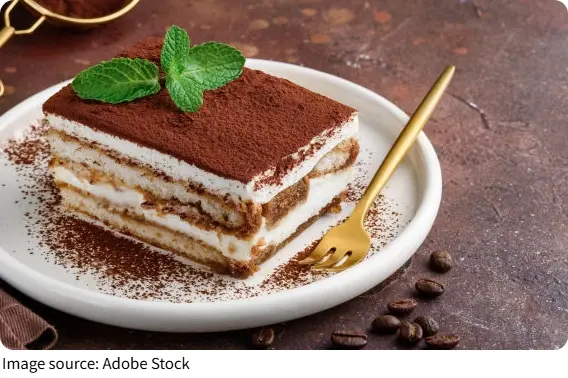
How to Make Tiramisu
1. Prepare the Baking Dish
- Start with a 9×13-inch baking dish.
- For a traditional presentation, the tiramisu can be assembled and served directly from the dish. If the goal is to lift out the entire dessert and display its layers, line the pan with parchment paper, leaving enough paper hanging over the sides to act as handles.
- A cardboard cake rectangle placed underneath the tiramisu can also provide additional support when lifting the chilled dessert from the pan.
2. Cook the Egg Yolks and Sugar
- Place the 6 egg yolks and 1 cup (207 g) sugar in the top of a double boiler.
- If a double boiler is unavailable, use a heatproof metal mixing bowl. The bottom of the bowl should not touch the water.
- Whisk the egg yolks and sugar together. The mixture may initially look thick or slightly grainy, but it will loosen as it warms.
- Continue whisking and cooking for approximately 5–8 minutes. The mixture should become noticeably thicker, increase in volume, and turn a pale yellow color. Most of the sugar should dissolve.
- Once ready, remove the bowl from the heat and allow the mixture to cool until it is slightly warmer than room temperature.
3. Whip the Cream
- While the egg mixture cools, pour 1¾ cups (420 mL) cold heavy whipping cream into a large mixing bowl.
- Using an electric mixer, whip the cream on high speed until stiff peaks form.
- The whipped cream should hold its shape when the beaters are lifted. Avoid over-whipping, as the cream can become grainy and eventually separate.
4. Make the Mascarpone Cream
- When the cooked egg mixture has cooled, add the 1¼ cups (285 g) mascarpone cheese.
- Gently fold the mascarpone into the egg mixture until smooth and evenly incorporated.
- Add the whipped cream in two portions, folding gently after each addition. Use a rubber spatula and work carefully to maintain as much air as possible.
- The finished cream should look light, smooth, and fluffy.
5. Prepare the Espresso Mixture
- Pour 1 cup (240 mL) hot water into a bowl or shallow dish.
- Add 6 tablespoons espresso powder and stir until completely dissolved.
- Allow the mixture to cool slightly if it is extremely hot. The soaking liquid should be flavorful without being hot enough to soften the ladyfingers too quickly.
6. Dip the Ladyfingers
- Take the ladyfingers one at a time and dip each cookie into the espresso for approximately 3–5 seconds.
- The dipping time affects the final texture. A shorter dip keeps the center firmer, while a longer soak produces a softer, more intensely flavored layer.
- Avoid leaving the ladyfingers submerged for too long. They absorb liquid rapidly and can become difficult to handle or overly wet.
- As each ladyfinger is dipped, arrange it in a single layer across the bottom of the prepared 9×13-inch dish. Arrange the cookies closely together; two rows should generally fit across the pan.
7. Add the First Mascarpone Layer
- Spread half of the mascarpone cream evenly over the first layer of ladyfingers.
- Use a spatula to gently smooth the surface from edge to edge. Try to create an even layer so every serving has a balanced amount of cream.
8. Add the Second Layer
- Repeat the process with the remaining ladyfingers.
- Dip each cookie briefly into the espresso mixture, then arrange it over the mascarpone layer.
- Once the second cookie layer is complete, spread the remaining mascarpone cream over the top.
- Smooth the surface carefully with a spatula.
9. Finish With Cocoa Powder
- Using a fine sieve or small strainer, dust 1½ tablespoons unsweetened cocoa powder evenly over the top.
- Adding the cocoa at this stage creates the classic tiramisu appearance and gives the dessert a slightly bitter chocolate note that balances the sweet mascarpone cream.
10. Refrigerate Before Serving
- Cover the tiramisu and refrigerate it for several hours or overnight.
- Although it can be tempting to serve it immediately, chilling is an important part of the recipe. During this time, the ladyfingers absorb some of the coffee mixture, while the mascarpone cream firms and the individual layers become more cohesive.
- For the neatest slices and fullest flavor, overnight refrigeration is an excellent option.
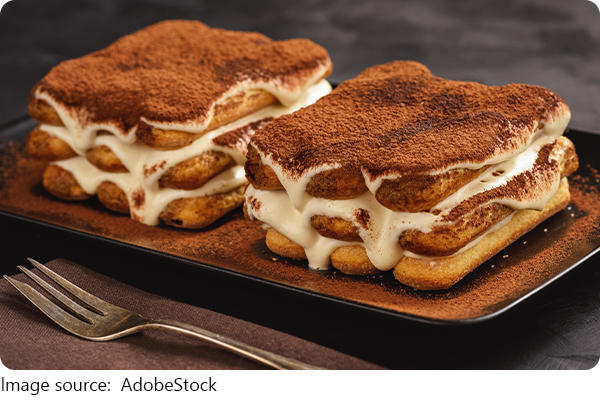
Tiramisu is particularly well suited to dinner parties because it can be prepared the day before. Once assembled and refrigerated, very little last-minute work is required, making it an especially convenient dessert for entertaining.