Why Car Seat Heights Differ

Chandan Singh
| 17-08-2026
 · Automobile team
Walk into different cars and the driving position can feel remarkably different. Some place the driver close to the road, while others create a noticeably higher viewpoint.
This difference is the result of careful engineering rather than seat preference alone.
Body proportions, cabin layout, floor height, visibility, accessibility, mechanical packaging, and the vehicle's intended role all influence where the driver sits. Understanding these factors explains why there is no universal seat height across every type of car.
Vehicle Architecture
A vehicle's overall architecture establishes the foundation for its seating position. Body height, roofline, floor structure, wheel placement, and cabin proportions all influence how much vertical space is available between the road and the driver's seat.
Lower vehicles generally place the occupants closer to the road, while taller designs can accommodate a more elevated seating position. Designers must balance these dimensions with passenger space, headroom, legroom, and the proportions of the exterior.
Driver Visibility
The driver's eye position is an important consideration when determining seat height. Raising the seating position can provide a higher viewpoint, while a lower position can create a stronger sense of connection with the vehicle and road.
Seat height is only one part of the visibility equation, however. Windshield dimensions, side windows, roof pillars, mirrors, dashboard height, and the driver's body position all affect the field of view. A higher seat does not automatically provide better visibility in every direction.
Interior Comfort
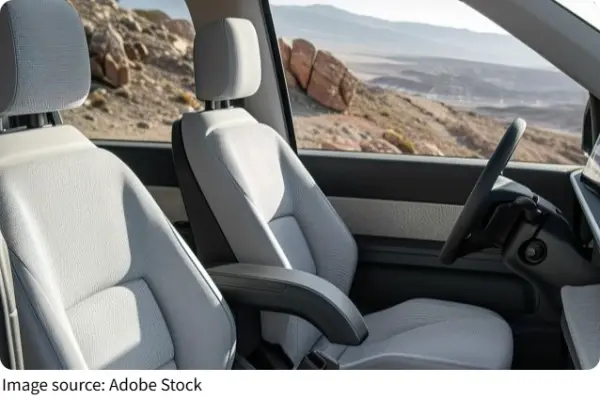
Seating height also contributes to how the cabin feels. A lower position can create a more enclosed and grounded environment, whereas a higher position can encourage a more upright posture.
Comfort depends on more than vertical height. Seat cushioning, backrest angle, steering-wheel position, pedal placement, legroom, headroom, and available adjustment all contribute to the driver's overall seating experience.
Vehicle Purpose
Different vehicles are designed with different priorities, and those priorities influence seating position.
A low-slung car may emphasize a close-to-the-road driving experience, while a taller vehicle may give greater attention to upright seating, cabin accessibility, and an elevated viewpoint. The seating position therefore reflects the broader purpose of the vehicle rather than following a single design formula.
Floor and Mechanical Packaging
Space beneath the cabin must accommodate numerous vehicle systems. Depending on the design, this area can contain structural members, drivetrain components, exhaust hardware, energy-storage systems, and other mechanical equipment.
The arrangement of these systems can affect floor height and available cabin space. Engineers must coordinate the mechanical layout with the passenger compartment so that the vehicle can provide appropriate occupant space without compromising its overall architecture.
Wheels and Suspension
Wheel and suspension placement also forms part of the vehicle's packaging strategy. Suspension components, wheels, structural elements, and other hardware must fit within the body while leaving sufficient space for the cabin.
These requirements can influence the proportions of the vehicle and, indirectly, the position of the seats. Seating height is therefore connected to the way the entire vehicle is packaged rather than being determined by the seat alone.
Entry and Exit
The height of the seat can affect how naturally a person enters and leaves the cabin. A higher seating position can support a more upright movement, while a lower position generally requires a different combination of bending and leg movement.
Door-opening dimensions, floor height, door-sill design, roof height, and seat position all contribute to cabin accessibility. These elements need to work together so that entering and exiting feels natural and practical.
Adjustable Seating
Even when a vehicle has a fixed overall architecture, drivers can often fine-tune their individual seating position. Depending on the vehicle, adjustments may include seat height, forward and backward travel, backrest angle, and steering-wheel position.
These controls allow drivers with different body proportions to establish a suitable relationship with the pedals, steering wheel, instruments, windows, and mirrors. Proper adjustment is therefore an important part of making the vehicle's designed seating position work for different occupants.
The Bottom Line
Different seat heights result from vehicle architecture, visibility, interior ergonomics, mechanical packaging, accessibility, and intended purpose working together.
A low seating position can create a close-to-the-road character, while a higher position can provide a more upright cabin environment and elevated viewpoint. Neither approach is inherently superior because each reflects a different set of engineering priorities.
Ultimately, the right seating position is the one that works naturally with the vehicle's design while providing clear visibility, comfortable control access, proper support, and a confident connection with the cabin.