Motorcycle Downhill Guide

Nolan O'Connor
| 17-08-2026
 · Automobile team
A long downhill section can quickly change how a motorcycle feels. Engine speed may rise, gravity increases momentum, and the rider may feel tempted to shift up or pull in the clutch.
The key is to prepare before the slope becomes demanding. Selecting an appropriate gear, managing speed early, and braking smoothly can make a steep descent more controlled and predictable.
Understand Engine Braking
When we close the throttle while the motorcycle remains in gear, the rear wheel continues turning the engine through the transmission. This creates engine braking, which can help slow the motorcycle without relying entirely on the service brakes.
The amount of engine braking varies with the motorcycle, selected gear, engine speed, throttle position, and riding conditions. Understanding this response helps us use the drivetrain effectively during a descent.
Select The Right Gear
Choosing an appropriate lower gear before the descent becomes steep can increase engine braking and reduce the need for prolonged brake use.
The suitable gear depends on the motorcycle, speed, gradient, road surface, and the manufacturer's guidance. Downshifts should be smooth and appropriate for the motorcycle's current speed. A gear that is too low can cause an unnecessarily sharp increase in engine speed and make the motorcycle less settled.
Stay In Gear
Pulling in the clutch throughout a descent removes engine braking because the engine is no longer connected to the rear wheel. Selecting neutral has the same basic effect.
Remaining in an appropriate gear allows the drivetrain to contribute to speed control. This leaves the brakes available for additional slowing when needed instead of making them the sole means of controlling speed.
Control The Brakes
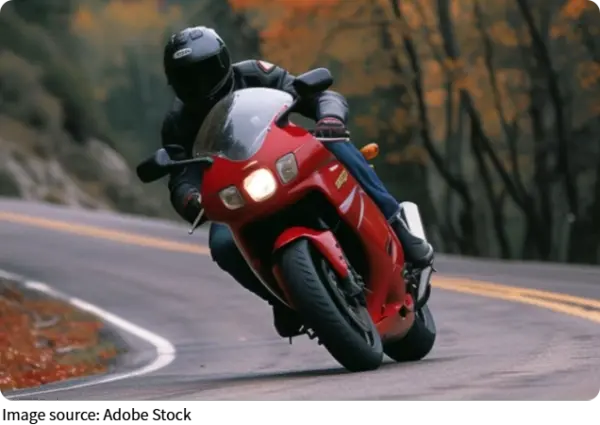
Braking should be smooth, progressive, and appropriate for the road conditions. Both brakes can be used in a controlled manner when additional deceleration is required.
Avoid depending on continuous brake application throughout a long descent. Prolonged braking can generate heat and reduce braking effectiveness. Managing speed early allows braking inputs to remain measured and gives the rider greater control.
Prepare Before Corners
A downhill corner should be approached at a speed that allows the motorcycle to remain stable and predictable.
When possible, reduce speed on the straighter section before reaching the turn. Once the motorcycle is at an appropriate speed, focus on smooth steering and a consistent line rather than making abrupt corrections in the corner.
Maintain A Balanced Position
A relaxed, balanced riding position can make a steep descent easier to manage. Keep unnecessary pressure off the handlebars while maintaining a secure connection with the motorcycle.
Large body movements are rarely necessary. Calm and deliberate adjustments help preserve smooth steering and consistent control.
Use Rider Assistance Wisely
Some motorcycles include systems such as ABS and traction control that can provide additional support in demanding conditions.
These systems are designed to assist the rider, not replace good speed management or smooth control. Understanding the features fitted to the motorcycle and following the manufacturer's guidance allows us to use them appropriately.
Monitor Engine Speed
A higher engine-speed reading during a descent does not automatically indicate a problem. In a lower gear, the rear wheel can continue driving the engine through the transmission, naturally increasing engine speed.
The owner's manual provides the appropriate operating limits for the motorcycle. If engine speed approaches an unsafe range, adjust speed or select a more suitable gear smoothly.
Practice The Technique
Before tackling a long or unfamiliar descent, it can be useful to practice controlled downshifts, braking, and speed management in a suitable low-traffic area.
Gradual practice helps us understand how the motorcycle responds to changes in gear, throttle, braking, and road gradient. Familiarity can make these actions more deliberate when the terrain becomes steeper.
Ride With Confidence
A steep descent is easier to manage when we prepare early and make smooth decisions. An appropriate gear provides engine braking, controlled brake use manages additional speed, and proper preparation keeps corners more predictable.
The goal is not to fight gravity but to manage the motorcycle deliberately. By choosing the right gear, controlling speed before it becomes excessive, and maintaining smooth inputs, we can approach long downhill sections with greater confidence and control.