Motorcycle Safety Basics

Naveen Kumar
| 18-08-2026
 · Automobile team
Riding a motorcycle can be enjoyable and efficient, but it requires skill, concentration, and sound judgment.
Because motorcycles offer less physical protection than enclosed vehicles and respond quickly to changes in road conditions, preparation is essential.
Safe riding combines proper training, suitable equipment, hazard awareness, and disciplined decision-making.
Build Essential Riding Skills
Effective motorcycle control starts with proper training and regular practice. Riders should become familiar with throttle, clutch, steering, and braking inputs while learning how the motorcycle behaves during acceleration, deceleration, and cornering.
Key skills include smooth control, accurate braking, appropriate corner entry speeds, hazard recognition, and effective lane positioning. Developing these abilities in a controlled environment can help riders respond more confidently when conditions change.
Wear Appropriate Protective Gear
A properly fitted helmet is a fundamental part of motorcycle safety. Choose a helmet that complies with the applicable safety requirements and fits securely. Eye protection is also important because unobstructed vision helps riders identify traffic, surface changes, and other hazards.
Additional protection can include a purpose-designed riding jacket, gloves, long pants, and sturdy footwear that covers the ankles. Appropriate equipment can provide valuable protection from abrasion and impact.
Stay Visible and Predictable
Motorcycles have a smaller visual profile than many other vehicles, making visibility an important consideration. Use appropriate lighting, consider reflective or high-visibility clothing, and select road positions that provide good sight lines.
Predictability also improves communication with surrounding traffic. Signal clearly, maintain a consistent position when appropriate, and avoid unnecessary or abrupt movements.
Master Controlled Braking
Effective braking requires practice and precise control. Riders should understand their motorcycle's braking system and learn to apply braking force progressively while maintaining stability.
Braking performance varies with speed, available traction, road surface, and weather. Riders should account for these factors and practice controlled braking techniques in an appropriate training environment.
Manage Corners Carefully
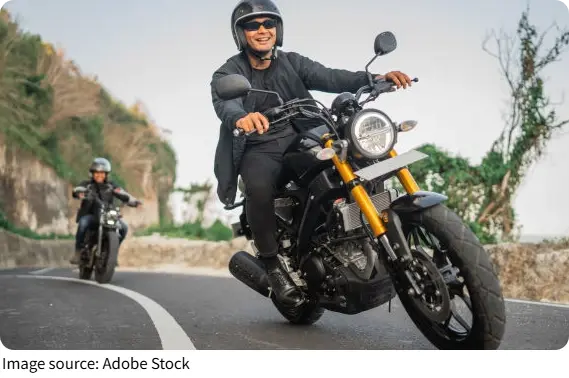
Safe cornering starts before the motorcycle enters the turn. Scan through the curve, assess the road, select an appropriate speed, and choose a suitable line before committing to the corner.
Smooth steering and throttle inputs help maintain control. Riders should avoid carrying excessive speed into a turn, particularly when visibility through the corner is limited or the road surface is uncertain.
Identify Surface Hazards Early
Motorcycles can be sensitive to changes in traction. Gravel, sand, potholes, wet leaves, painted surfaces, metal covers, and uneven pavement can affect stability and grip.
Looking well ahead allows more time to identify these hazards and make controlled adjustments. Maintaining a suitable following distance also provides additional space to react.
Adapt to Weather and Visibility
Weather conditions can change motorcycle handling significantly. Rain can reduce traction and visibility, strong winds can influence stability, and poor lighting can make hazards harder to identify.
When conditions become more demanding, reduce speed, increase space around the motorcycle, and use smoother control inputs. If the conditions are unsuitable for safe travel, delaying the ride is a sensible option.
Maintain Space in Traffic
Riding in traffic requires continuous observation of surrounding vehicles. Monitor lane changes, anticipate sudden movements, and avoid staying in another vehicle's blind spot whenever practical.
Adequate space gives riders more time to respond to unexpected changes. Extra attention is particularly important at intersections, merging areas, and locations where traffic patterns change quickly.
Complete a Pre-Ride Check
A short inspection before riding can identify problems before they affect the journey. Check the tires, brakes, lights, indicators, controls, fluid levels, and visible components for signs of damage or leaks.
If luggage is carried, secure it properly and distribute the load according to the motorcycle manufacturer's specifications. Regular inspections should complement scheduled servicing and maintenance.
Ride Within Your Limits
Good motorcycle safety also depends on responsible decision-making. Riders should consider their experience, the motorcycle's capabilities, traffic conditions, weather, visibility, and road surface before choosing how and where to ride.
Avoiding unnecessary risks and adjusting plans when circumstances change are important parts of responsible motorcycle use. Confidence should come from preparation and experience rather than excessive speed or aggressive riding.
Make Safety a Riding Habit
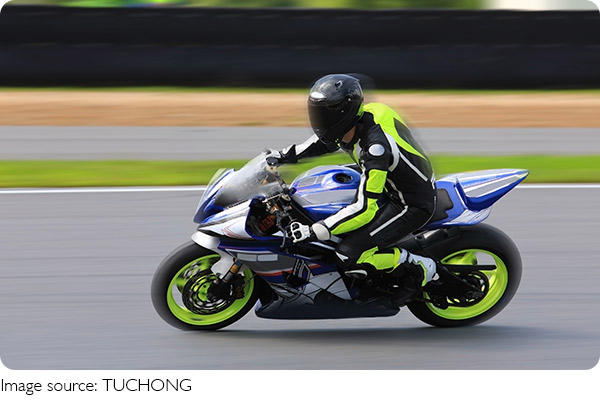
Motorcycle safety is most effective when it becomes part of the normal riding routine. Training, protective equipment, visibility, hazard recognition, controlled riding, appropriate spacing, and regular inspections each contribute to better preparation and control.
By applying these principles consistently, riders can develop stronger habits, respond more effectively to changing conditions, and enjoy motorcycle travel with greater confidence and responsibility.