How Cars Are Built

Elena Rossi
| 19-08-2026
 · Automobile team
A modern automobile is built through a carefully coordinated manufacturing process.
Materials are transformed into components, components are assembled into major systems, and those systems are integrated into a complete vehicle.
While production methods vary according to vehicle design and factory layout, the process generally moves through several key areas: component production, body construction, surface finishing, system installation, interior assembly, inspection, and final preparation.
Turning Materials Into Parts
Manufacturing begins with materials such as steel, aluminum, plastics, glass, rubber, textiles, and electronic components. Each is selected and processed according to its intended application.
Metal sheets can be cut and pressed into specific shapes, while plastics may be molded into interior or exterior components. Other materials are prepared or manufactured separately before reaching the vehicle assembly area.
Forming the Body
Large presses shape metal into panels for doors, roofs, hoods, and other sections of the vehicle. Structural components are also produced to precise dimensions.
Automated machinery and measurement systems help maintain accuracy throughout this stage. Consistent dimensions are essential because the individual pieces must align correctly during body construction.
Constructing the Vehicle Body
The formed panels and structural sections are joined to create the vehicle's main body. Welding, bonding, fastening, or combinations of these techniques may be used according to the design and materials involved.
Once assembled, the body provides the basic framework for the mechanical, electrical, and interior systems that follow.
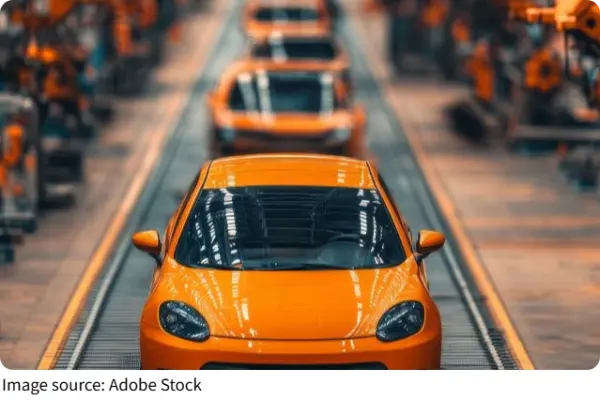
Preparing the Exterior
Before receiving its final finish, the vehicle body is cleaned and treated to prepare the surface. Protective coatings and other treatments help create a suitable foundation for painting.
Paint is applied under controlled conditions to achieve an even finish. Multiple layers can provide protection while contributing to the vehicle's appearance and durability.
Installing the Main Systems
The vehicle then receives its major mechanical systems. The configuration depends on the type of powertrain.
A conventional vehicle may be equipped with an engine and transmission, while an electric model uses an electric motor and battery system. Suspension, steering, braking, cooling, and related equipment are also integrated during production.
Building the Cabin
Interior assembly brings the cabin together. Seats, dashboard components, floor coverings, displays, controls, lighting, and other fittings are installed in their designated positions.
Electrical wiring and electronic modules are connected throughout the vehicle. These systems support features such as lighting, climate control, displays, communication, and driver-assistance functions.
Completing the Exterior
Glass, mirrors, lighting units, wheels, doors, and other exterior components are fitted as assembly progresses.
Each part must be positioned accurately. Doors and other movable panels are adjusted for proper operation, while inspection equipment helps maintain consistent alignment and panel gaps.
Inspecting the Finished Vehicle
Quality inspection is an essential part of the manufacturing process. Technicians and automated systems can examine electrical functions, lighting, steering, braking, interior equipment, exterior fit, and other vehicle systems.
Additional controlled checks may be carried out before the vehicle is approved for release. These inspections help confirm that the completed automobile meets the required production specifications.
Ready for Delivery
After manufacturing and inspection are complete, the vehicle undergoes final preparation. Documentation is completed, protective measures are applied where necessary, and transportation arrangements are organized.
At this point, the finished automobile has passed through a complex sequence of material processing, body construction, finishing, system integration, interior fitting, and quality checks.
Building a car is a precise combination of engineering, manufacturing technology, skilled work, and quality control. What begins as individual materials and components gradually becomes a fully integrated vehicle through a series of carefully managed production stages.
From the first shaped panel to the final inspection, every operation contributes to creating a vehicle that is ready to leave the factory and enter everyday use.