Motorcycle Types Guide

Lucas Schneider
| 19-08-2026
 · Automobile team
Motorcycles are designed around different priorities, and those choices influence how each one feels on the road.
Cruisers, standard motorcycles, and sport bikes represent three distinct approaches to motorcycle design, with differences in seating position, chassis geometry, engine performance, and intended use.
Understanding these characteristics can help riders select a motorcycle that suits their experience, comfort, and riding environment.
Cruisers
Cruisers are built for relaxed road riding and long, steady journeys. They commonly feature low seat heights, longer wheelbases, and forward-set foot controls, creating a laid-back riding position.
Their engines are often tuned to deliver accessible torque at low and medium engine speeds, providing smooth acceleration without requiring high engine speeds. The combination of relaxed ergonomics, substantial proportions, and stable handling gives cruisers a distinctive character.
A cruiser can be particularly suitable for riders who value a low seating position and an unhurried riding experience. Its longer wheelbase and relaxed chassis geometry generally favor stability over rapid changes in direction.
Standard Motorcycles
Standard motorcycles are designed to provide a balanced combination of comfort, control, and versatility. Their neutral ergonomics typically position the rider upright, with the handlebars and foot controls arranged for natural interaction with the motorcycle.
This configuration makes standards suitable for a wide range of everyday situations, including commuting, short trips, and longer road rides. Their relatively straightforward design also gives them broad appeal among riders who want a motorcycle without highly specialized ergonomics.
Rather than concentrating on one particular form of riding, standard motorcycles aim to perform effectively across different road environments. That versatility is one of their defining characteristics.
Sport Bikes
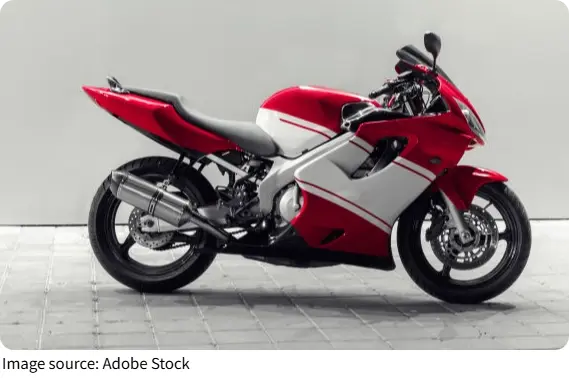
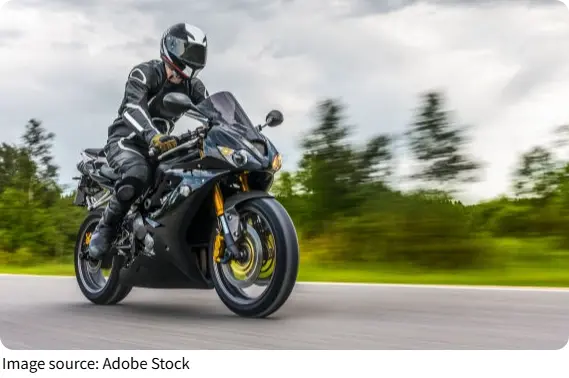
Sport bikes place greater emphasis on responsive handling, acceleration, and aerodynamic performance. Their ergonomics typically include lower handlebars and higher foot pegs, positioning the rider farther forward than on a standard motorcycle.
This posture can provide precise control during performance-focused riding while helping reduce aerodynamic drag. The trade-off is a more demanding riding position, particularly during slow traffic or extended urban journeys.
Sport bikes commonly feature responsive chassis designs, quick steering, and performance-oriented engines. Full or partial fairings are also widely used to manage airflow and support aerodynamic efficiency. Although specifications differ between models, the category generally prioritizes dynamic handling and rider feedback.
Comparing Their Riding Characteristics
Each category delivers a different balance of comfort, practicality, and performance.
Cruisers emphasize relaxed ergonomics, low-speed torque, and stable road manners. They are well suited to riders who enjoy a comfortable position and steady journeys.
Standard motorcycles offer the broadest balance of everyday usability. Their neutral ergonomics and adaptable handling make them suitable for varied riding conditions.
Sport bikes focus on precise handling, acceleration, and aerodynamic efficiency. Their design is most appropriate for riders who prioritize responsive performance.
These distinctions are not absolute. Individual motorcycles within the same category can vary significantly in weight, engine character, suspension setup, seat height, and ergonomics.
Choosing the Right Type
The right motorcycle depends on the rider's priorities and typical usage.
A cruiser may be appropriate for someone who values a low seat, relaxed ergonomics, and steady road travel. A standard motorcycle can suit riders looking for a versatile machine for commuting, errands, and recreational trips. A sport bike may appeal to those who place greater importance on responsive handling and performance-oriented design.
Before choosing, riders should consider seat height, overall weight, engine size, riding experience, physical comfort, passenger needs, storage requirements, and the roads they use most frequently. Test-riding suitable motorcycles can also provide valuable insight into ergonomics and handling.
Cruisers, standard motorcycles, and sport bikes offer different solutions to the same fundamental purpose: two-wheeled transportation and recreation. Cruisers favor relaxed road manners, standards emphasize versatility, and sport bikes concentrate on responsive performance.
Understanding these differences makes it easier to look beyond styling and evaluate what truly matters: how the motorcycle fits the rider, where it will be used, and what kind of riding experience it is designed to provide.