The Zodiac Beyond the Signs

Liam Reilly
| 20-10-2026
 · Travel team
Most people encounter the zodiac through horoscopes, where twelve familiar signs are associated with personality and birth dates.
Yet the zodiac has a different meaning in astronomy. Beyond the familiar names lies a region of the sky filled with real constellations, each offering a glimpse into the relationship between our view of the heavens and the stories we have built around them.
The Zodiac as a Celestial Path
The zodiac is a band of sky that follows the apparent path of the sun throughout the year. This path, known as the ecliptic, is tilted approximately 23.4 degrees relative to the celestial equator. The moon and planets also appear within or close to this band because their orbits lie near the same general plane as Earth's orbit.
Rather than being a collection of twelve individual signs, the zodiac is a region of the sky where the sun, moon, and planets can be observed. It extends roughly eight to nine degrees on either side of the ecliptic, creating a celestial pathway that connects many familiar constellations.
The Meaning Behind the Twelve Signs
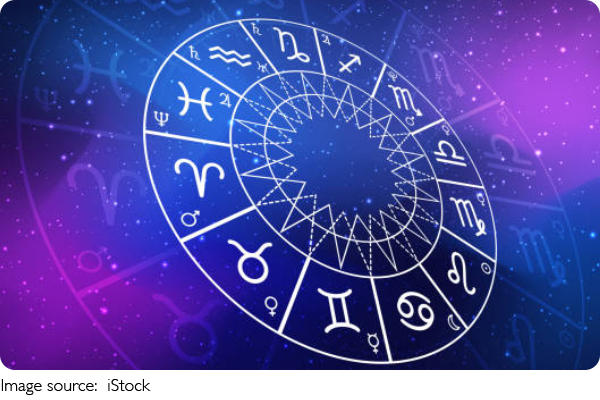
In astrology, the zodiac is divided into twelve equal sections of 30 degrees, each associated with a familiar sign, from Aries to Pisces. These divisions form a structured 360-degree circle that astrologers use to interpret birth dates and symbolic personality themes.
However, the astrological signs and astronomical constellations no longer align as they once did. Earth's axis slowly changes its orientation in a movement called precession, completing a cycle in approximately 26,000 years. Over time, this movement has shifted the apparent positions of the constellations relative to the dates traditionally assigned to the signs.
This distinction reveals two different ways of understanding the zodiac: one based on an established astrological framework and the other on the observable positions of celestial objects.
The Constellations Above Us
The constellations themselves are real patterns and defined regions of the sky. Although astrology traditionally recognizes twelve zodiac signs, the sun's apparent path passes through thirteen constellations, including Ophiuchus.
The sun moves through Ophiuchus for approximately eighteen days each year, usually between November 30 and December 18. Despite this astronomical passage, Ophiuchus is not included among the twelve traditional astrological signs.
This difference illustrates why zodiac signs and constellations should not be treated as interchangeable. One belongs to a system of symbolic divisions, while the other describes identifiable regions of the night sky.
Recognizing the Zodiac in the Night Sky
Observing the sky offers a simple way to understand the difference. Orion is a familiar constellation visible during winter evenings in many regions, while the Big Dipper is a recognizable star pattern in the northern sky. Neither lies along the zodiac band, so the sun and planets do not pass through them.
Other constellations, including Taurus and Scorpius, lie along the ecliptic. Taurus can be recognized by its distinctive V-shaped star pattern and the bright orange star Aldebaran. Scorpius is known for its curved tail and the reddish star Antares.
These constellations can be observed under suitable conditions without a telescope. Their visibility changes with the seasons and the observer's location, making the night sky an ever-changing guide to the movement of celestial objects.
Two Systems, Shared Names
The names of the zodiac signs and constellations often overlap, but their meanings differ. In astrology, Leo represents a 30-degree section of the zodiac associated with a particular period of the year. In astronomy, Leo is a constellation covering approximately 947 square degrees, making it the twelfth-largest of the 88 officially recognized constellations.
The boundaries of these constellations were formally established by the International Astronomical Union in 1930. Unlike the equal divisions used for astrological signs, astronomical constellations vary considerably in size and shape.
Understanding this distinction does not require abandoning an interest in astrology. Instead, it offers a clearer perspective on how astronomical observations and astrological traditions use the same names for different purposes.
Final Advice For You
The next time you read a horoscope, take a moment to consider the difference between the sign associated with your birth date and the constellation visible in the sky. Look for Taurus, Scorpius, or another zodiac constellation on a clear night, and notice how the positions of celestial objects change throughout the year. The zodiac connects astronomy with a long tradition of symbolic interpretation, but its signs and constellations are not the same thing. Recognizing that difference can make both the night sky and the stories associated with it more meaningful.
This content is for entertainment and general insight only and does not constitute professional advice.