Drive Vatnsnes Slowly

Vivienne
| 06-11-2026
 · Travel team
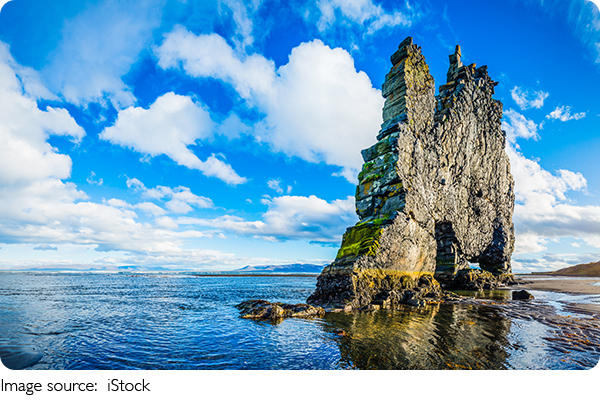
Vatnsnes Peninsula projects into Húnaflói in northwest Iceland and is best known for Hvítserkur, the 15 m basalt sea stack shown here. But driving directly to the rock and immediately returning to Route 1 misses the practical advantage of Vatnsnes: Hvítserkur, seal-watching areas, coastal landscapes, and Borgarvirki fit into one compact loop.
For Lykkers, start from Hvammstangi, allow 5 to 6 hours, and treat road condition rather than distance as the main planning factor.
Drive the Peninsula Loop
Vatnsnes looks small, but much of Route 711 is slower than Route 1. Gravel, potholes, weather, and frequent stops make normal map estimates optimistic.
Start From Hvammstangi
Hvammstangi is the logical starting point because it provides fuel, food, accommodation, and visitor services before you enter the quieter peninsula.
A complete Vatnsnes circuit is roughly 80 to 90 km depending on detours. Allow about 2 hours of actual driving, then increase the total outing to 5 or 6 hours for walks and stops.
In summer, an ordinary passenger vehicle is generally sufficient when road conditions are good. You do not need a 4WD simply because part of the route is gravel.
Drive slowly on loose surfaces, especially when another vehicle approaches. Flying stones can damage windscreens, while sheep may appear close to the road.
Outside summer, make a fresh decision that morning. The peninsula roads may become unsuitable during poor winter conditions. If the road report is unfavorable, remain on Route 1 rather than treating the loop as mandatory.
There is no entrance fee for driving Vatnsnes, so fuel is your main transport expense.
Give Hvítserkur One Hour
Hvítserkur stands on the eastern side of Vatnsnes, about 26 km from Route 1 by the most direct approach.
Park in the designated area and allow approximately 45 to 60 minutes.
The upper viewpoint is the easiest option. Reaching the shore requires a steeper descent, and the route may be slippery or eroded. If footing looks poor, stay above. Infrastructure around the site is being improved, so follow the marked access available when you visit rather than older tracks.
Low tide exposes more shoreline and may allow a closer perspective, but never walk toward the sea stack merely because other visitors are doing so. Check the water level and leave enough time to return safely.
The rock itself is about 15 m high. You do not need to approach its base to understand its scale.
Add Wildlife, Not Stops
The peninsula becomes more worthwhile when Hvítserkur is paired with one wildlife stop. Adding every minor viewpoint only increases driving time.
Choose One Seal Area
Vatnsnes is one of Iceland’s strongest areas for observing seals from shore.
Illugastaðir on the western side has a coastal walking path and viewing facilities. Allow roughly 45 to 60 minutes. Binoculars are more useful than trying to move closer to the animals.
There is one important seasonal restriction: Illugastaðir closes to visitors from May 1 through June 20 to protect nesting birds.
If your trip falls inside that period, remove it from the itinerary rather than searching for an unofficial way around the closure. Seal sightings are also possible elsewhere around Vatnsnes, including areas near Hvítserkur.
Wildlife is never guaranteed. If nothing appears after 30 to 40 minutes, continue the loop instead of losing half the day waiting.
Keep food packed away and stay on designated paths. The objective is observation from distance, not interaction.
Keep the Day Cheap
Vatnsnes is an unusually economical Iceland sightseeing day because its major outdoor stops do not require expensive activity tickets.
Fill the vehicle in Hvammstangi and bring lunch. A supermarket-based meal may cost roughly ISK 1500 to 3000 per person, while eating at a local restaurant can easily raise the food budget to roughly ISK 3000 to 6000 per person.
If you stay overnight, simple accommodation around Hvammstangi commonly requires roughly ISK 20000 to 35000 for a double room, although seasonal variation can be substantial.
For travelers already driving the Ring Road, one night in Hvammstangi is useful when Vatnsnes matters. Arrive in the afternoon, sleep locally, then complete the peninsula the following morning before returning to Route 1.
Borgarvirki makes a logical final stop if time remains. The volcanic formation rises to about 177 m above sea level and provides a broad view across the surrounding landscape. Give it approximately 30 to 45 minutes.
If the loop has already taken 5 hours, skip it. Vatnsnes is better when you properly experience three places than briefly stop at six.
For most Lykkers, Vatnsnes deserves 5 to 6 hours and roughly 80 to 90 km of driving from a Hvammstangi base. Give Hvítserkur 45 to 60 minutes, add one seal-watching location, and include Borgarvirki only when time and weather remain favorable. The outdoor sights are largely free, so costs mainly come from fuel and food. An ordinary vehicle is generally enough in good summer conditions, but gravel roads require slower driving, and winter conditions may make the peninsula loop a poor choice. Check the road first, then let conditions determine how much of Vatnsnes you actually drive.