Cerro Torre: Hardest View

Ethan Sullivan
| 20-10-2026
 · Travel team
Welcome to today's article. You can see photos of Cerro Torre a hundred times and still not be ready for the real thing.
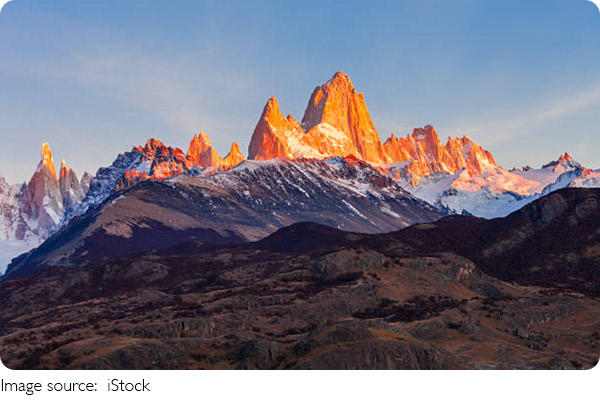
The mountain looks impossible in pictures, and up close it's worse, a 3,128 meter granite needle capped with a mushroom of ice, sitting behind a wall of wind and cloud in Argentina's Los Glaciares National Park.
Why the mountain matters
Cerro Torre anchors the southern end of the Fitz Roy massif, near the village of El Chaltén. Climbers know it as one of the hardest granite towers on earth, largely because of the rime ice that coats its upper reaches and the storms that hammer it. You don't need to climb it to feel that. The classic view comes from Laguna Torre, a glacial lake about three hours of walking from El Chaltén. On a clear morning the Torre group reflects in the water and the scale finally lands. Plenty of hikers wait two or three days for that window. In Patagonian summer, roughly November through March, you might get one.
The walk in, step by step
The trail to Laguna Torre starts at the west end of El Chaltén and runs about 9 kilometers one way, gaining maybe 200 meters of elevation. It's not technical. You cross a few wooden bridges, skirt the Fitz Roy river, and pass a viewpoint called Mirador Cerro Torre before the final stretch through lenga forest. Budget three hours in, two and a half out. Most people do it as a day hike from the village, which means no permit, no fee, and no guide required.
Costs and getting there
El Chaltén is reachable by bus from El Calafate, roughly 3 hours on a paved road, with tickets around $30 to $40 USD one way depending on the company. A bed in a hostel dorm runs about $25 to $35 USD a night, and a private room in a small hotel sits closer to $90 to $120 USD. Camping at Laguna Torre itself is free, with a basic toilet and no running water, so you carry your own. Food in the village is not cheap, so a lot of hikers stock up in El Calafate before the bus.

Wind, weather, and timing
The single biggest factor in your trip is wind. Gusts in this part of Patagonia regularly hit 80 kilometers per hour, and the trail to Laguna Torre is exposed on the last section. A good shell matters more than a warm layer. Check the forecast at the visitor center in El Chaltén before you commit, and plan your hike for early morning, when the clouds tend to break. Afternoon brings the worst of the gusts and the most cloud cover.
What to carry, what to skip
Bring layers, a windproof jacket, gloves, and a hat even in midsummer, because the temperature at the lake can drop well below what you felt in the village. Skip the heavy camera tripod if you're only day hiking, the wind will make long exposures frustrating anyway. Carry at least 2 liters of water and something to eat at the lake, since there's nothing on the trail. And give yourself a buffer day. If the mountain is hidden when you arrive, staying one extra night in El Chaltén costs far less than a return trip.
The thing about Cerro Torre is that it doesn't reward impatience. You show up, you wait, and if you're lucky the cloud lifts for twenty minutes and you get the view everyone talks about. So build that slack into your plan, check the forecast each morning, and treat the waiting as part of the trip rather than dead time. The mountain has been doing this for a very long time, and it isn't going to hurry for you.