Gualjaina

Mei
| 13-11-2026
 · Travel team
Hello, let's get started. Most travelers treat Gualjaina as a fuel stop on the way to somewhere else in Chubut, a name they pass on Route 40 and forget by dinner.
That's the ordinary version of the town. But stay a night instead of rolling through, and you get a Patagonian village that's cheap, unhurried, and sitting right where the valley starts to break into open steppe.
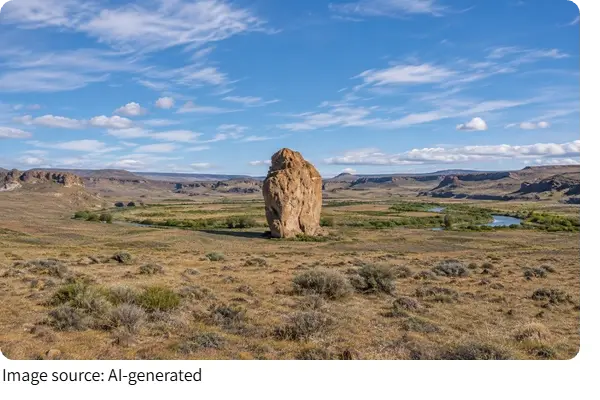
Where the valley opens up
Gualjaina sits in the northwest of Chubut province, roughly 120 km from Esquel and about 90 km from the town of El Maitén. The drive in from Esquel follows the road through the Chubut river valley, and the landscape shifts fast: green poplar rows near the water, then dry scrub, then nothing but wind and sky. It's a small agricultural town, a few thousand people at most, built around sheep farming and the river. Don't expect a resort. Expect a place where the grocery store still closes for a long lunch.
What to actually see
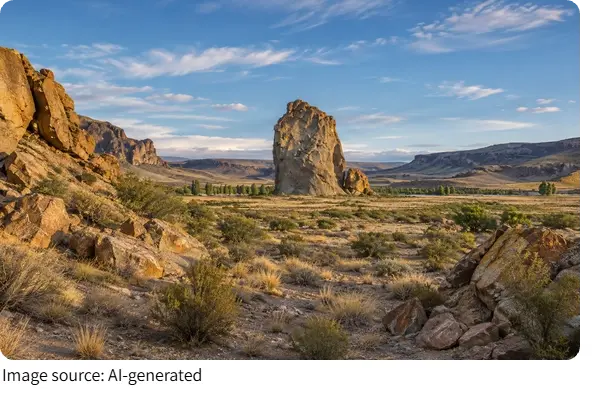
The town's main draw is the Museo Paleontológico, a modest regional collection of fossils pulled from the surrounding Patagonian rock, including marine shells and plant imprints that date back millions of years. Small rooms, local labels, and usually a caretaker who'll tell you which hillside the pieces came from. Beyond that, walk down to the Río Chubut itself. The riverbank is where locals fish and where you get the clearest view of the valley walls. Twenty minutes outside town the terrain turns to steppe, and that's the real attraction here: open country with almost nobody in it.
Getting in and getting around
There's no airport. You'll come by road, either self-driving from Esquel (about 1.5 to 2 hours depending on surface conditions) or catching a local bus that runs the route a few times a week. Confirm the schedule at the Esquel bus terminal before you commit, because services thin out in winter. Once you're in town, you don't need a car to see the center, the museum, or the river. For the steppe and the surrounding ranches, though, your own vehicle is the practical choice. Gravel sections are common, so check your spare.
What it costs and when to go
Budget travelers will like this part. A basic room in a local hospedaje runs around $25 to $45 per night, and a simple meal in town sits near $8 to $12. The museum entry is a few dollars at most. Fuel up before you arrive, since station hours here are limited. Summer (December through February) brings the best weather, long daylight, and the most reliable bus service. Winter is cold, windy, and quiet, with some routes running less often. Either way, carry cash, because card machines in small Patagonian towns are unreliable.
Plan for the wind and the gaps
Patagonia's wind is not a rumor. It picks up in the afternoon and can hit hard enough to make walking unpleasant, so plan your outdoor time for the morning. Bring a windproof layer even in summer. Book your room ahead if you're traveling in January or February, since accommodation is limited and fills up. And keep a day of slack in your schedule, because road and bus conditions in this part of Chubut can shift without much warning.
Gualjaina won't compete with the big Patagonian names, and it isn't trying to. Treat it as a real stop rather than a dot on the map, give it a night and a morning, and you'll come away with the kind of quiet, cheap, windblown day that's hard to find anywhere else on the route.