Fanes-Sennes-Braies

Isla
| 13-11-2026
 · Travel team
Hi there, readers. Most Dolomites trips get built around the same handful of names, but the Fanes-Sennes-Braies Natural Park sits right in the middle of the range and still feels like the one people skip.
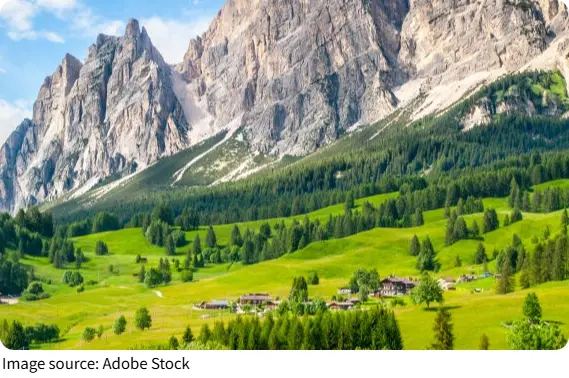
It's a UNESCO-listed park in South Tyrol, spread across roughly 25,000 hectares, and the payoff is a high plateau of open grassland ringed by pale limestone walls. You get the scenery without the queue.
Why the plateau earns the trip
The park's core is the Alpe di Fanes and the Sennes plateau, wide green bowls sitting above 2,000 meters. Two named highlights are worth planning around: the Lago di Braies, a green glacial lake at the northern edge with a flat 3.5 km loop trail, and the Fanes waterfall, which drops in two tiers near the Rifugio Fanes. The lake gets busy by mid-morning, so you'll want to be there before 9am if you want the shoreline to yourself. The waterfall side stays quiet most days.
Getting there without a car
Buses run from Brunico and Dobbiaco into the valleys on both sides of the park, and the Dobbiaco to Lago di Braies service is the most reliable link in summer. From the Pederu trailhead at the end of the Rudo valley road, a marked path climbs to Rifugio Fanes in about 1 hour 45 minutes. If you're driving, the Lago di Braies car park charges around 6 to 8 USD for the first hours and fills early. Arrive before 8am or take the bus.
What a day on the trails costs
Day hikes are free, but the mountain huts set your budget. A bed in a shared room at Rifugio Fanes or Rifugio Sennes runs roughly 25 to 40 USD per person half board, and a plate of pasta or a plate of dumplings at lunch lands around 10 to 14 USD. Budget 50 to 70 USD a day if you're hut-based, or closer to 20 USD if you carry your own food and sleep in the valleys below.

Timing your route
Snow lingers on the high passes into June, and the huts typically open from mid-June to early October. July and August bring the most walkers to Lago di Braies, so flip the order: do the lake first thing, then drive or ride to Pederu and walk up to the plateau in the afternoon. A solid two-day route is Pederu to Rifugio Fanes, over the pass to Rifugio Sennes, then down through the Rudo valley. Book hut beds a few weeks ahead in August, since the Sennes huts fill on weekends.
One planning tip that saves trouble: carry cash. Several huts don't take cards, and the nearest ATM is down in the valley. Also check the weather at the Pederu trailhead board before you commit to the high route, because afternoon storms roll in fast on the open plateau.
The whole point of Fanes-Sennes-Braies is that it gives you the Dolomites landscape with room to breathe, and a bit of planning on transport and hut timing is all it takes. Pick your trailhead, get there early, and let the plateau do the rest.