Vicente Perez Rosales Park

Kwame Johnson
| 13-11-2026
 · Travel team
Hello, everyone. Plenty of national parks ask you to pick one highlight and build a day around it.
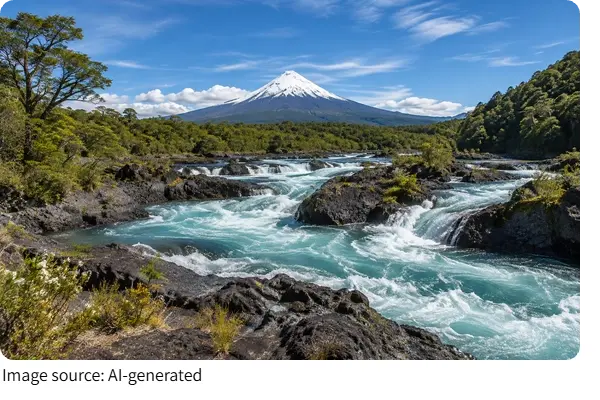
Vicente Perez Rosales does not work that way. In a single afternoon you can stand under a roaring waterfall, ride a cable car up a snow-capped volcano, and watch the water change color on a lake that sits right at the foot of it all.
Chile's oldest national park, created back in 1926, packs a lot into a manageable area near Puerto Varas, and you don't need a week to see the best of it.
Why this park earns the trip
The park sits in the Los Lagos region, about 50 miles northeast of Puerto Varas, and it covers roughly 253,000 hectares of temperate rainforest, lakes, and volcanic terrain. What makes it worth the detour is the concentration. You get the Petrohue falls, the Todos los Santos lake, and the Osorno volcano within a short drive of each other. That's three headline attractions in one compact loop, which is rare for a park this size. The landscape is also genuinely different from what most visitors expect of Chile, all green, wet, and dense with native trees rather than dry and open.
Start with the falls
The Saltos del Petrohue is where most people begin, and it sets the tone. The water rushes over dark volcanic rock through a narrow channel, and the color is a milky emerald that comes from glacial sediment. There's a short network of boardwalks and viewing platforms that takes about 30 to 45 minutes to walk at an easy pace. Go early. By mid-morning the tour buses arrive and the platforms get crowded, so an 8 or 9 am start gives you a much calmer visit.

Ride up the Osorno volcano
The Osorno volcano dominates the skyline, a near-perfect cone that you can see from Puerto Varas on a clear day. A chairlift runs partway up the slope and takes you above the tree line, where the views open up over the lake and surrounding peaks. The lift runs on a seasonal schedule, so check before you go, and bring a warm layer even in summer because the temperature drops fast as you climb. If you'd rather stay lower, the drive up to the base area alone is worth it for the photo stops.
Lake crossings and timing
Todos los Santos lake sits at the foot of the volcano, and its color shifts between turquoise and deep blue depending on the light. The classic move here is the lake crossing that links Chile with Argentina, a boat route that has run for decades. Even if you're not crossing the border, a short boat trip on the lake gives you a different angle on the volcano. Plan your visit between November and March for the most reliable weather and full access to the lifts and boat services. Winter visits are quieter but some facilities close.
Getting there and what to budget
Most people base themselves in Puerto Varas and drive in, which takes about an hour to the park entrance. Renting a car is the most flexible option, and daily rates in the area typically run around $40 to $60 USD. If you're relying on tours, day trips from Puerto Varas start at roughly $50 USD per person and usually cover the falls and the volcano base. Park entry is modest, a few dollars for foreign visitors, so the real cost is transport. Bring cash for smaller fees and pack layers, rain gear, and sturdy shoes, because the weather changes quickly and the boardwalks get slick.
The park rewards you most when you treat it as a series of short, well-timed stops rather than one long hike. Hit the falls early, ride the lift before clouds roll in, and leave the lake for the afternoon when the light softens. Do that, and you'll see why this old park still holds its own against Chile's bigger names.