Lago Argentino, Done Right

Vivienne
| 13-11-2026
 · Travel team
Hi, and thanks for joining us. Lago Argentino looks simple on a map: one huge blue shape in Santa Cruz province, near the Chilean border.
But it isn't just a lake you drive up to and photograph. It's the base for some of the most accessible glacier viewing in Patagonia, and the way you plan around it decides whether you spend your days waiting in queues or standing alone on a walkway with ice cracking below you.
Why this lake earns the trip
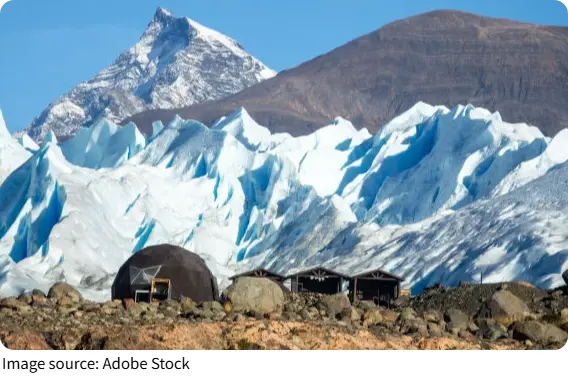
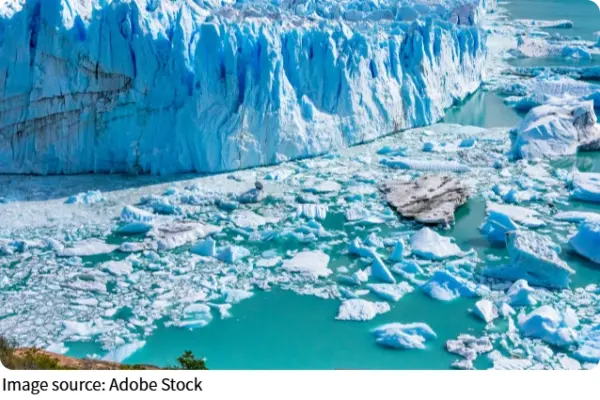
Lago Argentino is the largest lake in Argentina by surface area, and its western arms push right into the Southern Patagonian Ice Field. That's why the glaciers here sit close to the road and the boats instead of days away. The headline is Perito Moreno, a glacier that advances and calves into a narrow channel, and the walkways and viewing platforms on the Magallanes Peninsula put you a few hundred meters from the front wall. You'll hear the cracks before you see the ice fall. Upsala and Spegazzini, further up the lake by boat, are the quieter counterpoints, and a day trip that reaches them gives you a sense of scale the main glacier alone doesn't.
Getting there and getting around
Fly into El Calafate, the town on the lake's southern shore and the practical hub for everything here. Flights from Buenos Aires take about three hours, and the airport sits roughly 20 km from town, with taxis and remises at the terminal. From El Calafate, Perito Moreno is about 78 km west on a paved road, roughly an hour and a half by car or tour bus. You'll want wheels or a booked transfer, because there's no public bus that drops you at the glacier walkways. Rental cars in town run around $60 to $90 USD per day outside peak season. For El Chaltén, the hiking village to the north, it's about 215 km on Route 40 and Route 23, and the drive takes around three hours.
What to see beyond the main glacier
Do not just tick off Perito Moreno and leave, because the lake rewards a second day. The boat crossing to Estancia Cristina, on the northwest arm, combines a lake ride with a rough 4x4 climb to a viewpoint over the Upsala glacier and a short walk to a waterfall. On the Spegazzini arm, the navigation gets you close to a glacier face framed by a forest that runs right to the water. Back in El Calafate, the Glaciarium museum on the edge of town explains how the ice field formed, which makes the landscape easier to read on the following days. And the birdlife around the shore, flamingos included, is worth an hour with binoculars.
Costs and timing to plan around
Entry to Los Glaciares National Park costs around $30 USD for foreign visitors, paid at the gate or online, and it covers Perito Moreno for the day. A standard full-day tour from El Calafate with transfer runs roughly $50 to $80 USD, while the boat navigations to Upsala and Spegazzini start near $150 USD and climb from there. October through March is the warm, long-day window, with daylight stretching past 9 pm in December. July and August bring cold and short days but also the lowest prices and the fewest people on the walkways.
Before you go, know this
Patagonian weather shifts fast, and wind on the walkways can hit 80 km/h, so a shell jacket beats an umbrella every time. Book the glacier tours and boat trips a few days ahead in high season, since the morning departures fill first and the afternoon light on the ice is harsher for photos. Carry cash in pesos for park fees and small purchases, because card readers in the region can be unreliable. And give yourself a buffer day in El Calafate, since flights in and out of the area get delayed by wind more often than you'd expect.
The one thing to hold onto: Lago Argentino isn't a stop you squeeze into a day between buses. It's a place that pays you back for the extra night, the earlier start, and the boat ticket you almost skipped. Build in that second day, and you'll come home with more than a photo of blue ice.