Salt Mountains, Real Silence

Pankaj Singh
| 13-11-2026
 · Travel team
Hi there, readers. You probably expect a salt range to be white and flat, something you cross in ten minutes and forget.
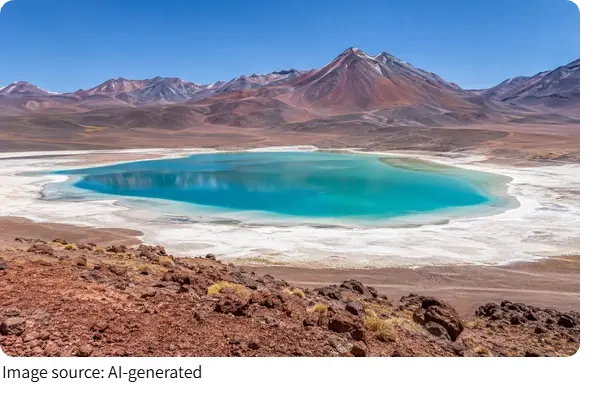
The Cordillera de la Sal is not that. It's a folded ridge of rock and salt just outside San Pedro de Atacama in northern Chile, and the terrain changes color and shape every few hundred meters, from pale crusted walls to dusty red layers to a long dry basin you can walk straight through.
Why this range stands out
The whole thing sits at roughly 2,400 meters, which is high enough that you'll feel the altitude on your first climb but low enough that most travelers adjust within a day or two. What makes it worth your time is the scale of the erosion. The salt has been pushed up and worn down for so long that you get features like the Valle de la Luna, a basin of sharp ridges and hollows that looks nothing like the surrounding desert. Los Tres Marias is the formation most people stop for, three tall pillars of salt and clay standing side by side. You don't need a guide to see them, but you do need to know where the entry points are.
Getting there and getting around
San Pedro de Atacama is the base, and the range starts about 2 kilometers west of town. You can reach the main access on foot if you're staying near the edge of the village, though most people take a bicycle or a tour van. Bikes rent in town for around $15 to $25 USD a day, and the ride to the Valle de la Luna entrance takes roughly 20 to 30 minutes depending on wind. Tours run about $25 to $40 USD per person for a half-day trip. If you drive yourself, note that the roads inside the park are gravel and sand, and a standard sedan will struggle in a few spots.
Timing your visit right
Go in the late afternoon, not midday. The light at sunset is what makes the ridge lines read clearly, and the heat earlier in the day is genuinely draining. Gates at Valle de la Luna close in the early evening, so check the current entry window before you set out. A common plan is to enter around 3 or 4 pm, walk the main trails, and finish at the Mirador de Kari, also called Piedra del Coyote, for the sunset over the valley. Bring a headlamp for the ride back if you're on a bike.

What to bring and what to skip
Water matters more than anything else here. Carry at least 2 liters per person, because there's nothing to buy inside the park. Wear closed shoes with decent grip, since the salt crust is uneven and the slopes are loose. Skip the flip-flops. A light windbreaker helps in the afternoon when the wind picks up across the basin. And keep your distance from the marked formations, because the salt surface cracks easily under weight and the park fines people for stepping off trail.
Costs and planning notes
Entry to Valle de la Luna runs around $10 USD for foreign visitors, and you pay at the gate. Budget another $20 to $40 USD if you join a tour, or $15 to $25 USD for a bike rental. Book your tour a day ahead in high season, since the sunset times fill up. Altitude is the other thing to plan around: give yourself a full day in San Pedro before you hike anything steep, and drink more water than you think you need.
The takeaway is simple. Treat the Cordillera de la Sal as a half-day outing built around late light, carry your own water, and give your body a day to adjust before you push the climbs. Go see it for yourself and let the terrain do the talking.