Peyto Lake, Up Close

Hiro
| 20-10-2026
 · Travel team
Hi, readers. You've seen the photo a hundred times, that electric turquoise water framed by dark spruce, and you assume the real thing can't possibly look like that.
It does. But the version most people get is a two-minute stop at a crowded platform, and that's not the lake at its best.
Where the color comes from
Peyto Lake sits at roughly 1,860 meters in Banff National Park, fed by meltwater from the Wapta Icefield above it. The color isn't a trick of light or a filter. Glacial melt carries fine rock particles, called rock flour, into the water, and those particles scatter blue and green wavelengths back at you. The result is that opaque, almost milky turquoise, and it's strongest in summer when melt is heaviest. Come in late June or July and you'll get the full effect. Come in October and you'll get deep blue water, fewer people, and a very different kind of beauty.
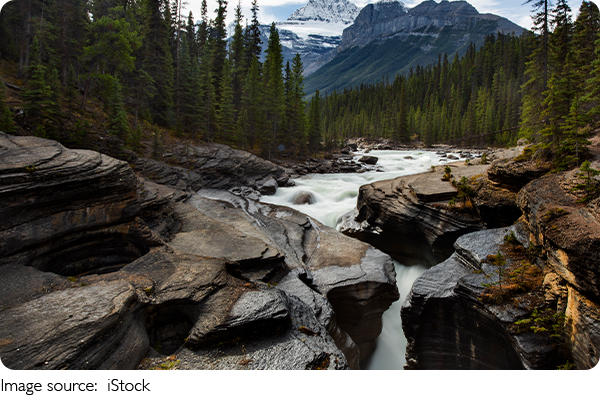
The view everyone comes for
The classic shot is from the Bow Summit viewpoint, reached by a short paved walk from the main parking lot on the Icefields Parkway. It's about 300 meters of gentle climbing, doable in flip-flops, which is exactly why it fills up. The lake below is shaped roughly like a wolf's head, though you'll need to find the right angle to see it. Arrive before 9 a.m. or after 6 p.m. and you'll have far more room to actually stand and look. Midday in July means tour buses and a slow shuffle along the railing.
Getting there and parking
Peyto Lake is about 40 kilometers north of Lake Louise along the Icefields Parkway, roughly a 40-minute drive. The turnoff is signed, and the road climbs to the Bow Summit lot. Parking is free, but the lot is small and fills fast between 10 a.m. and 4 p.m. in peak season. If it's full, you'll be turned away, no exceptions, so plan your timing around that. There's no shuttle to this particular stop, which means your own vehicle is the practical option. Fuel up in Lake Louise before you go, because services north of there are sparse.
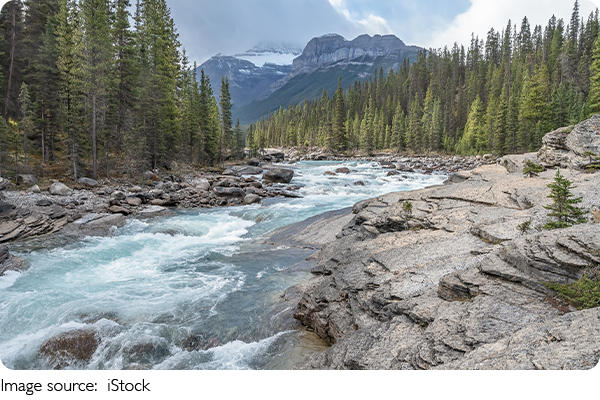
Going beyond the platform
Most visitors never leave the main viewpoint. Don't be most visitors. From the upper lot, the Peyto Lake Trail continues past the platform and climbs toward Bow Summit itself, a longer walk that opens up quieter angles of the lake and the valley beyond. The path runs through subalpine meadow and larch, and in late September those larches turn gold against the dark conifers. Another option is the short trail down to the lakeshore, steeper and rougher, where you trade the aerial view for the water up close. Bring bear spray on any of these, and make noise. This is grizzly country, and it's not a theoretical warning.
What it costs and when to go
Entry to Banff National Park runs about 11 USD per grown-up per day, or roughly 22 USD for a family or group day pass, and you'll need a Discovery Pass if you're staying longer. There's no separate fee for Peyto Lake itself. The parkway is open year-round, but the access road and viewpoint can close in heavy snow, so check conditions if you're visiting outside summer. For the best combination of color, weather, and elbow room, aim for a weekday morning in July or early August, or take a chance on a clear day in late September when the crowds thin out and the larches go gold.
Small things that help
The viewpoint sits at high elevation, around 2,070 meters, so the air is thin and the weather shifts fast. A sunny morning at the parking lot can turn into cold wind and rain at the platform within an hour. Pack a shell jacket even in August. Cell service is patchy along the parkway, so download your maps before you leave Lake Louise. And give yourself more time than the guidebooks suggest, because once you're standing there looking down at that water, you won't want to rush back to the car.
Peyto Lake rewards a little planning and punishes a lazy midday stop. Get there early or late, walk past the railing, and let the place be more than a photo. The color is real, and so is the quiet if you time it right.