Gualjaina

Sophie
| 12-11-2026
 · Travel team
Hi, and thanks for joining us. Most Patagonia itineraries rush straight past the small towns in Chubut province, racing south toward Trelew and the coast or west into the Andes.
Gualjaina is one of those places people skip, and that's exactly why it's worth a stop. It sits in the steppe country northwest of Trelew, a low-key settlement of a few thousand people where the paved road gives way to gravel and the scenery opens into dry hills and river valleys.
You won't find tour buses here. You'll find a working sheep-farming town and a base for some genuinely unusual day trips.
Why the setting earns a detour
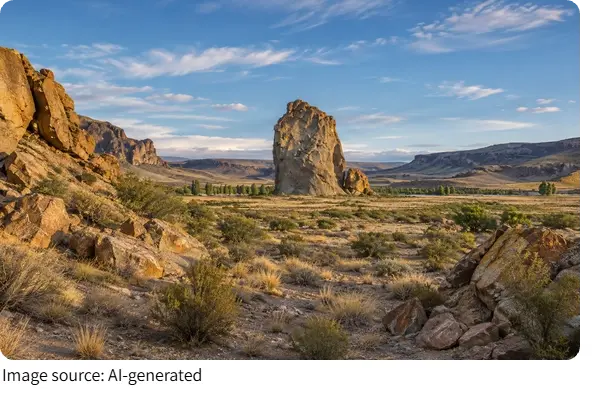
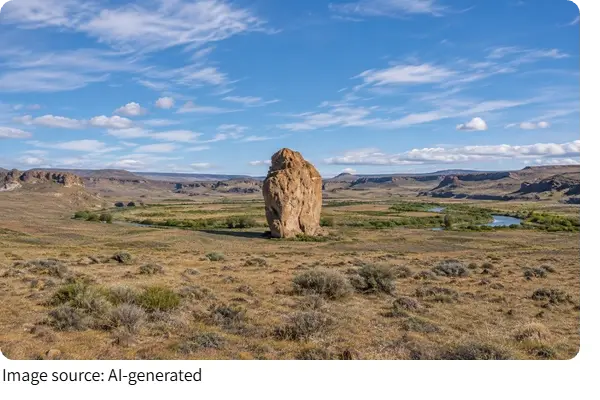
Gualjaina sits along the Río Gualjaina in a stretch of Patagonian steppe where the wind does most of the talking. The landscape is sparse, with low shrubs, reddish rock, and big skies that shift fast. If you've come this far expecting dramatic peaks, adjust your expectations. The appeal here is space and quiet, not postcard scenery. That said, the surrounding area holds real draws for travelers with an interest in paleontology and geology. Chubut province is known for its fossil beds, and the region around Gualjaina has produced dinosaur finds that draw researchers. Ask locally about guided visits before you go, since access to sites is often arranged through local contacts rather than walk-up tickets.
Getting there and getting around
The practical route is by road from Trelew, roughly 150 kilometers to the southeast. The drive takes a couple of hours depending on conditions, and the final stretch includes gravel, so a car with decent clearance helps. There's no train and no commercial airport here, so plan on driving yourself or arranging a transfer. Once you're in town, you can walk the center in fifteen minutes. For the surrounding sites and river valleys you'll want your own vehicle, and fill the tank in Trelew before you leave, because fuel options thin out fast out here.
What to budget for a stay
This is not an expensive place. Simple guesthouses and small hotels in town typically run around $40 to $70 per night in USD, and a basic meal will set you back far less than in the coastal resorts. Budget roughly $30 to $50 per day for food and local transport if you're driving yourself. Cash matters. Bring enough pesos for a few days, since card readers aren't reliable in small businesses, and the nearest ATM with consistent service is back in Trelew.
Timing your visit right
Summer, from December through February, brings the mildest weather and the longest days, with daylight stretching past 9 pm. Wind is a constant in Patagonia year-round, and winter here is cold and quiet, with some services closing. Book accommodation ahead in January and February, when Argentine families travel. Spring and autumn give you fewer people and comfortable daytime temperatures, though nights drop fast. Whatever season you pick, build slack into your schedule. Gravel roads and weather can slow a two-hour drive considerably.
A few practical notes before you commit. Cell coverage is patchy outside town, so download maps in advance. Carry water and a warm layer even on sunny mornings, because the wind chill catches people off guard. And check road conditions locally before heading out on side trips, since some tracks become impassable after rain. Gualjaina rewards travelers who treat it as a slow stop rather than a checklist item. Next time you're plotting a Patagonian route, leave a day for the towns in between, and see what the steppe gives you.