Torres del Paine, Done Right

Antonio
| 20-10-2026
 · Travel team
Hello, friends. Plenty of parks let you drive to a viewpoint, snap a photo, and call it a day.
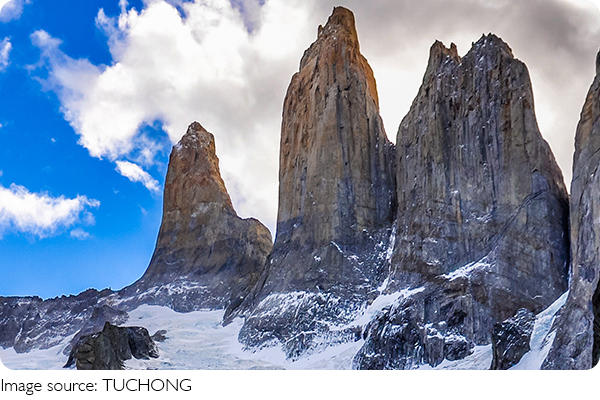
Torres del Paine does not. The granite towers that give the park its name sit at the end of a hard walk, and most of what makes this corner of Chilean Patagonia worth the flight shows up only after you've put in the miles on foot. Go in expecting a hike, not a drive-by, and the place opens up properly.
Why this park earns the trip
The centerpiece is the trio of vertical granite peaks, the Torres del Paine themselves, rising above a glacial lake that shifts from grey to turquoise depending on the light. But the park is bigger than that one postcard. You've also got the Cuernos del Paine, the horn-shaped peaks banded in black and pale granite, and Grey Glacier, a wall of ice that calves into a meltwater lake. Lago Pehoe is the blue you'll see in every photo, and it's a short walk from the Paine Grande refugio. Each of those is a real, named destination you can reach on the trail network, not just a distant view from a bus window.
Pick your route before you book
Two routes cover most of the park, and choosing between them is the single biggest planning decision you'll make. The W Trek runs roughly 4 to 5 days and hits the highlights: Base of the Towers, the French Valley, and Grey Glacier. The full Circuit, often called the O, takes about 8 to 10 days and adds the quieter back side of the massif. If you've got a week and want the famous views, take the W. The Circuit rewards people who want fewer crowds and don't mind a longer haul.
Getting there and getting around
Most travelers fly into Punta Arenas, then take a bus or drive the roughly 3 hours to Puerto Natales, the gateway town where you stock up and sort permits. From Natales it's about 2 more hours by bus to the park entrance at Laguna Amarga or Pudeto. Inside the park, catamarans cross Lago Pehoe and connect the trailheads, which saves you a long walk if you're doing the W in either direction. Book the catamaran and any refugio beds ahead, because the popular huts sell out months out.
Costs and timing
Budget around $35 to $50 USD per night for a dorm bed in a refugio, or closer to $100 and up for a private room, and expect park entry to run near $35 USD for foreign visitors. Camping is cheaper but you'll still pay site fees and often need to reserve. The window to go is roughly November through March, the Southern Hemisphere summer, when days stretch past 9 p.m. and the weather is at its most stable. July is winter and many services close. Wind is the constant here, so pack layers, a solid shell, and a hat that stays on.
Before you go
Train your legs first. The climb to Base of the Towers is a steep, rocky push of around 4 to 5 hours each way, and the last stretch is a boulder scramble. Carry cash for park fees and small purchases, since card readers can fail out there. And build one rest day into your plan, because Patagonian weather cancels plans more often than anyone likes to admit.
The takeaway is simple: this park rewards the people who plan the route, book the beds, and show up ready to walk. Do that, and the towers will be the least of what you remember.