Annapurna I: 8,091m Giant

Margot
| 20-10-2026
 · Travel team
Welcome back, everyone. Annapurna I is not a trek you can wing.
At 8,091 meters it's the tenth-highest mountain on the planet, and the first 8,000er ever climbed, summited by Maurice Herzog and Louis Lachenal in 1950. But the mountain most travelers can actually reach is the base camp and the trails around it, not the summit. That distinction matters more than anything else in this guide.
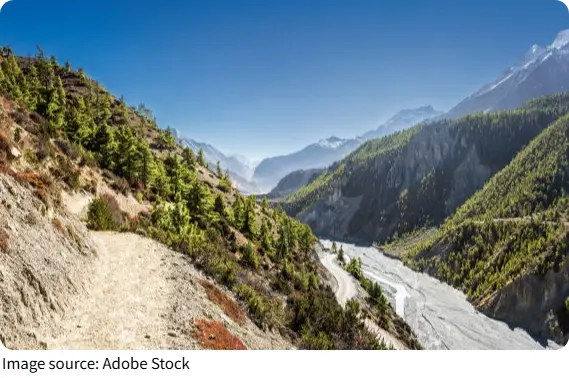
Know what you're signing up for
The full Annapurna Circuit is roughly 160 to 230 kilometers depending on where you start and stop, and it takes 12 to 21 days on foot. Annapurna Base Camp sits around 4,130 meters and is usually done as a 7 to 11 day out-and-back from Pokhara. Neither is a casual weekend hike. The circuit crosses Thorong La at 5,416 meters, a pass where altitude sickness is a real risk, not a footnote.
Getting there and around
Most trips start in Pokhara, which you reach by a 25-minute flight from Kathmandu or a 6 to 8 hour tourist bus for around $15 to $25. From Pokhara, a shared jeep to Nayapul or Kimche costs roughly $10 to $20 per person. Once you're on the trail, it's your legs. Porter-guides run about $25 to $35 per day, and hiring one is common and genuinely useful on the high sections.
What it costs
Budget trekkers spend $25 to $40 per day on teahouse rooms and dal bhat. The Annapurna Conservation Area Permit is about $30, and the Trekkers' Information Management System card adds roughly $2. Add gear, insurance, and a guide, and a two-week circuit lands somewhere between $800 and $1,500 depending on how much comfort you want. Flights from Kathmandu to Pokhara run $100 to $130 one way.
Timing and the practical details
Go in autumn (late September to November) or spring (March to May). Winter brings snow and closed passes; summer monsoon brings leeches and washed-out trails. Book teahouses as you go, no need to pre-book on the circuit. Acclimatize properly: sleep an extra night at Manang (3,519 meters) before pushing to Thorong La. Carry cash, because ATMs above Pokhara are unreliable or nonexistent.
The mountain rewards preparation, not bravado. Build in buffer days, respect the altitude, and treat the permits and the pace as seriously as the views. Get those basics right and the trail gives you something you'll carry for years.