Driverless Tech Explained

Daniel
| 26-10-2026
 · Automobile team
Have you ever imagined traveling in a car that can recognize roads, follow directions, and respond to traffic without constant human control? Self-driving technology is making this idea increasingly realistic.
These vehicles combine cameras, radar, digital maps, powerful computers, and communication systems to understand their surroundings and plan their movements. Let’s explore how these technologies work together and what challenges engineers are working to solve.
1. Cameras: The Car’s Eyes
Cameras capture images of the road, traffic signs, lane markings, signals, vehicles, and pedestrians. They are usually placed around the windshield, mirrors, rear section, and sides to provide different viewing angles.
Artificial intelligence analyzes these images to recognize objects and understand road conditions. For example, when the system identifies a speed limit sign, it can use that information to help adjust the planned speed. Camera recognition also supports lane-keeping functions.
However, rain, fog, darkness, and strong sunlight can affect image quality. Combining several cameras with other sensors helps the vehicle recognize its surroundings more reliably.
2. Radar and LiDAR: Measuring Distance
Radar sends out radio waves and analyzes their reflections to estimate the distance and relative speed of nearby objects. Millimeter-wave radar is useful in many weather conditions and supports features such as adaptive cruise control. If the vehicle ahead slows down, the system can adjust speed to maintain a suitable following distance.
LiDAR uses laser pulses to measure distances and create a three-dimensional picture of the surroundings. It helps identify road edges, buildings, vehicles, and obstacles. This detailed information is particularly useful at complicated intersections.
LiDAR can be expensive, and heavy rain or fog may affect its performance. Using it alongside radar and cameras allows the vehicle to benefit from their different strengths.
3. Ultrasonic Sensors: Easier Parking
Ultrasonic sensors use sound waves to measure the distance to nearby objects. Often installed around the bumpers, they are especially helpful when parking in narrow spaces.
When sound waves reflect from a wall or another parked vehicle, the sensor measures the return time. The computer uses this information to estimate the distance and guide parking movements. Because these sensors work over short distances, they complement rather than replace other sensing equipment.
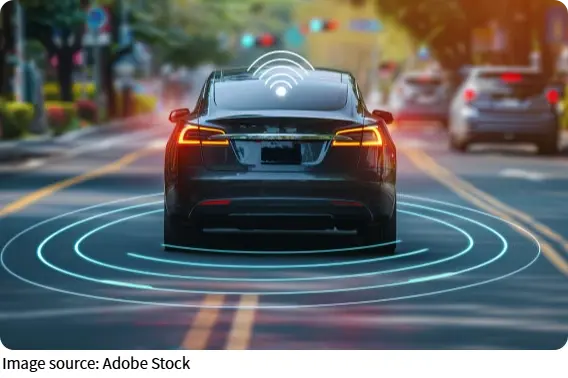
4. Digital Maps and Computer Intelligence
Satellite navigation helps a vehicle estimate its location, while an inertial measurement unit tracks changes in movement and direction. Combining these measurements with wheel data and detailed maps can improve positioning, even when buildings interfere with satellite signals.
High-definition maps may contain lane layouts, road curves, slopes, and traffic signal locations. Meanwhile, onboard computers process sensor information and use machine learning to recognize driving situations and predict how nearby road users might move.
After selecting a suitable action, electronic control units send instructions to the steering, braking, and propulsion systems. These steps happen rapidly, allowing the vehicle to follow its planned path.
5. Communication Between Cars and Roads
Vehicle-to-vehicle communication, or V2V, allows compatible cars to share information about speed, position, and direction. This exchange may help vehicles coordinate their movements and maintain suitable distances.
Vehicle-to-infrastructure communication, known as V2I, connects cars with compatible traffic lights, road equipment, and parking systems. Signal timing updates can help a vehicle prepare for an intersection, while roadwork alerts can support route changes.
Vehicle-to-pedestrian communication, or V2P, may exchange safety information with compatible phones or wearable devices. However, onboard sensors remain important because not every pedestrian carries a compatible device.
6. Challenges Ahead
Self-driving technology still needs to handle sudden pedestrian movements, changing road layouts, and difficult weather conditions. Maps also require regular updates, and computer systems need extensive testing to reduce faults.
Engineers must improve emergency responses and protect connected vehicles against cyberattacks. Privacy matters, too, because these systems may process location details and information about nearby people. Clear rules are also needed to establish responsibility when an automated vehicle is involved in an incident.
High equipment costs, ongoing development, and public concerns about safety can slow wider adoption. Careful testing and honest communication will help people understand what each system can and cannot do.
Final Thoughts: Smarter Journeys
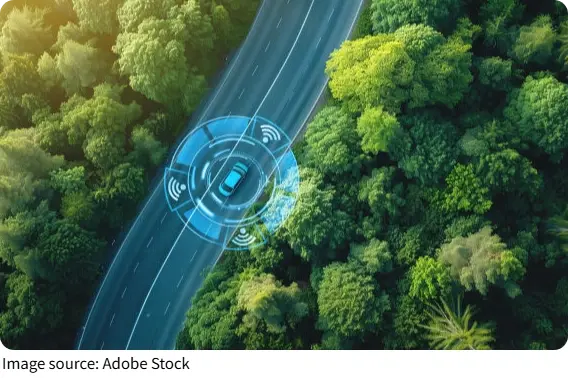
Self-driving cars rely on many technologies working as one system. Cameras recognize visual details, radar and LiDAR measure surroundings, maps support positioning, and computers turn information into driving decisions. Although challenges remain, continued development may make future journeys more convenient.
Dear Lykkers, which technology interests you most: smart cameras, powerful onboard computers, or communication between cars and traffic signals? Share your thoughts and imagine how these innovations might shape our daily travels.