Torres del Paine, Plainly

Luca
| 26-10-2026
 · Travel team
Hi, let's get started. Torres del Paine looks like a place you only see in photos, but it's a real, walkable park in Chilean Patagonia, and you can plan a trip there without a tour company holding your hand.
The catch is that the park rewards preparation more than spontaneity. Show up loose and you'll spend your days sorting logistics instead of looking at granite.
Why this park earns the trip
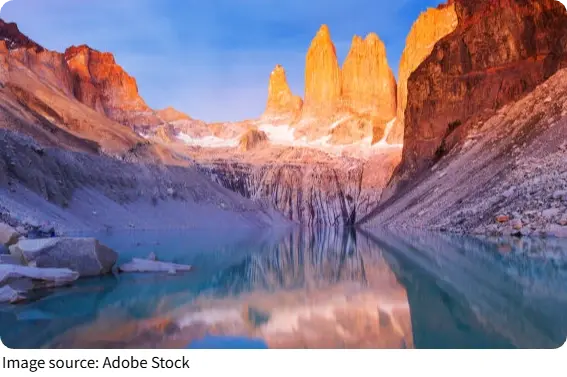
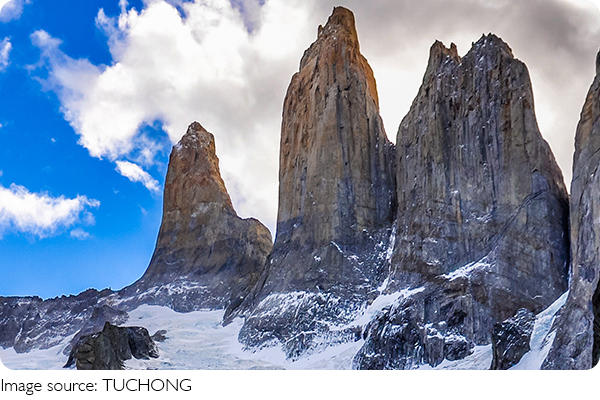
The centerpiece is the Paine massif, a cluster of granite peaks that turn pink at sunrise. The three towers, the Torres del Paine themselves, sit above a glacial lake you can reach on a day hike from the Las Torres area. Then there's Grey Glacier, which calves into Lago Grey, and the Cuernos del Paine, the horn-shaped peaks with a dark band of sedimentary rock across them. You get all three in one park, which is why people fly across the world for it. The trail network is the real draw: the W trek covers about 80 kilometers and takes four to five days, while the full O circuit runs roughly 130 kilometers and adds the back side of the massif.
When the weather cooperates
Patagonian weather does not follow a schedule. The park sits at roughly 51 degrees south, so you get long daylight in summer and short, cold days in winter. The common window is November through March, when the W is busiest and the refugios are fully open. February is peak. If you want fewer people on the trail, aim for late October or early April, but expect wind that can push you sideways on exposed sections. Wind gusts in the park regularly hit 80 kilometers per hour, and rangers will close certain trails when it gets worse.
Getting in and getting around
Most people fly into Punta Arenas, then take a bus or drive about three hours north to Puerto Natales, the gateway town. From Puerto Natales, buses run to the park entrance at Laguna Amarga in roughly two hours. You'll pay an entrance fee at the gate, around 32 USD for foreign visitors for a multi-day pass, so keep cash or a card ready. Inside the park, catamarans cross Lago Pehoe and connect the Pudeto sector to Paine Grande, which is how most W trekkers link the west side. Book that ferry ahead in high season. Shuttle buses also run between the Laguna Amarga entrance and the Las Torres trailhead.
What a bed and a meal cost
You have two main choices: refugios, which are staffed huts with bunk beds and hot meals, and camping. A dorm bed in a refugio runs roughly 60 to 100 USD per night depending on the sector, and full board adds more. Camping with your own tent is cheaper, often 10 to 20 USD per night, but you need to reserve spots on the official booking system well in advance because the popular sectors sell out months ahead. Puerto Natales is where you rent gear: tents, sleeping bags, trekking poles. A full rental kit for a five-day trek costs around 100 to 150 USD.
Planning that pays off
Reserve everything early. Refugio beds and campsites on the W open for booking months before the season, and the best dates go first. Carry Chilean pesos for small purchases, since card readers fail in the wind and rain. Pack layers, not one heavy jacket, because you'll swing from sun to sleet in an hour. And give yourself a buffer day in Puerto Natales before and after the trek. Buses get delayed, ferries get cancelled, and a tight schedule in Patagonia is the one thing that reliably goes wrong.
The park asks a lot of you upfront, in planning and in legwork, and hands back scenery that holds up to every photo you've seen. Get your bookings locked in, pack for four seasons in one day, and let the trails do the rest.