Jotunheimen: Norway's Trails

Declan Kennedy
| 26-10-2026
 · Travel team
Welcome, readers. Jotunheimen looks like a place you need a guide and a small fortune to see.
You don't. Norway's biggest mountain range sits about four to five hours by road from Oslo, and once you're in, the trails are marked, the huts are staffed, and the whole thing runs on a system that's been refined for over a century.
Why this range earns the trip
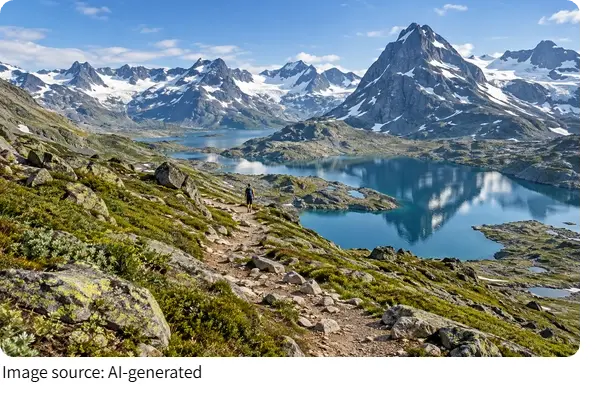
Jotunheimen holds all of Norway's peaks above 2,300 meters, and Galdhopiggen at 2,469 meters is the highest point in Northern Europe. You don't have to climb it to feel the scale. The Besseggen ridge, a roughly 13 to 14 kilometer traverse between Gjendesheim and Memurubu, puts you above two lakes that sit at different elevations, Gjende and Bessvatnet, with a narrow crest between them. Most hikers take 6 to 8 hours on it. That single day is the reason many people book the trip at all.
Getting in and moving around
The practical entry point is Gjendesheim, at the eastern edge of the park along Road 51. From Oslo, drive roughly 4 hours, or take the Valdresekspressen bus toward Beitostolen and transfer. The Gjende boat runs between Gjendesheim and Memurubu during the summer season, and it's how most people set up the Besseggen hike one way instead of doubling back. Book a seat on the boat when you book your bed, because the morning departures fill up in July.
Huts, costs, and timing
The Norwegian Trekking Association runs the cabin network here, and full board at a staffed hut like Gjendesheim or Memurubu typically runs around $100 to $130 per night for non-members, less if you join. Members pay noticeably less, so a year's membership often pays for itself on a single week-long trek. Self-service cabins are cheaper still. The season is short: most staffed huts open late June and close in mid-September, and snow can linger on high passes into early July. Carry cash or a card, but confirm the hut's payment setup before you go.
What to pack and what to skip
Weather here changes fast, and a sunny morning at Gjendesheim can turn into cold rain on the ridge by noon. Bring a waterproof shell, a warm mid layer, and sturdy boots with ankle support, because the Besseggen crest involves some hands-on scrambling. Skip the heavy tent if you're doing the hut route. And pack a water bottle rather than a filter system, since Norwegian mountain streams are generally clean enough to drink from directly. Check the trail markers, the red T painted on rocks and posts, and you won't need a guide on the main routes.
Small choices that save the day
Start the Besseggen early. Hikers who leave Gjendesheim after 9 a.m. often finish in fading light, and the descent toward Memurubu is slow going. Reserve your hut beds weeks ahead in peak season, since Memurubu in particular books out. If you want a quieter alternative, the loop around Lake Gjende's western arm or the trail up to Fannaraken gives you big views with far fewer people. And keep an eye on the ferry schedule, because missing the last boat back means an unplanned extra night.
Jotunheimen rewards planning more than gear. Pick your route, book the huts and the boat, and give yourself a buffer day for weather. Then go stand on that ridge and see what all the fuss is about.