Calving Glacier Guide

Eleanor
| 09-11-2026
 · Travel team
Hey Lykkers, have you ever typed a place into a map app, only to realize you literally cannot drive there? That's exactly the case with the Brueckner Glacier. It's tucked away at the head of Johan Petersen Fjord in East Greenland, and the only way to lay eyes on it is by boat or an expedition ship.
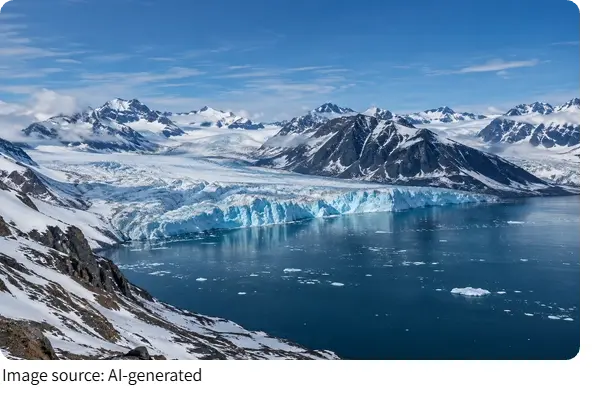
The glacier itself is a massive river of ice flowing down from the Greenland Ice Sheet, dropping colossal icebergs straight into the fjord. It's raw, incredibly remote, and totally spectacular. Here are four places to check out and two spots to eat when you're in the area.
Bruckner Gletscher
This is the main event. The glacier drops down into the eastern side of the fjord's head, separated from the Heim Glacier by rocky outcrops.
Together, they push a constant stream of icebergs into the water. You can actually see the lateral moraines dating back to the 1900s, which is a pretty stark reminder of how much ice has melted over the last century. The best way to experience it is from the water—just watching the ice face and listening for that loud boom and rumble of calving. There are no entry fees or infrastructure here, because the only way you're getting here is by paying for an expedition. Multi-day voyages in this region usually start around US$7,500–13,700 per person depending on the ship and itinerary.
Bruckner Gletscher
Johan Petersen Fjord Landings
Expedition ships often drop people off along the shores of this fjord, and it is absolutely worth getting off the boat. People who have hiked here describe walking among stranded icebergs scattered along the shoreline, with the calm, mirror-like water reflecting the surrounding peaks. The terrain is rugged and unmarked, so you definitely need a guide and proper gear. The silence out here is deafening, broken only by the occasional shifting of ice. There is no extra cost for this beyond your expedition package.
The Abandoned Village of Ikateq
If your route allows, stopping at Ikateq is a haunting experience. It's a ghost town, mostly in ruins, but the chapel and the schoolhouse remain in surprisingly good condition. Books still sit on the desks as if the kids just got up and left that morning. It's a quiet, eerie reminder of how tough human life is in this harsh landscape. Access depends entirely on your expedition itinerary.
Tasiilaq and the Surrounding Fjords
Tasiilaq is the main settlement in the region and your logistical hub. It's a small town of colorful wooden houses perched on the edge of the King Oscar Fjord. It's where you'll find supplies, guides, and the starting point for most adventures. The town itself is worth a wander, and the surrounding fjords offer some of the most accessible Arctic scenery in East Greenland. Getting to Tasiilaq usually involves a flight from Iceland, and a basic hotel room starts around US$260 per night at Hotel Angmagssalik.
Where to Eat: The Red House
In Tasiilaq, The Red House is the place to eat. It's a hotel and restaurant on a hill overlooking the fjord, and it serves a unique menu combining Italian recipes with Greenlandic specialties like fish and meat. In summer, dishes are refined with local herbs, berries, and wild salads from the surrounding hills. A dinner main course costs roughly US$27–30, while a full dinner menu is roughly US$46–50 (cost may vary). A packed lunch from the breakfast buffet is roughly US$14 if you're heading out for the day. It's the most reliable sit-down meal in town.
The Red House
Where to Eat: Hotel Angmagssalik
This is the other main option in Tasiilaq. The hotel has a restaurant and a lounge, and guests consistently praise the helpful staff and the stunning views. It's a practical choice for a meal before or after a boat trip, and the atmosphere is welcoming. Room rates start from around US$260–270 per night with breakfast included if you need a place to stay, but the restaurant is open to non-guests as well.
Final Thoughts
The Brueckner Glacier and Johan Petersen Fjord are not destinations you can do on your own. You need an expedition ship, a guide, and a tolerance for cold, remote travel. The reward is a landscape of staggering scale: calving glaciers, stranded icebergs, and a ghost town that will stay with you. Budget for a multi-day expedition, pack layers, and leave room for the weather to change your plans. This is the Arctic on its own terms, and that is exactly why it is worth the effort.