Svalbard: Polar Bear Land

Yuna
| 30-10-2026
 · Travel team
Hi, and thanks for joining us. You probably picture Svalbard as a frozen nowhere at the top of the map, a place you admire in documentaries and never actually visit.
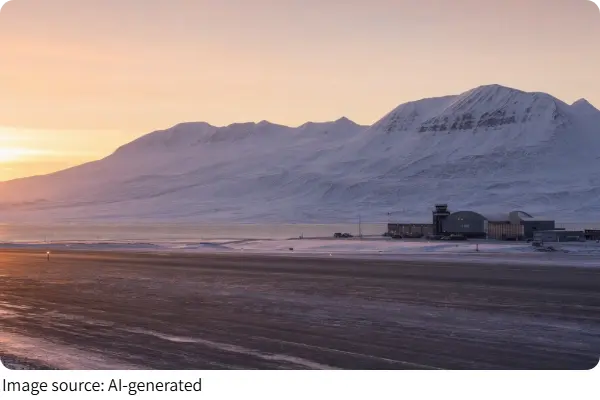
It's more reachable than that. Regular flights land at Longyearbyen Airport, and from the moment you step off the plane you're inside the Arctic proper, roughly 78 degrees north.
Getting there and getting around
Norwegian Air and SAS both fly into Longyearbyen from Oslo, usually with a stop in Tromso, and a round trip commonly runs $300 to $600 depending on the season and how early you book. Once you land, you don't rent a car. The town is small enough to walk, and anything beyond the settlement limits requires a guide with a rifle, because polar bears outnumber people here. Snowmobiles handle winter transport and boats cover the summer fjords.
What to actually see
The settlements carry the weight. In Longyearbyen, the Svalbard Museum lays out the whaling and coal mining history in a couple of dense rooms, and the old wooden houses along the main street still look like a mining camp. Outside town, Pyramiden is the one people talk about, an abandoned Russian coal town with a statue of Lenin still standing in the square. Boat trips run there in summer. In winter, snowmobile tours cross the frozen fjord to the ice caves near Longyearbyen, and the northern lights show up on clear nights from September through March.
Costs and timing
This isn't a cheap trip. A basic guesthouse room in Longyearbyen starts around $150 a night, and guided day tours typically run $150 to $250 per person. Food is expensive too, since almost everything is shipped in. Summer, roughly June through August, brings the midnight sun and open water for boat trips. Winter offers the aurora and snowmobile access, but you'll pay for cold-weather gear rental, usually around $50 a day.

Before you go
Book your accommodation months ahead, because Longyearbyen has a limited number of beds and tour operators fill up fast in peak season. Pack layers rather than one heavy coat, and budget for gear rental if you don't own it. Carry your passport when moving between settlements, and respect the guide's instructions on bear safety without arguing. That part isn't optional.
Svalbard rewards the traveler who plans ahead and accepts the costs, and it hands back landscapes and history you won't find anywhere else at that latitude. If you've been circling the idea for a while, pick a season, book the flight, and let the Arctic do the rest.