Half Dome: The Real Deal

Santosh Jha
| 03-11-2026
 · Travel team
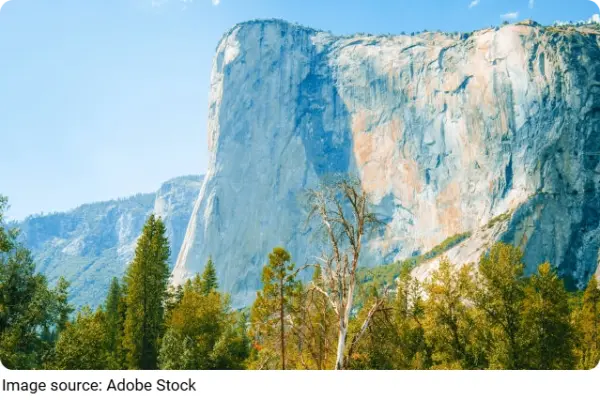
Hello, and thank you for reading. Half Dome looks like a postcard from the valley floor, a smooth granite curve against the sky.
Up close it's a 2,700-foot climb from the trailhead, a permit lottery, and a final stretch where you pull yourself up steel cables with your arms. Worth it? Almost everyone who finishes says yes. But the trip rewards people who plan, not people who wing it.
Getting a permit is the hard part
Yosemite limits cable-route access to 300 hikers a day, split between a preseason lottery in March and a daily lottery two days before your climb. The preseason odds run around 25 to 35 percent for a typical summer date, so apply for several days in a row. If you miss out, the daily lottery is your backup, and it costs $10 to enter whether you win or not. Your permit costs $10 per person on top of that. No permit, no cables, and rangers do check at the base of the subdome.
The route, start to finish
Most people start at Happy Isles trailhead in the valley, around 4,000 feet, and follow the Mist Trail past Vernal and Nevada Falls. That first stretch is steep and slick, roughly 2 miles of stone steps. From Nevada Falls you continue through Little Yosemite Valley, a flatter, quieter section where the crowds thin out, then climb the subdome, a punishing granite staircase that ends at the cable base. Total distance is about 14 to 16 miles round trip depending on which route you take down. The John Muir Trail is longer but gentler on the knees if you're descending late.

What the cables actually feel like
The cable section is 400 feet of near-vertical granite with two steel cables and wooden planks every few feet. You grip the cables, plant your feet on the planks, and pull. It's more upper-body work than most hikers expect. Gloves help, and so does a via ferrata-style leash clipped to the cable so you always have a hand free. When the rock is wet or crowded, the pace slows to a crawl, and that's fine. People wait at the base for a gap rather than crowd the line.
Timing and what to carry
Start before sunrise, ideally by 5 or 6 a.m., so you're off the summit before afternoon thunderstorms build. Those storms roll in fast in July and August, and the summit is the worst place to be when lightning starts. Carry at least 3 to 4 liters of water, more if it's hot, plus a headlamp and a light jacket for the top. Temperatures at 8,800 feet drop quickly once the sun goes behind the ridge. Trekking poles are a real help on the descent, when your legs are shot and the steps feel endless.
Budget and logistics
Park entry to Yosemite runs $35 per vehicle for a 7-day pass. If you're staying overnight, campgrounds like Little Yosemite Valley require a wilderness permit and run about $10 to $15 per person per night. Shuttle service from Curry Village to the Happy Isles trailhead is free and saves you a mile of walking each way. Book lodging months ahead, since valley rooms fill up fast in summer.
The climb is hard, but it's not mysterious. Get your permit early, start before dawn, respect the weather, and pace yourself on the subdome. Do those four things and the summit view, with the whole valley laid out below you, will feel earned rather than lucky. Next time you're staring up at that granite curve from the meadow, you'll know exactly what it takes to stand on top of it.