Fridtjovbreen Glacier Guide

Maya
| 06-11-2026
 · Travel team
Hi there, readers. Most Svalbard trips get planned around Longyearbyen, the main town, and never push much past it.
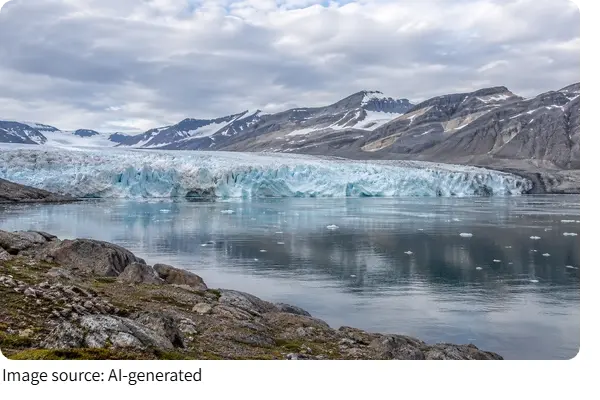
But if you want one of the quieter, more striking glacier views in the archipelago, Fridtjovbreen should be on your shortlist. It sits on the northern side of Van Mijenfjorden, a broad tidewater glacier front in a fjord that sees far fewer boats than the famous Isfjorden routes.
Why this glacier stands apart
Fridtjovbreen is a tidewater glacier, which means its face calves straight into the sea. You get the blue ice wall, the floating brash ice, and the occasional loud snap without a long hike. It's also part of a national park, so the shoreline stays undeveloped and the wildlife is left alone. On a good day you'll spot bearded seals hauled out on ice floes near the front, and Arctic terns working the shallows. The scale is what catches people off guard. The glacier face runs roughly two kilometers wide across the fjord head, and the ice cliffs stand tens of meters above the waterline.
Getting there takes planning
There's no road, no bridge, no ferry schedule. You reach Fridtjovbreen by boat from Longyearbyen, usually as part of a multi-day sailing trip that crosses Van Mijenfjorden. Day trips rarely cover the distance. Most operators run small expedition vessels carrying 12 to 30 passengers, and the crossing itself takes several hours depending on ice conditions. Expect to pay in the range of $1,500 to $3,000 per person for a multi-day Svalbard sailing trip that includes a Fridtjovbreen stop, with cabin class and trip length driving the spread. Book months ahead. Summer berths sell out, and operators cap passenger numbers for safety.
The ice decides the route
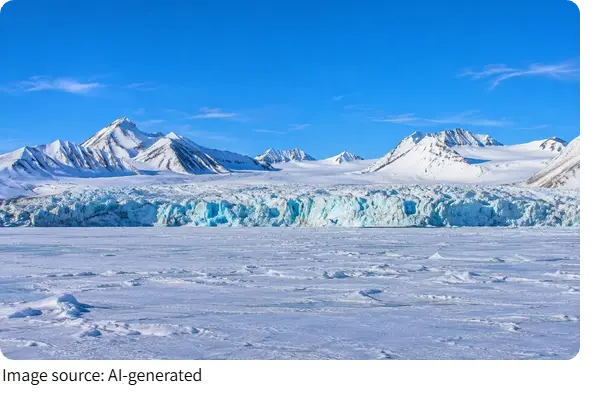
Here's the part that surprises first-timers: your itinerary is a suggestion, not a contract. Sea ice in Van Mijenfjorden can block the approach even in July, and captains adjust constantly. A typical summer window runs from June through August, when the fjord is most open. Skippers often time the glacier visit for early morning, when the water is calm and the light hits the face straight on. If the ice pushes you back, you'll usually get a zodiac cruise along the edge instead, which gets you closer to the calving zone anyway.
What to pack and expect
Layers, and then more layers. Even in midsummer, temperatures hover around 5°C on the water, and wind off the ice cuts hard. Bring a waterproof outer shell, insulated gloves, and a warm hat. Binoculars earn their weight in gold here. Keep a respectful distance from the glacier face, since calving waves and collapsing ice are real hazards, and follow your guide's instructions on where to stand on deck. Most trips include a safety briefing covering polar bear precautions before you go ashore anywhere.
The takeaway is simple: Fridtjovbreen rewards the traveler who books early, packs warm, and stays flexible on timing. If you're already planning a Svalbard sailing trip, ask your operator directly whether the route includes Van Mijenfjorden, and build your expectations around the ice rather than a fixed schedule.