Lake Stellisee, Up Close

Raghu Yadav
| 30-10-2026
 · Travel team
Hello, and welcome. Lake Stellisee looks, in most photos, like a calm little mirror parked under the Matterhorn.
The walk up to it is not calm at all, and that gap between the picture and the climb is exactly what makes a visit here worth planning properly. It sits at roughly 2,537 meters above sea level, above the resort village of Zermatt in the Valais region of Switzerland, and you don't drive to it. You earn it.
Why this lake earns the climb
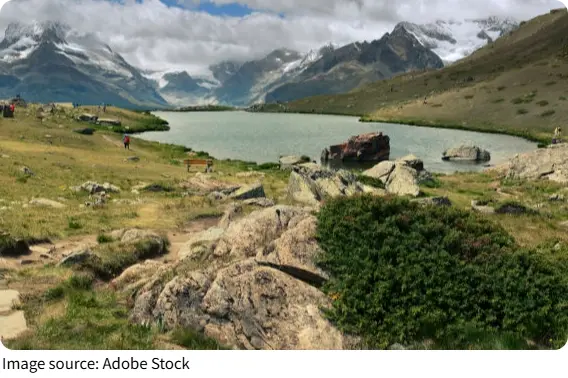
The draw is the reflection. On a still morning, the Matterhorn's north face drops into the water almost without distortion, and photographers have been making that shot for decades. But don't just come for the postcard angle. The lake itself is small, maybe a few hundred meters around, ringed with rock and low alpine grass, and the quiet up there is the real prize. You'll hear wind, maybe a marmot whistle, and not much else. Reach it before the day-trippers arrive and the place feels genuinely remote.
The route that works best
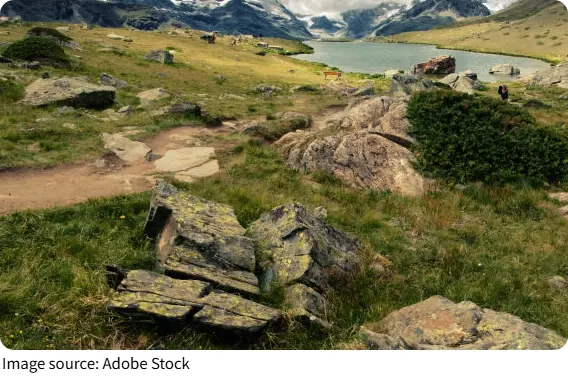
Most people start from Blauherd, which you reach by taking the Sunnegga funicular from Zermatt and then the gondola up to Blauherd station. From there it's a marked trail of roughly 20 to 30 minutes to the lake, gentle enough that families do it. The longer option starts at Sunnegga itself and climbs via the 5-Seenweg, the five-lakes trail, which passes Stellisee as its first or second stop depending on direction. That version takes about an hour to the lake and is steeper. Take the gondola up if you want the short version, walk from Sunnegga if you want the full day. Both are well signposted.
Timing changes everything
Go early. The reflection needs calm water, and by late morning the wind usually picks up and the surface breaks into ripples. The Sunnegga funicular typically starts running around 7:30 in summer, and the first gondola to Blauherd follows shortly after. Catch that first lift and you'll have the shoreline nearly to yourself for the first hour. Summer, roughly June through September, is the window when the trail is clear of snow. In October the lifts wind down for maintenance, so check operating dates before you build a trip around it.
What it costs and how to prepare
A return ticket from Zermatt up to Blauherd runs around 60 to 70 USD for a grown-up in high season, and a Swiss Travel Pass or a regional pass can cut that. Bring layers even in July, because the temperature at 2,500 meters sits well below the village, and a waterproof shell is worth the weight. Sturdy shoes matter more than you'd think, since the trail has loose stone sections. Fill your bottle in Zermatt before you go up; there are no shops at the lake. And give yourself a buffer for the descent, because the last gondola down leaves in the late afternoon.
The whole trip is a half-day if you take the lifts, a full one if you walk the five-lakes route. What stays with you isn't the photo you came for, it's standing at the edge of that cold, clear water with the valley dropping away below. Set your alarm a little earlier than feels reasonable, and you'll understand why.