Fjortende Julibukta on Foot

Margot
| 06-11-2026
 · Travel team
Fjortende Julibukta, also called July 14th Bay, lies inside Krossfjorden on the west coast of Spitsbergen. Since the previous Fuglefjorden guide focused on choosing an expedition voyage, this guide starts after you are already aboard one.
The practical question here is how to handle a shore landing where glacier views, tundra, seabirds, and Arctic terrain sit close together. You will not need a long hike, but you do need disciplined movement and the right clothing.
Prepare for the Landing
There is no road, visitor centre, or independent transport to Fjortende Julibukta. Access normally comes by expedition vessel followed by a small inflatable boat, and the landing happens only when local conditions allow it.
Expect About Two Hours Ashore
A typical landing may occupy roughly 1.5 to 3 hours, although expedition teams adjust timing to weather, wildlife, sea conditions, and the number of passengers.
That is enough. The objective is not distance.
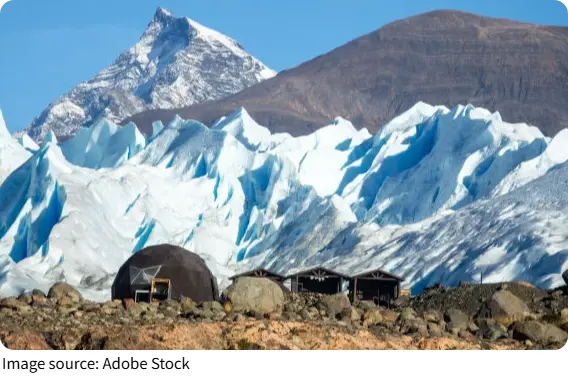
The bay is backed by the Fourteenth of July Glacier, while tundra vegetation and steep cliffs create several different habitats within a compact area. A guided walk may therefore cover only a few kilometres while still filling the entire landing period.
Summer is the practical season. June through August provides continuous or near-continuous daylight, navigable coastal conditions, and the best opportunity for ship-based exploration. July is particularly useful for observing tundra vegetation and active seabird colonies.
Before leaving the ship, use the restroom, fill your water bottle, and put on every layer you expect to need. Returning to the vessel halfway through a landing is usually impractical.
Do not carry a heavy hiking pack. A small waterproof day pack with water, camera equipment, an extra insulating layer, and gloves is sufficient for most landings.
Dress for Standing Still
The temperature reading can be misleading because expedition landings involve considerable waiting.
You may spend 15 to 30 minutes sitting in an open inflatable boat, then stand while guides assess wildlife or organize the group. Wind from the fjord makes those stationary periods feel much colder than an ordinary walk.
Wear a thermal base layer, insulating mid-layer, waterproof jacket and trousers, warm hat, gloves, and waterproof boots. Many expedition operators provide suitable landing boots, but confirm this before departure.
Avoid dressing only for the hiking portion. If you feel comfortably warm while standing beside cold water for 20 minutes, you have probably chosen the right system.
Keep cameras protected from spray during the boat transfer. Once ashore, a lens cloth is useful because moisture can quickly cover exposed glass.
Walk With the Landscape
Fjortende Julibukta is a poor place for independent wandering but an excellent place for a controlled, short Arctic walk.
Keep Your Distance From Wildlife
The cliffs around the bay support nesting seabirds, while reindeer may appear on the surrounding tundra.
Follow the guide rather than approaching animals for photographs. If wildlife changes direction because of your presence, you are already influencing its behaviour.
The same principle applies to vegetation. Arctic tundra grows slowly and is easily damaged. Walk where the expedition team directs the group and avoid spreading across vegetated ground simply to find a cleaner camera angle.
Polar bear safety governs the entire landing. Guides inspect the area and manage group movement. Never separate from the group, even when the ship remains clearly visible offshore.
There is no admission ticket for the bay itself. The cost is effectively included in the expedition voyage, which commonly runs into several thousand euros per person. That makes each successful landing valuable, but it does not mean every landing needs to become a long hike.
Do Not Approach the Glacier
The glacier dominates the end of the bay, but getting physically closer is not the goal.
Glacier fronts can release ice unexpectedly, and falling ice can generate waves. Your expedition team determines appropriate viewing positions based on current conditions.
Use the glacier as the background to the wider landscape instead. The shoreline gives you tundra, water, mountains, and ice within one compact area, so changing position by a few hundred metres often produces more variety than trying to cover several kilometres.
If the landing includes a higher viewpoint, take it slowly. Uneven tundra, loose rock, wet ground, and lingering snow may make short climbs more demanding than their distance suggests.
After roughly 1.5 to 3 hours, return to the designated pickup point when instructed. Keep waterproof layers on for the ride back even if conditions improved during the walk.
Once aboard, dry gloves and outer layers immediately. Expedition schedules may include another small-boat excursion or landing later the same day.
For most Lykkers, Fjortende Julibukta works best as a focused 1.5 to 3 hour guided landing rather than a distance-driven hike. Visit during a summer expedition through Krossfjorden, prepare for cold periods sitting and standing as well as walking, and carry only a small waterproof day pack. Stay with the expedition group because wildlife and polar bear safety determine where you can move, avoid fragile tundra and nesting areas, and let guides establish safe glacier viewing distances. The goal is not to cover kilometres but to experience glacier, tundra, wildlife, and fjord within one carefully managed Arctic landing.