Brake Hard Without Losing It

Kenji
| 03-11-2026
 · Automobile team
Welcome, everyone. Most riders practice braking by grabbing a handful of front lever and hoping for the best.
That works fine at low speed on clean asphalt. But when a car pulls out and you need to shed 60 mph in a hurry, the front and rear have to work as a team, and the timing matters more than the force.
The front does the heavy lifting
Physics is on the front tire's side. As you brake, weight shifts forward and loads that contact patch, so the front can handle roughly 70 to 80 percent of your stopping power before it locks. The rear goes light and contributes less. On a sport bike with sticky tires, a skilled rider can brake close to the point where the rear wheel lifts slightly off the ground. That's the limit of usable front grip, and it's where most of your stopping distance lives.
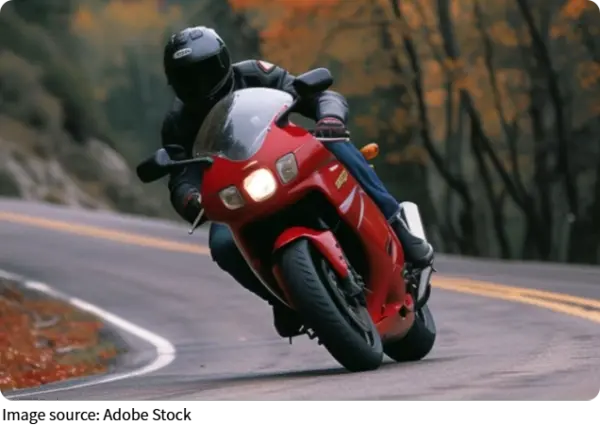
The rear steadies the bike
Do not just drag the rear out of habit. Use it to manage chassis stability. A light, constant pressure on the rear pedal keeps the bike from pitching forward too sharply and helps hold your line if the surface is slick. On a wet road or loose gravel, the rear contributes more than usual because the front is more prone to locking. Apply it progressively, not as a stomp, and you'll feel the bike settle instead of diving.
Progressive squeeze, not a stab
The single biggest mistake is grabbing the front lever instantly. That transfers weight too fast, the front tire loads before the suspension can respond, and the wheel locks or the front tucks. Instead, squeeze the lever through a short initial phase, feel the weight load onto the front, then add pressure steadily. Think of it as two stages: set the front, then brake hard. Honda's rider training programs teach this exact two-stage squeeze for a reason, and it works on everything from a CB500 to a Gold Wing.
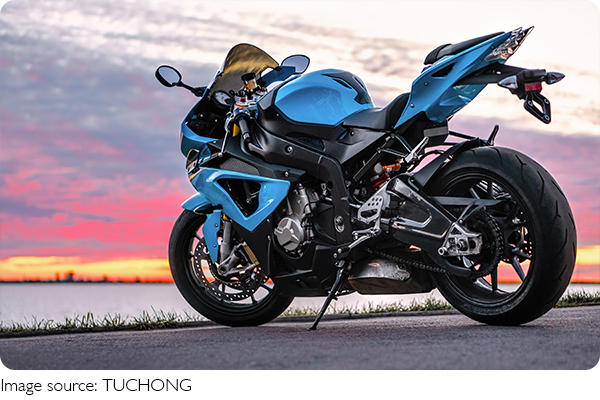
Body position buys you margin
Sit upright and brace your arms slightly bent as you brake. Locked elbows push the rods and unsettle the front. Slide back a touch in the seat, grip the tank with your knees, and let your hips anchor you. This keeps the rear wheel loaded longer and gives the suspension room to work. Riders who brace forward over the handlebars tend to overload the front and lose rear contact.
Practice where it's safe
Find an empty lot and mark a reference point. Ride at 30 mph, brake to a stop using only the front, then front plus rear, and compare distances. You'll notice the combined stop is shorter and the bike stays flatter. Repeat until the squeeze becomes automatic. Locking the front is recoverable if you release pressure immediately, so learn that reflex before you need it in traffic.
The takeaway is simple: load the front smoothly, use the rear to keep the chassis calm, and let progressive pressure do the work. Next time you're in an empty lot, run a few stops and feel how the two brakes hand off to each other. Your hands will remember it when it counts.