Sports Car Speed

Tessa
| 04-11-2026
 · Automobile team
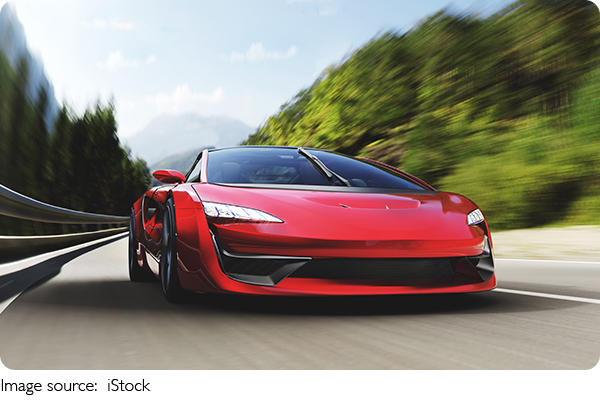
Sports cars are designed for speed, quick acceleration, and responsive handling. When we see one moving smoothly along a road, it may seem that its performance comes mainly from a powerful engine.
However, several engineering features work together to create impressive speed. From advanced transmissions to specialized tires and aerodynamic bodywork, every component has an important role. Let's explore six reasons why sports cars can move so quickly.
1. Powerful Engines Provide Strong Performance
The engine is one of the most important parts of a sports car. It produces the power needed to accelerate and maintain speed. Many sports cars feature high-performance engines designed to deliver substantial power and torque.
Torque is the turning force that helps the wheels move. Strong torque allows a vehicle to respond quickly when the driver presses the accelerator.
Some engines also use turbocharging to increase power by sending additional air into the combustion process. Engine design, cooling, and efficiency all influence overall performance.
2. Advanced Transmissions Deliver Power
A powerful engine needs an effective transmission to transfer its energy to the driving wheels.
Sports cars often feature advanced automatic or manual transmissions that allow quick gear changes. Some models use dual-clutch systems, which prepare the next gear in advance and reduce interruptions during acceleration.
Gear ratios are equally important. Lower gears provide stronger acceleration, while higher gears help maintain speed with fewer engine revolutions.
A well-designed transmission allows the engine to operate efficiently and makes power delivery smoother.
3. High-Performance Tires Improve Grip
Tires help determine how effectively a sports car uses its power. Even a powerful engine cannot deliver good acceleration if the tires struggle to maintain contact with the road.
Sports cars often use specialized tires with rubber compounds and tread patterns designed for strong grip. This helps prevent unnecessary wheel spinning and improves acceleration.
Good tire grip also supports cornering and braking. Tire pressure, temperature, and tread condition matter too. Regular checks help maintain performance and provide more predictable handling.
4. Lightweight Construction Improves Acceleration
A lighter vehicle generally requires less force to increase its speed. This is why many sports cars use lightweight materials such as aluminum and carbon fiber in selected body and structural components.
Reducing unnecessary weight can improve acceleration, braking, and handling.
Another important factor is the power-to-weight ratio. It describes how much engine power is available compared with the vehicle's weight. A higher ratio generally supports stronger acceleration, although tire grip and transmission performance also matter.
5. Aerodynamic Design Reduces Air Resistance
A sports car's shape is not only about appearance. Its body is designed to manage the airflow around it.
At higher speeds, air resistance becomes increasingly important. A streamlined body reduces drag, helping the vehicle move through the air more efficiently.
Some models also feature spoilers, diffusers, and specially shaped underbody panels. These components can generate downforce, which pushes the vehicle toward the road.
Downforce helps improve tire contact and stability, particularly during cornering. Engineers must balance downforce with air resistance to achieve effective performance.
6. Strong Brakes Support Performance
Speed is only one part of sports car engineering. The ability to slow down reliably is equally important.
High-performance braking systems are designed to handle heat and repeated braking demands. Many sports cars feature larger brake discs and specialized components to improve stopping performance.
When the driver applies the brakes, friction slows the wheels and reduces the vehicle's speed. A reliable system provides better control when approaching bends or changing road conditions.

Final Thoughts
Sports cars achieve impressive speed through a combination of powerful engines, efficient transmissions, high-performance tires, lightweight construction, aerodynamic design, and strong brakes.
These features must work together. A powerful engine needs suitable tires and effective power delivery to produce meaningful performance.
The real achievement of sports car engineering is not simply creating a fast vehicle. It is building one that accelerates smoothly, handles predictably, and remains stable throughout the driving experience.