Where Supercars Go Next

Isla
| 04-11-2026
 · Automobile team
Hi, let's get started. Every few years someone declares the supercar dead, buried under emissions rules and safety mandates, and every few years a 1,000 hp machine rolls out of Sant'Agata or Maranello anyway.
But the next wave won't just be bigger engines with louder exhausts. The engineering brief is flipping: less mass, smarter power delivery, and software doing work that used to fall to displacement.
Electrification stops being optional
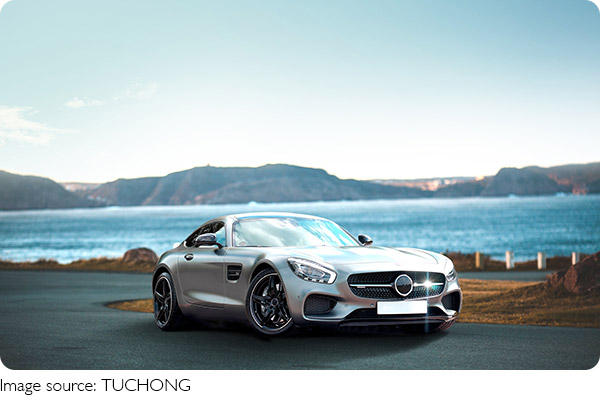
The Lamborghini Revuelto pairs a naturally aspirated V12 with three electric motors and a small battery for a combined 1,001 hp. The Ferrari SF90 Stradale runs a twin-turbo V8 plus three motors for 986 hp. Neither is a hybrid for fuel economy. The motors fill torque gaps during shifts and push the front axle when the rear tires run out of grip. Expect more of this: small, light battery packs sized for acceleration bursts rather than electric-only range.
800 volts becomes the default
Porsche's Taycan moved the industry to an 800 volt architecture, and the reasons apply directly to supercars. Higher voltage means thinner cables, less heat, and faster charging. For a low-volume car, thinner wiring harnesses save real kilograms. You'll see 800 volt packs paired with silicon carbide inverters in more halo models, because the efficiency gain shows up in both lap times and thermal headroom.
Active aero gets smarter
The McLaren P1 and Ferrari LaFerrari started the movable-wing era, but the next step is per-corner control. The Aston Martin Valkyrie uses underbody tunnels and adjustable flaps tuned to work with the diffuser rather than bolted on as a rear wing. The goal is downforce that loads up in a corner and sheds on the straight without a drag penalty. Expect flaps that respond to steering angle and brake pressure, not just speed.
Weight is the new horsepower
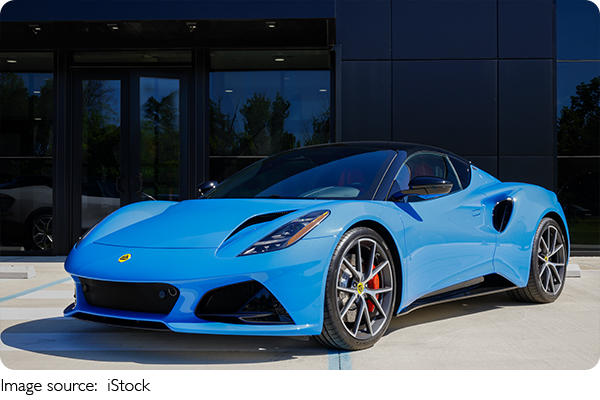
Adding a hybrid system typically adds 150 to 200 kg. Engineers are clawing it back with carbon fiber monocoques, 3D-printed suspension nodes, and brake-by-wire systems that delete the vacuum booster and hydraulic lines. Gordon Murray's T.50 weighs around 986 kg with a Cosworth V12, no hybrid at all. That car is a deliberate statement: light cars still work, and the market will pay for them.
Steer-by-wire and brake-by-wire
Removing the mechanical steering column saves weight and lets engineers tune ratio and feedback per driving mode. Infiniti's Q50 introduced the idea in a production car, and supercar makers are revisiting it with far better software. The catch is feel. Drivers notice when a system filters out road texture, so the tuning work matters more than the hardware.
The heat problem
A 1,000 hp hybrid drivetrain generates serious thermal load from three sources at once: engine, motors, and battery. The Mercedes-AMG One deals with this using a Formula 1 derived powertrain and extensive cooling ducting. Smaller makers will lean on larger radiators, repositioned intercoolers, and coolant loops that share duty between battery and motor. Thermal management, not peak power, will separate the good cars from the compromised ones.
Hybrid V8s and V12s, 800 volt packs, active aero, and by-wire controls are the visible shifts, but the real battle is weight and heat. Next time you read a spec sheet, skip the horsepower line and look at the curb weight and cooling layout instead. That's where the actual engineering story sits, and it's the one worth following.