Street-Ready Race Tech

Elise
| 04-11-2026
 · Automobile team
Welcome, and let's begin. You'd expect the tech in a race car to stay on the track, locked away in a garage with a team of engineers.
But a lot of what wins on Sunday ends up in the car you drive to work, just toned down and made to last 100,000 miles.
Brakes that came from racing
Carbon-ceramic brakes are the clearest example. Porsche put them on the 911 GT1 race car in the 1990s, then offered them on the road-going 911 Turbo. The discs are lighter than cast iron and hold up to repeated hard stops without fading. On a track that matters. On a commute, you mostly get the lighter weight and the long life, which is why they show up on cars like the Ferrari 488 and the Porsche 911 GT3.
Aero that actually works on the road
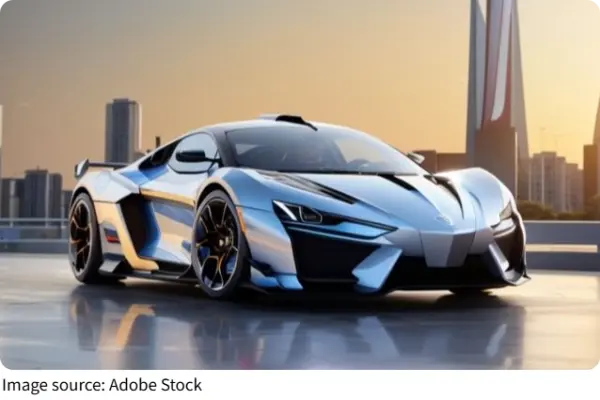
Downforce is the other big transfer. A race car's wings push the tires into the ground so it can corner faster. Road cars can't use that outright because you don't want a wing dragging on a speed bump. Instead, engineers borrow the shape and the idea. The Porsche 911's active rear spoiler lifts at speed and tucks away at low speed. The Ferrari 458 used underbody diffusers to generate downforce without a giant wing. You get the stability at highway speeds without the parking lot hassle.
Materials that shed weight
Weight is the enemy of acceleration, braking, and fuel economy. Race teams chase grams, and road cars follow. Carbon fiber started in Formula 1 chassis and now shows up in the body panels of cars like the BMW M4 GTS. Aluminum suspension parts, once exotic, are common on mid-range sports sedans. The McLaren F1 used a carbon monocoque in 1992; today you'll find carbon tubs in the McLaren Artura. The cost per part drops as production volumes rise, which is why the tech spreads.
Engines and cooling tricks
Turbocharging is the biggest one. Race cars used turbos to make power from small engines, and road cars copied it. The BMW 2002 Turbo in the 1970s was one of the first production cars with a turbo, and it drew directly from racing experience. Today, a 2.0-liter four-cylinder in a Honda Civic Type R makes 315 horsepower thanks to turbo tech refined on track. Dry sump lubrication, which keeps oil flowing under high cornering loads, moved from race engines to road cars like the Porsche 911.
What you actually pay for
Not every race trick makes sense on a road car. Sequential gearboxes shift fast but are harsh and expensive to service, so most road cars use dual-clutch automatics instead. The transfer isn't automatic, it's selective. Engineers pick what improves the driving experience without wrecking reliability or cost. That's why you see carbon brakes on a $200,000 sports car but not on a $25,000 hatchback.
The next time you look at a sports car's spec sheet, remember that half of it probably started on a racetrack. The brakes, the aero, the turbo, the lightweight parts. They all came from somewhere.