Why Supercars Wear Big Wings

Amit Sharma
| 04-11-2026
 · Automobile team
Welcome, everyone. A big rear wing on a supercar looks like pure attitude, but it's doing serious work.
Remove the wing from a Porsche 911 GT3 RS and the car starts to feel light and nervous at speed, especially through fast corners.
The problem speed creates
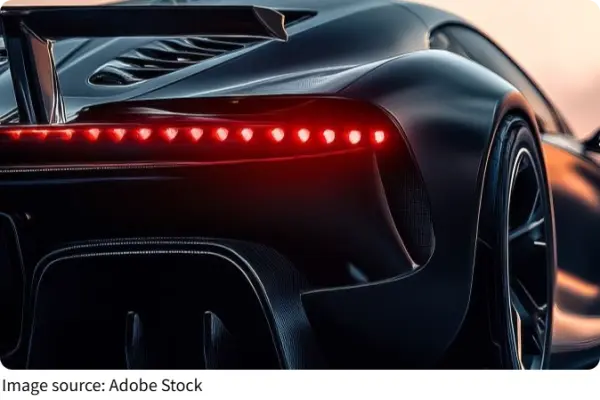
Lift is the issue. As air rushes over a car's body, the shape can generate upward force, and the rear end is especially prone to it. A wing inverts that, shaping airflow to push the tail down instead of lifting it. On a McLaren Senna, the rear wing works with a huge diffuser to keep the back end stable when you're deep into triple-digit speeds. Without that downforce, the rear tires lose grip and the steering goes vague.

How the wing actually works
It's an upside-down airplane wing. The curved profile speeds air up over the underside, lowering pressure there and pushing the wing down. Angle matters too, and that's why active aero exists. The Porsche 911 Turbo's wing tilts up under braking to add rear grip, then flattens at cruise to cut drag. You get grip when you need it and efficiency when you don't.
Why the rear needs it most
Weight shifts rearward under acceleration, so the back tires carry the load. A wing keeps them pressed into the road. On a Ferrari F8 Tributo, the rear spoiler and underbody work together to balance the car at high speed. Get that balance wrong and the front goes light while the tail squats, which is a handful to correct mid-corner.
The trade-off you feel
Downforce costs drag. More wing angle equals more grip but lower top speed and worse fuel use. That's the reason road cars use active flaps rather than a fixed plank. A Lamborghini Huracan Performante's active system adjusts on the move, so you're not stuck with one setting. It's a constant negotiation between sticking to the road and slicing through the air.
Small wings, big effect
You don't always need a giant plank. A modest lip spoiler on a Toyota GR Supra adds real stability at highway speed without wrecking efficiency. The size follows the car's speed range and how much rear grip it needs. Bigger isn't automatically better, it just means the car was built to go faster.
So next time you see a towering wing on a supercar, remember it's there to fight lift and keep the rear tires honest. Take one for a fast drive and you'll feel the difference in the seat before you ever read the spec sheet.