Why Supercars Sit Mid-Engine

Nolan O'Connor
| 04-11-2026
 · Automobile team
Hi there. You'd expect the fastest cars on the road to keep their engines up front, the way nearly every sedan and pickup does.
But supercar makers do the opposite, and it's not for looks. They put the engine behind the driver because physics rewards it, and once you understand why, the whole layout stops feeling exotic and starts feeling obvious.
The weight sits where it helps
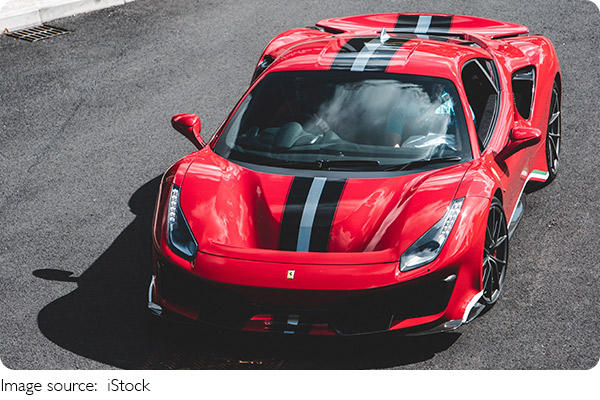
A front-engine car carries most of its mass over the front wheels, which makes the nose reluctant to turn. Move the engine to the middle, and the bulk lands between the axles. Ferrari's 296 GTB puts its twin-turbo V6 right behind the cabin, and that single decision shifts the center of gravity toward the middle of the car. You feel it the moment you change direction: the front end responds quicker, and the rear stays planted instead of swinging wide.
Turning needs a balanced car
Here's the part people miss. A car's ability to corner comes down to how evenly its weight is spread, and mid-engine layouts get closer to an even split than almost anything else. The McLaren 720S sits near 42/58 front to rear, a ratio a front-engine design struggles to reach without piling ballast somewhere useless. That balance means all four tires share the work in a corner instead of the fronts doing most of it. More grip, less sliding.
Braking gets shorter and steadier
Push the brake pedal hard in a mid-engine car and the weight transfers forward into the front tires, which is exactly where you want it. The rear stays loaded too, so the back doesn't go light and twitchy under hard stops. Lamborghini's Huracan leans on this in its carbon-ceramic setup, pulling down from speed without the nervous rear-end shuffle you get in a nose-heavy car. Shorter stops, more confidence at the pedal.
The packaging fights back
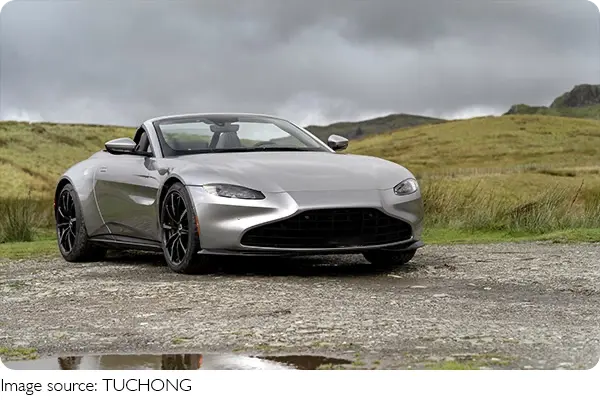
None of this comes free. Drop the engine behind the seats and you lose the rear cargo space, the easy service access, and often the back seats entirely. The Porsche 718 Cayman solves part of that with a small front trunk and a rear one, but there's no pretending it's practical. Cooling is another headache, since the radiators often end up in the nose with long pipes running back to the engine. That's why mid-engine cars cost more to build and maintain.
It changes how the car feels
The layout also reshapes the driving experience in ways you notice immediately. With the mass sitting behind you, the car rotates around your hips rather than your feet, so the steering and the seat talk to each other. Audi's R8 uses this to make a 5.2-liter V10 feel almost friendly at low speed, then sharp when you push. You're not fighting the nose into a corner. You're guiding a car that already wants to turn.
Why it stays rare
Cost and packaging keep mid-engine layouts out of everyday cars. The engineering is more complex, the parts are pricier, and the cabin gets tighter. But for a machine built around speed and feel, the trade is worth it. That's why nearly every serious supercar, from the Ferrari SF90 to the Chevrolet Corvette after its move to a mid-engine design, has gone this way. The physics simply favor it.
So next time you see a supercar with that short nose and long rear deck, you'll know the shape isn't styling for its own purpose. It's the engine sitting where it does the most good. Sit in one, even as a passenger, and pay attention to how it turns. You'll feel the difference in the first corner.