Why Sports Cars Chase Air

Vivienne
| 04-11-2026
 · Automobile team
Hello, everyone. A sports car used to be judged on one number, usually horsepower, and the body was mostly there to look good and hold the engine.
Not anymore. Walk up to a modern performance machine and half its shape is doing a job at speed, pushing air where the engineers want it instead of letting it pile up wherever it lands.
The problem with going fast
Air is not empty space you glide through. At highway speed it becomes something you have to manage, and the faster you go, the harder it pushes back. Drag rises with the square of speed, so doubling your velocity multiplies the resistance roughly four times. That's why a car that feels fine at 60 mph can start floating and wandering at 150. Aerodynamics is how engineers fight back, trading some of that drag for grip and stability.

Downforce is the real prize
The headline goal isn't slipperiness, it's downforce: air pressure pressing the car into the road so the tires bite harder in corners. The Porsche 911 GT3 RS is a clear example, generating hundreds of pounds of downforce at speed from a large rear wing and a front that channels air carefully. More grip means you can carry more speed through a bend without the rear stepping out. That's the trade engineers chase, and it's why race cars look the way they do.
Why the underside matters now
Flat floors and rear diffusers do quiet, invisible work. A diffuser is the upswept section under the tail that speeds air up as it exits, dropping pressure beneath the car and pulling it toward the ground. The McLaren MP4-12C leaned heavily on underbody airflow instead of giant wings, keeping the shape cleaner. Ground effect like this adds grip without the drag penalty of a big spoiler bolted on top.
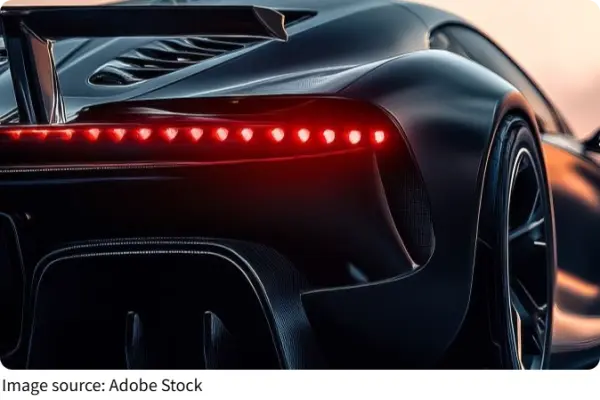
Active aero changes the game
Fixed wings are a compromise: great in a corner, costly on a straight. Active systems solve that by moving parts in real time. The Ferrari 458 Italia had a flexible front wing element that flattened at high speed to cut drag, and the Pagani Huayra used four movable flaps at each corner to balance the car as it turned. You get downforce when you need it and less drag when you don't.
Stability you can feel
Aerodynamics isn't only about lap times. A well-shaped car feels planted at speed, and a poorly shaped one gets nervous. The Audi TT famously needed a small rear spoiler after early cars felt light at the back on fast roads. That's a very direct lesson: airflow over the tail can lift a car, and a modest wing fixes it. You notice good aero as calm, not drama.
Where it pays off for you
Even if you never touch a track, the work shows up in daily driving. Better airflow means less drag on the highway, which helps fuel economy, and more downforce means a car that tracks straight in crosswinds and feels secure merging at speed. The next time you look at a sports car, notice the vents, the flat underbody, the shape of the tail. That's not styling for its own purpose, it's air being put to work, and you'll feel the difference the moment you press the throttle.